Join us on a literary world trip!
Add this book to bookshelf
Grey
Write a new comment Default profile 50px
Grey
Subscribe to read the full book or read the first pages for free!
All characters reduced
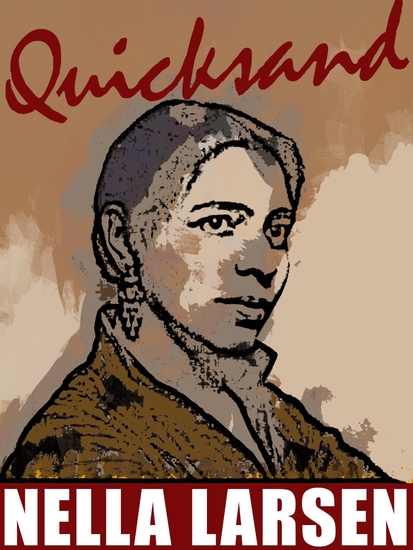
Quicksand - cover

Quicksand

Nella Larsen

Publisher: Alien Ebooks

  • 0
  • 0
  • 0

Summary

Harlem Renaissance author Nella Larsen (1891 –1964) published just two novels and three short stories in her lifetime, but achieved lasting literary acclaim. Her classic novel Quicksand first appeared in 1928.
Available since: 07/26/2022.
Print length: 207 pages.

Other books that might interest you

  • The Boscombe Valley Mystery - cover

    The Boscombe Valley Mystery

    Arthur Conan Doyle

    • 0
    • 0
    • 0
    The Boscombe Valley Mystery, one of the 56 short Sherlock Holmes stories written by Sir Arthur Conan Doyle, is the fourth of the twelve stories in The Adventures of Sherlock Holmes. It was first published in the Strand Magazine in 1891.Lestrade summons Holmes to a community in Herefordshire, where a local landowner has been murdered outdoors. The deceased's estranged son is strongly implicated. Holmes quickly determines that a mysterious third man may be responsible for the crime, unraveling a thread involving a secret criminal past, thwarted love, and blackmail.Sherlock Holmes and Dr Watson take a train to Boscombe Valley, in Herefordshire. En route, Holmes reads the news and briefs Watson on their new case.John Turner, a widower and a major landowner who has a daughter named Alice, lives there with a fellow expatriate from Australia, Charles McCarthy, a widower who has a son named James. Charles has been found dead near Boscombe Pool; it was reported that he was there to meet someone. Two witnesses testify that they saw Charles walking into the woods followed by James, who was carrying a gun. Patience Moran, daughter of a lodgekeeper, says that she saw Charles and James arguing and that, when James raised his hand as if to hit his father, she ran to her mother, and while she was telling her mother what she saw James rushed to their house seeking help. The Morans followed James back to the Pool, where they found his father dead. James was arrested and charged with murder. Alice Turner believes that James is innocent and has contacted Lestrade, a Scotland Yard detective who in turn has asked Holmes' help.Famous works of the author Arthur Conan Doyle's: "A Study in Scarlet", "Silver Blaze", "The Hound of the Baskervilles", "The Yellow Face", "A Scandal in Bohemia", "The Red-Headed League", A Case of Identity", "The Boscombe Valley Mystery", "The Five Orange Pips", "The Man with the Twisted Lip", "The Blue Carbuncle", "The Speckled Band", "The Engineer's Thumb", "The Noble Bachelor", "The Beryl Coronet", "The Copper Beeches" and many more.
    Show book

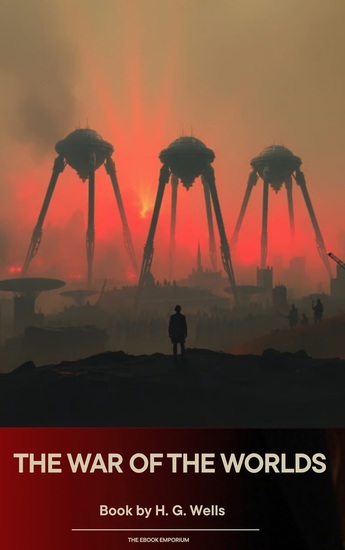
  • The War of the Worlds - cover

    The War of the Worlds

    H. G. Wells

    • 0
    • 0
    • 0
    "No one would have believed in the last years of the nineteenth century that this world was being watched keenly and closely by intelligences greater than man's..."
    
    From the first mysterious cylinder landing in Horsell Common to the total devastation of London, H.G. Wells crafts a harrowing first-person account of a world under siege. Armed with devastating Heat-Rays and suffocating Black Smoke, the Martian invaders move across the countryside in towering, three-legged fighting machines. The British military—the greatest power of the age—is rendered helpless. As the narrator flees through a landscape transformed by the alien "Red Weed," the novel explores the primal terror of being hunted and the humbling realization that humanity is not the master of its own planet.
    
    The Biological Reality of Mars: Wells avoids the "little green men" tropes of later sci-fi. His Martians are biologically plausible creatures—vast, leathery heads with tentacles, evolved for a dying planet with low gravity. They do not eat; they inject the blood of living creatures directly into their veins. This chilling detail turns the invasion from a political conquest into a biological harvest.
    
    A Masterclass in Suspense and Satire: The War of the Worlds was a shocking critique of British Imperialism, forcing Victorian readers to experience the terror of being colonized by a superior force. Through the narrator's encounters with the broken Curate and the delusional Artilleryman, Wells examines how human social structures—religion, military pride, and logic—crumble under the weight of an existential threat.
    
    Experience the terror that stopped the world. Purchase "The War of the Worlds" today and witness the survival of the human spirit.
    Show book
  • Missy's Room - cover

    Missy's Room

    Lucy Maud Montgomery

    • 0
    • 0
    • 0
    Lucy Maud Montgomery (November 30, 1874 – April 24, 1942), published as L. M. Montgomery, was a Canadian author best known for a series of novels beginning in 1908 with Anne of Green Gables. The book was an immediate success. The title character, orphan Anne Shirley, made Montgomery famous in her lifetime and gave her an international following.
    Missy's Room: Mrs. Falconer and Miss Bailey walked home together through the fine blue summer afternoon from the Ladies' Aid meeting at Mrs. Robinson's. They were talking earnestly; that is to say, Miss Bailey was talking earnestly and volubly, and Mrs. Falconer was listening.
    Show book
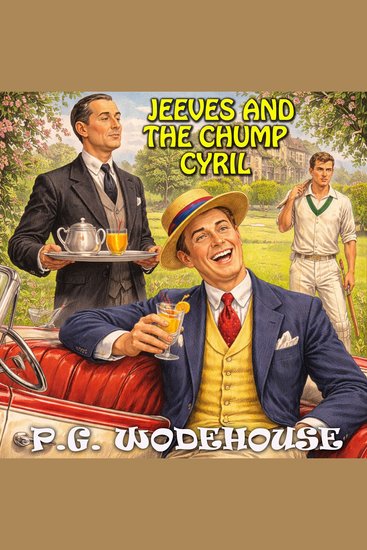
  • Jeeves and the Chump Cyril - cover

    Jeeves and the Chump Cyril

    P. G. Wodehouse

    • 0
    • 0
    • 0
    "A situation of the most extreme delicacy, if you follow me..."
    Bertie Wooster has been sent to New York for a brief breather, largely in an effort to escape the formidable shadow of Aunt Agatha. But his peace is short-lived when he is asked to look after "Chump" Cyril—a young man whose enthusiasm for life is matched only by his complete disregard for common sense.
    In Jeeves and the Chump Cyril, Bertie soon finds himself adrift in a most refined kind of trouble. Between Cyril's theatrical ambitions and a letter of introduction capable of blowing Bertie's quiet life to smithereens, logic has quietly stepped outside for fresh air.
    As well-meaning intentions drift ever closer to mild catastrophe, the incomparable Jeeves remains calm, precise, and several moves ahead. It is a sparkling example of the Wodehouse tradition: a world where polished manners glide smoothly over questionable judgement, and where consequences remain—thanks to Jeeves—delightfully negotiable.
    A perfect listen for those who appreciate elegant mischief, impeccable timing, and the fine art of the narrow escape. 
    In short: everything appears under control—which is usually the first warning sign.
    Show book
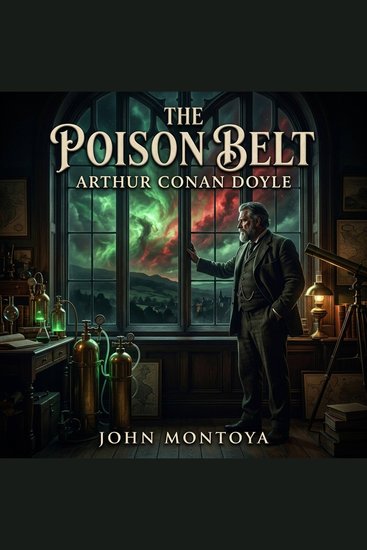
  • The Poison Belt - A gripping classic Science Fiction adventure of cosmic disaster Join Professor Challenger as Earth plunges into a deadly galactic ether wiping out humanity in this thrilling apocalyptic tale - cover

    The Poison Belt - A gripping...

    Arthur Conan Doyle

    • 0
    • 0
    • 0
    The end of the world arrives not with a fiery explosion, but with a silent, suffocating wave. 
    When the brilliant and bombastic Professor George Edward Challenger observes an abnormal blurring of Fraunhofer's lines in the stellar spectrum, he deduces a terrifying truth: the Earth is speeding directly into a cosmic cloud of poisonous ether. As reports of madness, mass sickness, and sudden death pour in from across the globe, Challenger gathers his intrepid companions from his famed Lost World expedition—Lord John Roxton, Professor Summerlee, and the journalist Edward Malone—at his countryside estate. 
    Armed with a limited supply of oxygen cylinders and sealed tightly inside a single room, the men can only watch from their window as the unstoppable tide of death consumes the human race. Will they be the last survivors of a doomed, silent planet, or is there a flicker of hope beyond the poisoned atmosphere? 
    Why you will love this: This masterclass in early Science Fiction will keep you on the edge of your seat. Blending thrilling apocalyptic and post-apocalyptic tropes with philosophical existential dread, the story combines the claustrophobic tension of a locked-room mystery with the vast, terrifying stakes of an extinction-level cosmic event. 
    About the Author: Sir Arthur Conan Doyle (1859–1930) is celebrated worldwide as the creator of Sherlock Holmes. However, his boundless imagination also birthed the formidable Professor Challenger, cementing his legacy as a true pioneer of early speculative fiction and sweeping adventure.
    Show book
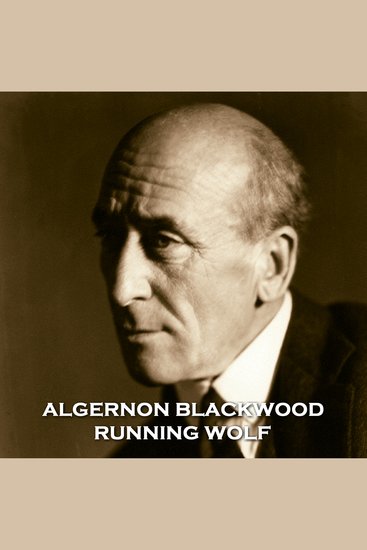
  • Running Wolf - Set in the Canadian wilderness this is a gripping supernatural tale with Native American elements - cover

    Running Wolf - Set in the...

    Algernon Blackwood

    • 0
    • 0
    • 0
    Algernon Blackwood was born on 14th March 1869 in Shooter’s Hill, South East London, to a religious middle-class family. His mother was a widowed Duchess and his father was a Post Office administrator.  
     
    Blackwood was interested in the paranormal and the supernatural at an early age, and had a thirst for anything on Buddhism, other Oriental philosophies, mysticism and occultism.  In his writings the weaving of the supernatural into his various works, from ghost stories and children’s stories to plays and long novels is clearly seen, his writings beautifully enriched by his long and diversified life experience.  
     
    After leaving university and visiting parts of Europe, mainly Switzerland, the young writer went to Canada and the United States where he took on jobs including work as a farmer, a bartender, a secretary, a journalist, a reporter, running a hotel and teaching the violin.  He was voracious in meeting new people and absorbing new ideas.  
     
    In his late thirties, he returned to England where he published two of his supernatural stories in Pall Mall Magazine. As more of his highly entertaining stories were published so did his reputation and his bank balance.  All those years of curiosity and experiences were starting to emerge from his writing. 
     
    In 1906, ‘The Empty House & Other Ghost Stories’ was published with tremendous success.  Further volumes of short stories followed and with it a larger audience and bigger paydays. He also published children’s stories. 
     
    Blackwood also had ideas for novels and to explore on a larger canvas the paranormal world and the relationship between man and metaphysical powers including, in 1911, ‘The Centaur’.  
     
    With the outbreak of the First World War, Blackwood was assigned to British intelligence to write propaganda to support the war effort. 
     
    He was a prolific author with a quite staggering output which was also to include many plays. The exact number of his works is unknown as he would frequently write a story for a newspaper or periodical at very short notice.  
     
    In 1949, Blackwood was made a Commander of the Order of the British Empire in recognition of his literary talents and his services during the First World War.  
     
    Algernon Blackwood died on 10th December 1951 after a series of strokes.  
     
    The mysteries of the natural world are enhanced by those of the Native American spirit world in this wonderfully descriptive short story of a man’s fishing expedition to Medicine Lake.
    Show book