Join us on a literary world trip!
Add this book to bookshelf
Grey
Write a new comment Default profile 50px
Grey
Subscribe to read the full book or read the first pages for free!
All characters reduced
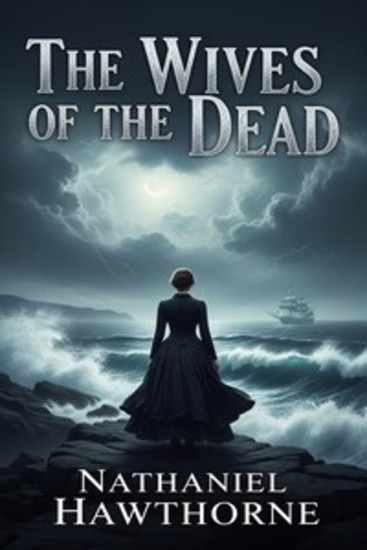
The Wives of the Dead - cover

The Wives of the Dead

Nathaniel Hawthorne

Publisher: Bu Classics Books

  • 0
  • 0
  • 0

Summary

In a rain-drenched coastal town, two widows navigate the agonizing uncertainty of loss and the flickering hope of a miracle. This somber, atmospheric sketch captures the visceral sting of grief and the psychological toll of a life defined by the sea. The narrative oscillates between the warmth of a dream and the cold reality of bereavement. Hawthorne delivers a poignant meditation on the fragile bonds that connect the living and the dead.
Available since: 03/06/2026.
Print length: 10 pages.

Other books that might interest you

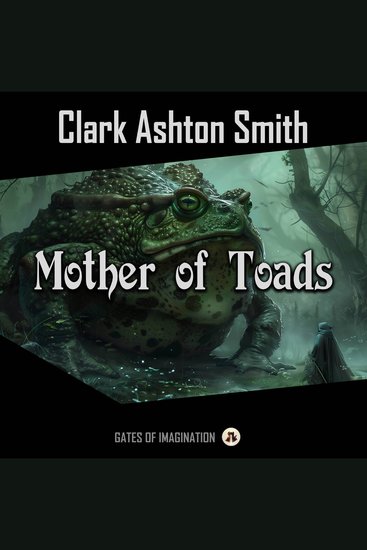
  • Mother of Toads - cover

    Mother of Toads

    Clark Ashton Smith

    • 0
    • 0
    • 0
    This audiobook is narrated by an AI Voice.  
    “Mother of Toads” is a short story by Clark Ashton Smith, originally published in the July issue of Weird Tales in 1938. The plot revolves around a young apothecary’s assistant who encounters an extraordinary witch deep in the forest. Readers are drawn into a mysterious world where magic and supernatural phenomena intertwine with human desires and fears. The tale is filled with intriguing details and unexpected twists that will captivate fans of horror and fantasy.
    Show book
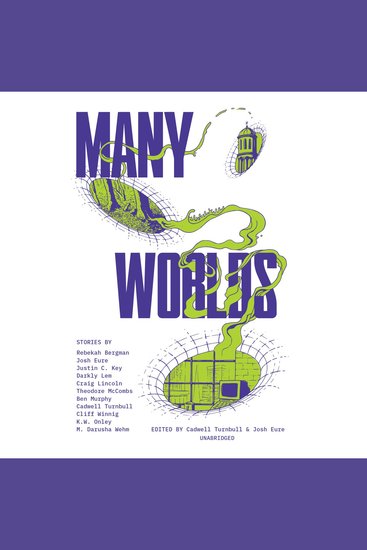
  • Many Worlds - Or the Simulacra - cover

    Many Worlds - Or the Simulacra

    Rebekah Bergman, Justin C. Key,...

    • 0
    • 0
    • 0
    Many Worlds, or The Simulacra is an anthology of reality-bending stories from a one-of-a-kind collective of authors building a shared multiverse. 
    The stories in this anthology range from quietly strange to ambitiously speculative. Humans transform into cosmic energy or sentient algae. A man wakes up in a new body in a world with continents cut out, months absent from the calendar year, and souls misplaced. Students at a high school regularly vanish without a trace. A woman descends into the depths of the ocean and encounters all-knowing creatures who may have the answers to her deepest questions. 
    Mech-suits and parallel selves, conspiracy forums and interstellar telepaths, and a mysterious cosmic force connecting it all; the stories in this collection are revelatory and offer a breathtaking portal into worlds far more mysterious than our own. 
    Subversive, transgressive, and utterly original, this collection compels the reader to believe in the fantastical. 
    Many Worlds features stories by Rebekah Bergman, M. Darusha Wehm, Craig Lincoln, alongside other fascinating voices in speculative fiction. This collection is edited by Cadwell Turnbull, author of The Lesson and No Gods, No Monsters, and Josh Eure, winner of Sundress Publications’ Best of the Net Award,
    Show book
  • Plain Pleasures - cover

    Plain Pleasures

    Jane Bowles

    • 0
    • 0
    • 0
    "The most important writer of prose fiction in modern American letters . . . Her work, her life: deep truth, observed without pretension, with humor and humanity. As artist and person, an angel." ―Tennessee WilliamsIn these uncanny and insidious tales, Jane Bowles presents an incendiary and groundbreaking vision of the mad possibilities of literary modernism. From "Everything Is Nice," where an American woman is led to a house in a "blue Moslem town" by a veiled woman with porcupines in her basket, to "Camp Cataract," a tour de force of middle-class claustrophobia and dread set in Colorado, these stories are a bewildering, headlong plunge into the jagged, fever-dream world of Jane Bowles. And for the first time ever, this collection includes the excised sections of Bowles's novel Two Serious Ladies (which was originally Three Serious Ladies).
    Show book
  • Library of the World's Best Literature Ancient and Modern volume 1 - cover

    Library of the World's Best...

    Various

    • 0
    • 0
    • 0
    The Library of the World's Best Literature, Ancient and Modern, is a work of enormous proportions. Setting out with the simple goal of offering "American households a mass of good reading", the editors drew from literature of all times and all kinds what they considered the best pieces of human writing, and compiled an ambitious collection of 45 volumes (with a 46th being an index-guide). Besides the selection and translation of a huge number of poems, letters, short stories and sections of books, the collection offers, before each chapter, a short essay about the author or subject in question. In many cases, chapters contemplate not one author, but certain groups of works, organized by nationality, subject or period; there is, thus, a chapter on Accadian-Babylonian literature, one on the Holy Grail, and one on Chansons, for example.  
     
    The result is a collection that holds the interest, for the variety of subjects and forms, but also as a means of first contact with such famous and important authors that many people have heard of, but never read, such as Abelard, Dante or Lord Byron. According to the editor Charles Dudley Warner, this collection "is not a library of reference only, but a library to be read."   
     
    This first volume contains chapters from "Abelard" to "Amiel". (Summary by Leni)
    Show book
  • The Coffin Maker - From their pens to your ears genius in every story - cover

    The Coffin Maker - From their...

    Alexander Puskin

    • 0
    • 0
    • 0
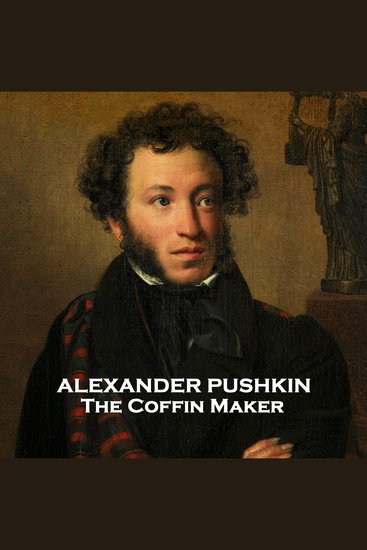
    Alexander Sergeyevich Pushkin was born on 26th May 1799 in Moscow into a family of Russian nobility. 
    Raised by nursemaids and French tutors in French he learnt Russian only via the household staff. 
    He graduated from the prestigious Imperial Lyceum, near St Petersburg and plunged into the vibrant and raucous intellectual youth culture of what was then the capital of the Russian Empire.  
    In 1820, he published his first long poem, ‘Ruslan and Ludmila’, with much controversy about both subject and style.  Pushkin was heavily influenced by the French Enlightenment and gravitated, with other literary radicals, towards social reform angering the Government. 
    His early literary work and reputation was poetic and written as he travelled around the Empire or engaged himself in various rebellions against the Ottoman Empire.  A clash with his own government after his poem, ‘Ode to Liberty’, was found among the belongings of the Decembrist Uprising rebels meant two years of internal exile at his mother's rural estate.  His friends and family continually petitioned for his release, sending letters and meeting with Tsar Alexander I and then Tsar Nicholas I.   
    In 1825, whilst at his Mother’s estate, Pushkin wrote his most famous play, the drama ‘Boris Godunov’.  
    Upon meeting with Tsar Nicholas I, Pushkin obtained his release and began work as the Tsar's Titular Counsel of the National Archives.  However, because of the earlier problems the tsar retained control of everything Pushkin published, and he was banned from travelling at will. 
    Around 1828, Pushkin met the 16-year-old Natalia Goncharova, one of the most talked-about beauties of Moscow.  After much hesitation, Natalia accepted his marriage proposal after she received assurances that the government had no intentions to persecute the libertarian poet.  When the Tsar gave Pushkin the lowest court title, Gentleman of the Chamber, he became enraged, feeling that the Tsar intended to humiliate him. 
    In the year 1831, during Pushkin's growing literary influence, he met Nikolai Gogol.  Recognising his gifts Pushkin supported him and published his short stories in his own magazine ‘The Contemporary’. 
    By the autumn of 1836, Pushkin was falling into greater and greater debt and facing scandalous rumours that his wife was having an affair.  
    In January 1837, Pushkin sent a ‘highly insulting letter’ to his wife’s pursuer, Georges-Charles de Heeckeren d'Anthès.  The only answer could be a challenge to a duel. 
    It took place on 27th January.  D'Anthès fired first, critically wounding Pushkin; the bullet entered at his hip and penetrated his abdomen.  Two days later Alexander Pushkin died of peritonitis.  He was 37.
    Show book

  • The Three Hermits - From their pens to your ears genius in every story - cover

    The Three Hermits - From their...

    Leo Tolstoy

    • 0
    • 0
    • 0
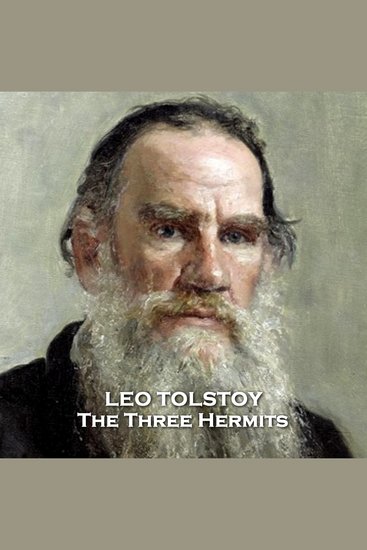
    Leo Tolstoy was born in 1828 in the Russian province of Tula to a wealthy noble family. As a child, he had private tutors but he showed little interest in any formal education. When he went to the University of Kazan in 1843 to study oriental languages and law, he left without completing his courses.  Life now was relaxed and idle but with some writing also taking place.  Gambling debts forced an abrupt change of path and he joined the army to fight in the Crimean War.  He was commended for his bravery and promoted but was appalled at the brutality and loss of life.  He recorded these and other earlier experiences in his diaries which formed the basis of several of his works. 
    In 1852 ‘Childhood’ was published to immediate success and was followed by ‘Boyhood’ and ‘Youth’. 
    His experience in the army and the horrors he witnessed resulted in ‘The Cossacks’ in 1862 and the trilogy ‘Sevastopol Tales’. After the war he travelled around Europe, visiting London and Paris and meeting such luminaries as Victor Hugo and Charles Darwin.  
    It was now that Tolstoy began his masterpiece, ‘War and Peace’. Published in 1869 it was an epic work that changed literature. He quickly followed this with ‘Anna Karenina’.  
    These successes made Tolstoy rich and helped him accomplish many of his dreams but also brought problems as he grappled with his faith and the lot of the oppressed poor. These revolutionary views became so popular that the authorities now kept him under surveillance.  
    He led a life of asceticism and vegetarianism and put his socialist ideals into practice by establishing numerous schools for the poor and food programmes. He also believed in giving away his wealth, which caused much discord with his wife.  
    His writing continued to bring forth classics such as ‘The Death of Ivan Ilyich’ and many brilliant and incisive short stories such as ‘How Much Land Does A Man Need’.  
    In 1901 Tolstoy was excommunicated from the Church and controversially deselected for the Nobel Prize for Literature. 
    Whilst undertaking a pilgrimage by train in October 1910 with his daughter Aleksandra he caught pneumonia in the nearby town of Astapovo.  Leo Tolstoy died on November 9th, 1910, he was 82.
    Show book