Join us on a literary world trip!
Add this book to bookshelf
Grey
Write a new comment Default profile 50px
Grey
Subscribe to read the full book or read the first pages for free!
All characters reduced
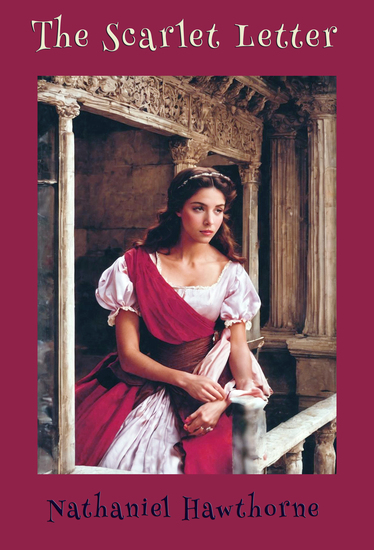
The Scarlet Letter - cover

The Scarlet Letter

Nathaniel Hawthorne

Publisher: E-Kitap Projesi & Cheapest Books

  • 0
  • 0
  • 0

Summary

The Scarlet Letter is an 1850 romantic work of fiction in a historical setting, written by Nathaniel Hawthorne, and is considered to be his magnum opus. Set in 17th-century Puritan Boston, Massachusetts, during the years 1642 to 1649, it tells the story of Hester Prynne, who conceives a daughter through an affair and struggles to create a new life of repentance and dignity. Throughout the book, Hawthorne explores themes of legalism, sin, and guilt.

The experience of Hester and Dimmesdale recalls the story of Adam and Eve because, in both cases, sin results in expulsion and suffering. But it also results in knowledge – specifically, in knowledge of what it means to be immoral. For Hester, the Scarlet Letter is a physical manifestation of her sin and reminder of her painful solitude. She contemplates casting it off to obtain her freedom from an oppressive society and a checkered past as well as the absence of God.

Because the society excludes her, she considers the possibility that many of the traditions held up by the Puritan culture are untrue and are not designed to bring her happiness.

As for Dimmesdale, the "cheating minister", his sin gives him "sympathies so intimate with the sinful brotherhood of mankind, so that his chest vibrate[s] in unison with theirs."

His eloquent and powerful sermons derive from this sense of empathy. The narrative of the Reverend Arthur Dimmesdale is quite in keeping with the oldest and most fully authorized principles in Christian thought. His "Fall" is a descent from apparent grace to his own damnation; he appears to begin in purity but he ends in corruption. The subtlety is that the minister's belief is his own cheating, convincing himself at every stage of his spiritual pilgrimage that he is saved.

The rose bush's beauty forms a striking contrast to all that surrounds it – as later the beautifully embroidered scarlet "A" will be held out in part as an invitation to find "some sweet moral blossom" in the ensuing, tragic tale and in part as an image that "the deep heart of nature" (perhaps God) may look more kind on the errant Hester and her child than her Puritan neighbors do.

Throughout the work, the nature images contrast with the stark darkness of the Puritans and their systems.

Chillingworth's misshapen body reflects (or symbolizes) the anger in his soul, which builds as the novel progresses, similar to the way Dimmesdale's illness reveals his inner turmoil. The outward man reflects the condition of the heart; an observation thought to be inspired by the deterioration of Edgar Allan Poe, whom Hawthorne "much admired".
Available since: 02/02/2024.
Print length: 400 pages.

Other books that might interest you

  • The House in the Orchard - cover

    The House in the Orchard

    Elizabeth Brooks

    • 0
    • 0
    • 0
    When a World War II widow inherits a dilapidated English estate, she uncovers a diary written by an adolescent girl named Maude Gower. Looking for answers, she begins reading, only to unravel more questions about the mysterious past and many secrets hidden deep within the walls of Orchard House. 


    In 1876, orphaned Maude is forced to leave London, and her adored brother, Frank, to live with a stranger. Everyone—especially Frank—tells her not to trust Miss Greenaway, the enigmatic owner of Orchard House, but Maude can't help warming to her new guardian. Encouraged by Miss Greenaway, Maude finds herself discovering who she is for the first time, and learning to love her new home. But when Frank comes for an unexpected visit, the delicate balance of Maude's life is thrown into disarray. Complicating matters more, Maude witnesses an adult world full of interactions she cannot quite understand. Her efforts to regain control result in a violent tragedy, the repercussions of which will haunt Orchard House for the rest of Maude's life—and beyond. 


    With each psychologically gripping turn, Elizabeth Brooks masterfully explores the blurred lines between truth and manipulation, asking us who we can trust, how to tell guilt from forgiveness, and whether we can ever really separate true love from destruction.
    Show book
  • The Children's Train - Escape on the Kindertransport - cover

    The Children's Train - Escape on...

    Jana Zinser

    • 0
    • 0
    • 0
    This compelling Holocaust action adventure story tells of bravery, sacrifice, and the survival of the human spirit against Hitler and the horrors of war."Gripping and impossible to put down. I cried several times throughout. Perfect ending, emotional but complete." - Goodreads reviewIt begins in November 1938 on The Night of the Broken Glass, when Jewish people of Germany are terrified as Hitler's men shatter their store windows, steal and destroy their belongings, and arrest many Jewish fathers and brothers.Parents face unparalleled fear for their own lives but their focus is on protecting their beloved children.When England arranges to take the children out of Germany by train, the Kindertransport is organized and parents scramble to get places on the trains for their young family members, worried about what the future will hold.Soon, trains filled with Jewish children escaping the Nazis chug over the border into Holland, where they are ferried across the English Channel to England and to freedom. But for Peter, the shy violin player, his sister Becca, and his friends Stephen and Hans, life in England holds challenges as well. Peter's friend Eva, who did not get a seat on the Kindertransport, is left to the evil plans of Hitler.Peter, working his musician's hands raw at a farm in Coventry, wonders if they should have stayed and fought back instead of escaping. When the Coventry farm is bombed as the Nazis reach England, Peter feels he has nothing left. He decides it's time to stand and fight Hitler.Peter courageously returns to Germany to join the Jewish underground resistance, search desperately for his mother and sister he left behind in Berlin, and try to rescue his friend Eva."A beautifully written book. Sadly, the historical details are true and this makes the story all the more poignant. At times heartbreaking, at times hopeful and optimistic, this book will stay with the reader for a long time. The author is definitely one to watch" ~ Dorothy M Calderwood (Media Professional) for NetGalley". . . Jana Zinser brilliantly expresses the horror, confusion and fear that not only Peter but the other children in the novel are feeling and thinking when witnessing the atrocities by the Nazis . . When I began this book I thought that I had quite a lot of knowledge about the Holocaust but I was surprised to learn about the Kindertransport children. Although this novel is fiction, the Kindertransport was not and I will never forget about the ones that made it on those trains and also the ones who did not . . ." - Amanda - NetGalley and Goodreads reviews". . . The Children's Train by Jana Zinser absolutely blew me away! Heartbreaking, terrifying and traumatic it was also filled with hope and courage, determination and inspiration. Over six million Jews died at the hands of the Nazis and many of them were children. Though The Children's Train is fiction, the sad and tragic truth stands out and stays with you. I know this book will stay with me! The Children's Train is an absolute credit to this author and I have no hesitation in recommending it extremely highly. . . " - Brenda, Goodreads review"I'm positive that I held my breath for most of this book. I wouldn't be surprised if I'd held my breath for the entire time I'd been reading this. This book was so unlike any other I've read. It's gripping, powerful, heartbreaking and intense --- so, so, so intense . . . I honestly have no words right now; this book was amazing and thrilling, and so sad." - Leah, Goodreads review 
    Show book
  • The Weeds - cover

    The Weeds

    Katy Simpson Smith

    • 0
    • 0
    • 0
    A Mississippi woman pushes through the ruin of the Roman Colosseum, searching for plants. She has escaped her life, apprenticed herself to catalog all the species growing in this place. Crawling along the stones, she wonders how she has landed here, a reluctant botanist amid a snarl of tourists in comfortable sandals. She hunts for a scientific agenda and a direction of her own. In 1854, a woman pushes through the jungle of the Roman Colosseum, searching for plants. As punishment for her misbehavior, she has been indentured to the English botanist Richard Deakin, for whom she will compile a flora. She is a thief, and she must find new ways to use her hands. If only the woman she loves weren’t on a boat, with a husband. But love isn’t always possible. She logs 420 species. Through a list of seemingly minor plants and their uses?medical, agricultural, culinary?these women calculate intangible threats: a changing climate, the cost of knowledge, and the ways repeated violence can upend women’s lives. They must forge their own small acts of defiance and slip through whatever cracks they find. How can anyone survive? Lush, intoxicating, and teeming with mischief, The Weeds is a tense, mesmerizing page-turner about science and survival, the roles women are given and have taken from them, and the lives they make for themselves.
    Show book
  • Lizzie's Recalcitrant Earl - cover

    Lizzie's Recalcitrant Earl

    Fiona Miers

    • 0
    • 0
    • 0
    Widows are safe for this rakehell to bed… …until he meets the one widow he can’t forget. 
    Lizzie Somers is a widow with means. But instead of retiring to her country estate, she’s off to London in search of a husband. She’s certain she needs a respectable, faithful man to give her the family she desperately desires. Until she meets notorious rake, Rupert Willoughby. He’s the opposite of what she wants, but exactly what she needs. And her heart leaps before her head can catch up. 
    Rupert Willoughby dedicated his youth to becoming the worst possible candidate for Earl, a title he never wanted. Not only does he have a reputation for drinking, and frequenting ladies of the night, but he has the muscles of a pugilist. Most unbecoming of a gentleman. He thought he’d secured his freedom, but nothing can scare away the matchmaking mamas and eligible ladies of the ton. Society expects him to marry. He needs a wife he can wed, bed and forget. Then Lizzie enters his world and stamps herself onto his heart. 
    Rupert’s found a woman he wants to love forever… but can he be the man his beloved Lizzie deserves?
    Show book
  • Cascades of Time: Book summary & analysis - cover

    Cascades of Time: Book summary &...

    Margot Langley

    • 0
    • 0
    • 0
    This content is an independent and unofficial summary created for informational and educational purposes only. It is not affiliated with, authorized, approved, licensed, or endorsed by the original author or publisher. All rights to the original work belong to its respective copyright holders. This summary is not intended to substitute the original book, but to offer a concise overview and interpretation of its main ideas. 
    Cascades of Time is a mesmerizing journey through memory, fate, and the hidden threads that bind past and future. When a brilliant but reclusive historian stumbles upon a forgotten artifact capable of bending time, she is swept into a cascade of shifting realities—each revealing a different version of her life, her choices, and the world around her. As timelines collide and echoes of ancient civilizations resurface, she must navigate a labyrinth of secrets, sacrifice, and truth to preserve what truly matters. Poetic, thought-provoking, and emotionally resonant, Cascades of Time is a spellbinding tale for listeners who crave science-tinged fantasy, introspective adventure, and stories where time itself becomes the greatest mystery of all.
    Show book
  • Skull River - cover

    Skull River

    Pip Fioretti

    • 0
    • 0
    • 0
    In a fading gold town, the seams of violence run deep. 
     
    'I was like a man washed ashore on an island, half mad and only my warrant card and blood-soaked uniform to vouch for me. But I had to act as if I knew what the hell to do.' 
     
    In Autumn of 1912, mounted trooper Augustus Hawkins arrives at his new post in the fading gold town of Colley, NSW. On his first day, he is ambushed by a hidden gunman, his junior officer is killed before his eyes, and he escapes back to town to find the police station burning to the ground. Someone has it in for the mounted troopers. 
    A traumatised veteran of the Boer War, and a stranger to Colley, Hawkins is deeply shaken and ill-equipped to solve the case. But with only green troopers and a drunken, incompetent detective available to hunt down the murderer, he is forced to take the lead. Soon he finds that Colley hides a lot more than gold beneath its surface, for anyone who knows where to dig. 
    In Skull River, Gus Hawkins returns for a gripping and immersive hunt through a small town at the edge of a troubled empire. With black humour, Fioretti weaves a story that's both a cracking murder mystery and a razor-sharp portrayal of a country on the verge of transformation.
    Show book