Join us on a literary world trip!
Add this book to bookshelf
Grey
Write a new comment Default profile 50px
Grey
Subscribe to read the full book or read the first pages for free!
All characters reduced
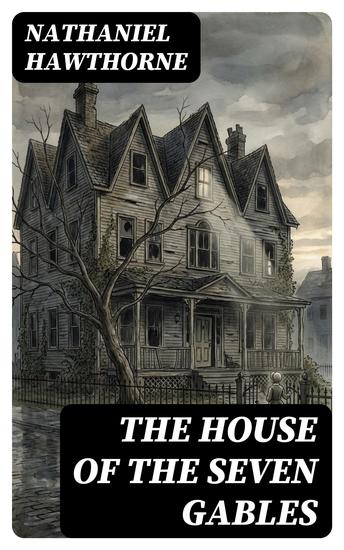
The House of the Seven Gables - Enriched edition - cover

The House of the Seven Gables - Enriched edition

Nathaniel Hawthorne

Publisher: DigiCat

  • 0
  • 0
  • 0

Summary

Nathaniel Hawthorne's "The House of the Seven Gables" intricately weaves a tale of guilt, retribution, and the haunting specter of the past. Set against the backdrop of a decaying, ancestral mansion in Massachusetts, the novel employs a rich, descriptive style akin to gothic romance, infusing the narrative with themes of hereditary sin and moral decay. Hawthorne's use of symbolism—epitomized by the house itself—encapsulates the entrapment of its inhabitants in their familial legacies, while his contemplative prose invites readers to explore deeper psychological truths within the narrative structure. Hawthorne, who descended from one of the early Puritan settlers, drew upon his own ancestral history and fascination with the complexities of human nature and evil. This personal connection to themes of social judgment and historical consequence illuminates his purpose in creating a richly layered work that critiques the moral dilemmas faced by individuals within a community. The author's unique context as a 19th-century American writer, alongside his interest in his family's legacy, profoundly influences the character arcs and setting of this haunting tale. I highly recommend "The House of the Seven Gables" to readers who appreciate a nuanced exploration of themes such as guilt and family dynamics, encapsulated in a stylistically fulfilling narrative. Hawthorne offers a masterclass in blending moral allegory with intricate character development, making this novel a cornerstone of American literature, one that resonates with anyone captivated by the interplay of history and human experience.

In this enriched edition, we have carefully created added value for your reading experience:
- A succinct Introduction situates the work's timeless appeal and themes.
- The Synopsis outlines the central plot, highlighting key developments without spoiling critical twists.
- A detailed Historical Context immerses you in the era's events and influences that shaped the writing.
- An Author Biography reveals milestones in the author's life, illuminating the personal insights behind the text.
- A thorough Analysis dissects symbols, motifs, and character arcs to unearth underlying meanings.
- Reflection questions prompt you to engage personally with the work's messages, connecting them to modern life.
- Hand‐picked Memorable Quotes shine a spotlight on moments of literary brilliance.
- Interactive footnotes clarify unusual references, historical allusions, and archaic phrases for an effortless, more informed read.
Available since: 05/17/2022.
Print length: 334 pages.

Other books that might interest you

  • The Art Of Money Getting - The Original Manuscript - cover

    The Art Of Money Getting - The...

    P. T. Barnum

    • 0
    • 0
    • 0
    The Art of Money Getting was written by P. T. Barnum, who is widely known as an important historical entrepreneur as founder of the famous traveling circus, but in this publication, Barnum shares his knowledge of business and teaches readers how to be successful in making money. This is an excellent book for individuals who are interested in learning from an important historical business leader's own personal success and also serves as an excellent motivational writing intended for those looking to be successful and make lots of money. 
     
    Phineas Taylor Barnum was an American showman, businessman, and politician remembered for promoting celebrated hoaxes and founding the Barnum & Bailey Circus with James Anthony Bailey.
    Show book
  • Morality of the Profession of Letters The (Unabridged) - cover

    Morality of the Profession of...

    Robert Louis Stevenson

    • 0
    • 0
    • 0
    Robert Louis Stevenson was a Scottish novelist, essayist, poet and travel writer. Born and educated in Edinburgh, Stevenson suffered from serious bronchial trouble for much of his life, but continued to write prolifically and travel widely in defiance of his poor health. As a young man, he mixed in London literary circles, receiving encouragement from Andrew Lang, Edmund Gosse, Leslie Stephen and W. E. Henley, the last of whom may have provided the model for Long John Silver in Treasure Island.
    THE MORALITY OF THE PROFESSION OF LETTERS: The profession of letters has been lately debated in the public prints; and it has been debated, to put the matter mildly, from a point of view that was calculated to surprise high-minded men, and bring a general contempt on books and reading.
    Show book
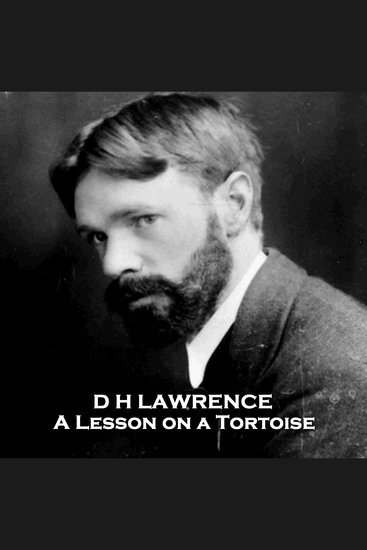
  • A Lesson on a Tortoise - From their pens to your ears genius in every story - cover

    A Lesson on a Tortoise - From...

    D H Lawrence

    • 0
    • 0
    • 0
    David Herbert Lawrence was born on the 11th September 1885 in Eastwood, Nottinghamshire, a coal mining town where the reality of a harsh life was only useful as experiences for future literary works. 
    He was educated at Beauvale Board School and became the first local boy to receive a scholarship to attend Nottingham High School. After 3 years he became a junior clerk in Haywood’s surgical appliances factory. He was also attempting a literary career which, in the short term, led to a teacher training position in Eastwood and later a teaching qualification from University College, Nottingham.  
    Lawrence’s first efforts were poems, short stories and a draft of ‘The White Peacock’. Moving to London and a teaching position in Croydon his writing attracted the attention of Ford Madox Ford, editor of The English Review, and he commissioned him to write ‘Odour of Chrysanthemums’.  
    Wanting to write full-time he now began work on what would become ‘Sons and Lovers.   
    In 1912 he met the older and married mother-of-three Frieda Weekley. They eloped to Germany and here Lawrence could see for himself the growing tensions with France.  So keen was his interest that he was arrested and accused of being a British spy.  
    In early 1914 Frieda obtained her divorce and they returned to Britain to be married just days before the outbreak of war. Owing to her German parentage, and his own public dislike of militarism and violence, the couple were treated with contempt and suspicion throughout the war years.  
    Despite this he continued to write but his reputation in England was so tarnished and, mirrored by his own disdain for the country, he and Frieda left England in November 1919, first for Europe and then America via Ceylon and Australia. 
    They bought a ranch in Taos, New Mexico and visited Mexico several times. The third visit in March 1925 caused a near fatal attack of malaria. To convalesce they moved to Florence. Here he continued work on ‘Lady Chatterley’s Lover’ which for many years would cause controversy. A renewed interest in oil painting resulted in an exhibition in 1929 which was raided by the police and several works were confiscated.  
    D H Lawrence died of complications arising from a bout of tuberculosis on the 2nd of March 1930 in Vence, France.  He was 44.
    Show book
  • Christmas and Other Stories - cover

    Christmas and Other Stories

    G. K. Chesterton

    • 0
    • 0
    • 0
    "Christmas and Other Stories" by G. K. Chesterton is a delightful collection that delves into the spirit of the holiday season through a series of thought-provoking and heartwarming tales. With Chesterton's signature wit and keen insight, each story explores themes of faith, joy, and human nature. From festive gatherings to reflective moments, the narratives capture the essence of Christmas and its impact on individuals and communities. This compilation offers a blend of humor, warmth, and profound reflections, making it a perfect read for the holiday season.
    Show book
  • The Importance of Being Earnest - First Draft - cover

    The Importance of Being Earnest...

    Oscar Wilde

    • 0
    • 0
    • 0
    "The Importance of Being Earnest" is a comedic play written by Oscar Wilde, first performed in 1895. Regarded as one of Wilde's masterpieces, the play is celebrated for its wit, humor, and satirical examination of the social conventions and manners of the Victorian era. The plot revolves around the lives of two friends, Algernon Moncrieff and Jack Worthing. To escape social obligations and responsibilities, both men create fictional identities. Algernon invents an imaginary friend named "Bunbury," whom he uses as an excuse to avoid unwelcome social events. On the other hand, Jack assumes the identity of "Ernest" whenever he wishes to engage in more adventurous and carefree pursuits in the city.The central conflict arises when both Algernon and Jack become romantically involved with women who are attracted to the name "Ernest." Gwendolen Fairfax, Jack's love interest, is enamored with the idea of marrying a man named Ernest, while Algernon's romantic pursuit, Cecily Cardew, shares the same sentiment. The play cleverly exploits the comedic potential of mistaken identities, love affairs, and the absurdity of social expectations. Wilde's razor-sharp wit is evident in the dialogue, filled with epigrams, puns, and clever wordplay. The characters engage in delightful banter, and the play satirizes the trivialities of upper-class society while highlighting the importance placed on appearances and social status. "The Importance of Being Earnest" is known for its comedic absurdity, intricate plot twists, and exploration of the theme of identity. Beyond the surface-level humor, Wilde uses the play to critique the hypocrisy and artificiality of societal norms, exposing the ridiculousness of the characters' obsessions with names and titles.
    Show book
  • The Picture of Dorian Gray - cover

    The Picture of Dorian Gray

    Oscar Wilde

    • 0
    • 0
    • 0
    The Picture of Dorian Gray is Oscar Wilde's only novel and one of the most provocative masterpieces of classic literature. First published in 1890, this haunting and philosophical work explores the dark consequences of vanity, moral corruption, and the pursuit of pleasure, offering a powerful meditation on beauty, identity, and the soul.
    
    The novel tells the story of Dorian Gray, a young man of extraordinary beauty whose portrait ages and records the marks of his sins while he himself remains outwardly youthful and unblemished. Influenced by the charismatic and cynical Lord Henry Wotton, Dorian embraces a life devoted to sensation and self-indulgence, gradually descending into moral decay. As his actions grow increasingly cruel and destructive, the hidden portrait becomes a terrifying mirror of his inner self.
    
    Through elegant prose and brilliant wit, Wilde challenges Victorian ideas of morality, art, and respectability. The novel raises enduring questions about the nature of good and evil, the cost of aestheticism, and whether a life devoted solely to pleasure can escape accountability. Rich in symbolism and philosophical insight, the story balances Gothic elements with sharp social satire.
    
    The Picture of Dorian Gray shocked contemporary audiences with its bold themes, yet it has endured as a timeless exploration of human desire and ethical responsibility. Its memorable characters, haunting imagery, and epigrammatic dialogue continue to captivate readers and inspire debate.
    
    A cornerstone of English literature, The Picture of Dorian Gray is essential reading for lovers of classic fiction, psychological drama, and philosophical novels. It is a compelling and unsettling tale that reminds readers that beauty without conscience leads inevitably to ruin.
    Show book