Join us on a literary world trip!
Add this book to bookshelf
Grey
Write a new comment Default profile 50px
Grey
Subscribe to read the full book or read the first pages for free!
All characters reduced
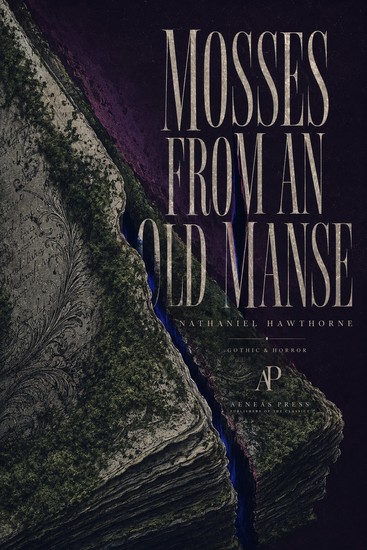
Mosses from an Old Manse - Rappaccini's Daughter Young Goodman Brown and Other Tales - cover

Mosses from an Old Manse - Rappaccini's Daughter Young Goodman Brown and Other Tales

Nathaniel Hawthorne

Publisher: Aeneas Press

  • 0
  • 0
  • 0

Summary

Twenty-odd tales written in a damp parsonage where Emerson had lived before him — a scientist who erases his wife's birthmark, a young Puritan who walks into the forest at night and finds his whole village there, a garden whose beauty is fatal. Hawthorne descended from a judge at the Salem witch trials and never got over it; the allegories here are his laboratory. Fifty-eight plates of rivers, moonlight, and mountain weather by painters including J. M. W. Turner and John Berney Crome give these tales of conscience and shadow their natural element.
Available since: 07/22/2026.
Print length: 495 pages.

Other books that might interest you

  • True manliness from the writings of thomas hughes - cover

    True manliness from the writings...

    Thomas Hughes

    • 0
    • 0
    • 0
    Having somewhat rashly consented to write a short biographical preface to a volume of selections to be made in America from the writings of my friend, Mr. Hughes, I applied to him directly for the needful facts and dates. His answer was an autobiographical letter which I found so interesting that I resolved to print it, omitting only a few intimate allusions natural in such a communication, but with which the public has nothing to do. My temptation was the greater that the letter was not intended for publication, and had, therefore, that charm of unpremeditated confidence which is so apt to be wanting in more deliberate autobiographies. I cannot consult him, (and I confess that I purposely waited till I could not) for he is already at sea, on his way to America, and I fear that friendship may have tempted me to an unwarrantable liberty, but I could not bring myself, even at the risk of seeming indiscreet, to deny to others what had given me so much pleasure. At any rate, the indiscretion is wholly my own and in direct violation of the injunction with which Mr. Hughes' letter concludes: "I hate the idea of being presented in any guise to any public; so if you can't squelch the plan altogether, give only the driest and meagrest facts and dates." I feel somewhat as if I had been reporting a private conversation, and take upon myself in advance all the reproach that belongs of right to that scourge and desecrator of modern life, the "Interviewer." For the first time, I look forward with dread to my next meeting with an old friend, after having thus practised the familiar stage device of putting the right letter into the wrong cover. As the brief record of a well-spent and honorable life, devoted to unselfish ends and associated with notable friendships, Mr. Hughes' letter has a higher than merely personal interest. Of any critical introduction to American readers no one could stand in less need than he. The same qualities of manliness, frankness, simplicity and sympathy, with whatever is generous and humane, that gave and continue to "Tom Brown" a success that may be compared with that of "Robinson Crusoe," are not wanting in his other works.
    Show book
  • Midsummer Night in the Workhouse - cover

    Midsummer Night in the Workhouse

    Diana Athill

    • 0
    • 0
    • 0
    A woman trapped in an agonising love affair; a writer avoiding the group seducer at a writers’ retreat; a girl experiencing her first kiss. Set in 1950s England, as well as Italy and France, Midsummer Night in the Workhouse is a collection of short stories written and read  by distinguished editor and author, Diana Athill. Written in the late 1950s, these short stories mainly centre around female protagonists. Several stories are based on events from Athill’s own life. From holidays abroad to love affairs and sexual encounters, these brilliant, touching narratives provide subtle snapshots of human experiences and stage portrayals of memory, conflict and adventure. Midsummer Night in the Workhouse is part of the Persephone Audiobook Collection, a series of forgotten classics including neglected fiction and non-fiction by women writers. First published in 1962, this edition includes a preface by the author.
    Show book
  • The Eclogues - cover

    The Eclogues

    Virgil

    • 0
    • 0
    • 0
    Virgil’s Eclogues (also known as Bucolics) is a collection of ten pastoral poems that idealize rural life in the Italian countryside. Written in the tradition of Greek bucolic poetry, particularly inspired by Theocritus, the Eclogues depict shepherds singing, competing in poetic contests, and lamenting lost love and displacement. Set against the backdrop of civil unrest and land confiscations in 1st-century BCE Rome, the poems blend idyllic imagery with subtle political commentary. Figures of hope, such as the prophesied birth of a divine child in the Fourth Eclogue, reflect contemporary longing for peace and renewal. Through lush language and elegant form, Virgil explores themes of love, loss, nature’s beauty, and the contrast between urban turmoil and rural harmony. The Eclogues established the pastoral tradition in Western literature, influencing poets for centuries with their lyrical grace and emotional depth.
    Show book
  • Christmas Carol by Charles Dickens A - A Radio Drama - Adapted from the novel by Joanna O'Connor - cover

    Christmas Carol by Charles...

    Joanna O'Connor

    • 0
    • 0
    • 0
    The complete audio play of Charles Dickens' glorious festive classic 'A Christmas Carol.' Ebenezer Scrooge is spending Christmas Day alone, in his Counting House, as usual. Or so he thinks. After decades of generally being rather a mean old misery, he’s built up quite an escrow of karmic debt. Enter the ghost of old Jacob Marley, our hero’s former partner in skin-flinting, who has arranged the opportunity of a lifetime for his friend; a visit from three different Spirits - Christmases Past, Present and Future - who hope to guide their night-shirted charge to a broader understanding of love, true wealth and shared humanity. But will Scrooge resist? Will he decide - after all - to stay as he is, too set in his ways to change? Or will he embrace this great gift of transformation with both hands and open his heart to life, friendship and the true meaning of Christmas?
    Show book
  • The Great Gatsby - cover

    The Great Gatsby

    Francis Scott Fitzgerald

    • 0
    • 0
    • 0
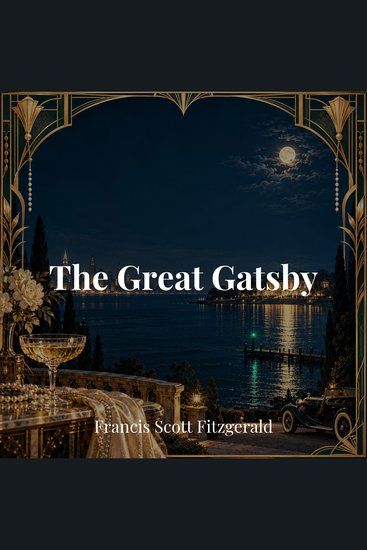
    This audiobook is narrated by an AI Voice. 
    What if the brightest lights of wealth only made desire more impossible to reach? 
     
    In *The Great Gatsby*, F. Scott Fitzgerald creates one of the defining novels of the Jazz Age: a luminous, tragic vision of ambition, illusion, love, class, and the American Dream. First published in 1925, the novel follows Nick Carraway as he enters the glittering world of Long Island wealth and becomes drawn into the mystery of his neighbor, Jay Gatsby. 
     
    Gatsby’s parties blaze with music, champagne, fashion, and restless longing. Yet behind the mansion lights stands a man devoted to a dream fixed across the bay: Daisy Buchanan, the green light, and the hope that the past can be remade by will, money, and desire. Around him, Fitzgerald reveals a world of charm and carelessness, where beauty conceals moral emptiness and romance is shadowed by class, status, and loss. 
     
    The novel endures because it turns one man’s longing into a portrait of a nation’s dream. Its elegance, symbolism, and melancholy continue to shape how readers understand wealth, self-invention, nostalgia, and the dangerous promise of reinvention. 
     
    This AI-narrated audiobook offers a clear, polished, and immersive listening experience, bringing Fitzgerald’s lyrical prose, social irony, glittering atmosphere, and tragic undertone to life with refined clarity. 
     
    Enter the moonlit parties, follow the green light across the water, and discover the classic that made longing itself unforgettable.
    Show book

  • How Old Tomofei Died Singing - From their pens to your ears genius in every story - cover

    How Old Tomofei Died Singing -...

    Rainer Maria Rilke

    • 0
    • 0
    • 0
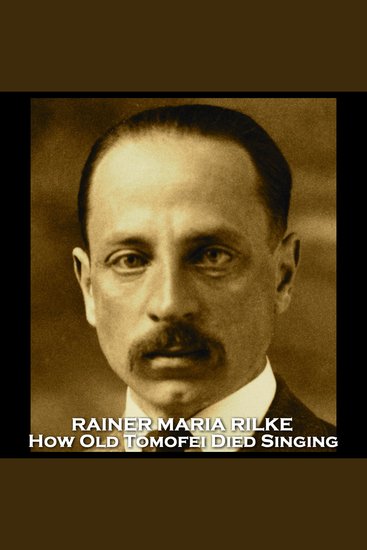
    René Karl Wilhelm Johann Josef Maria Rilke was born into a troubled marriage on the 4th December 1875 in Prague, then part of the Austro-Hungarian Empire.  His mother, having previously lost a baby girl, would dress the young boy up in girl’s clothing.   
    Later his father dispatched him to a military academy at age 10 but after a miserable 5 years the young Rilke left due to illness and instead entered first Prague and then Munich and finally Berlin university to study art history, philosophy and literature. 
    His initial forays into literature was in poetry.  His intense, mystical and lyrical style was much admired and over time inspired many in succeeding generations.    
    His short prose collection ‘Stories of God’, written in an impassioned burst over several nights was published in 1900 and offers a beguiling view of much of Rilke’s influences and outlook.  
    The following year he married the pioneering sculptor and artist Clara Westhoff.  The union produced one child, a daughter Ruth.   
    He lived in Paris for most of the Century’s first decade where he mixed with many great minds of the time.  Although he continued to write he also worked as a secretary to the sculptor, Rodin.   
    It was only after they settled in Switzerland in 1919 that his writing output was in full flow.  Here he wrote profusely in both German and French, which included much on his previous travels, his left-wing sympathies, his religious and existential thoughts, all part of a unique and consummate style. 
    From 1923 on, Rilke increasingly struggled with his health which was now in constant decline and often spent time rehabilitating at a sanatorium.   
    Rainer Maria Rilke died of leukaemia on the 29th December 1926 in Montreux, Switzerland.  He was 51.
    Show book