In Colonial Days
Nathaniel Hawthorne
Editorial: Carousel Books
Sinopsis
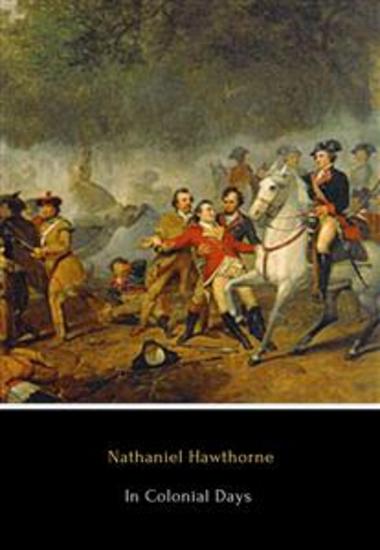
Four tales take place in the colonial Province House, Massachusetts, where Britain's last governors and governesses exchange tales as the Empire crumbles.
Editorial: Carousel Books
Four tales take place in the colonial Province House, Massachusetts, where Britain's last governors and governesses exchange tales as the Empire crumbles.
Who doesn’t love to listen to a terrific tale?! Yep, you’ve come to the right place for a whole host of Horridly Terrific Tales with this collection of 11 Horrid Henry super stories, perfectly performed by the show's full cast. Can you have too much of a Horrid thing, are all dentists demons and how scary was that scooter?! No, no and massively scary so let’s turn up the Horrid and enjoy these classic stories with "Ludicrously Lucky Lottery", "Grown Ups", "House of Henry", "True Story", "Operation Stink", "Got The Message", "Raid Of The Century", "Awful Author", "Demon Dentist", "Double Trouble" and "Scary Scooter". Horridly Brilliant or Brilliantly Horrid? You decide!!Ver libro
From the barren rocks of Aden to the west coast of Ireland, the war under the sea is subverting the certainties of the Victorian Navy. While the dreadnoughts hide away at Scapa Flow and Kiel, the submarines and small ships of both sides are taking the war to the enemy coast. The Royal Navy is at war with itself and, as in any civil war, the conflict is merciless.Gilbert Maltravers takes his tiny E Class boat to war against both navies in this final book of the trilogy.Ver libro
When a terminally ill woman dies much earlier than expected, Lord Peter Wimsey suspects murder: "First-rate detection" (The Cincinnati Enquirer).Though never quick-witted, Agatha Dawson had an iron constitution and a will to fight that never abated in her old age. Even after three operations failed to rid her of her cancer, she refused to give in. But as her body began to weaken, she accused lawyers, nurses, and doctors of trying to kill her and snatch her fortune. The town physician, an expert in cancer, gives her six months to live. Only three days later, she is dead. Though the autopsy reveals nothing surprising, the doctor suspects that Agatha's niece had some hand in the old woman's death. When Lord Peter Wimsey, the dashing gentleman detective, looks into the matter, he finds that death stalks all those who might testify. How can he continue his investigation when every question marks another innocent for murder? Unnatural Death is the 3rd book in the Lord Peter Wimsey Mysteries, but you may enjoy the series by reading the books in any order.Ver libro
David Herbert Lawrence was born on the 11th September 1885 in Eastwood, Nottinghamshire, a coal mining town where the reality of a harsh life was only useful as experiences for future literary works. He was educated at Beauvale Board School and became the first local boy to receive a scholarship to attend Nottingham High School. After 3 years he became a junior clerk in Haywood’s surgical appliances factory. He was also attempting a literary career which, in the short term, led to a teacher training position in Eastwood and later a teaching qualification from University College, Nottingham. Lawrence’s first efforts were poems, short stories and a draft of ‘The White Peacock’. Moving to London and a teaching position in Croydon his writing attracted the attention of Ford Madox Ford, editor of The English Review, and he commissioned him to write ‘Odour of Chrysanthemums’. Wanting to write full-time he now began work on what would become ‘Sons and Lovers. In 1912 he met the older and married mother-of-three Frieda Weekley. They eloped to Germany and here Lawrence could see for himself the growing tensions with France. So keen was his interest that he was arrested and accused of being a British spy. In early 1914 Frieda obtained her divorce and they returned to Britain to be married just days before the outbreak of war. Owing to her German parentage, and his own public dislike of militarism and violence, the couple were treated with contempt and suspicion throughout the war years. Despite this he continued to write but his reputation in England was so tarnished and, mirrored by his own disdain for the country, he and Frieda left England in November 1919, first for Europe and then America via Ceylon and Australia. They bought a ranch in Taos, New Mexico and visited Mexico several times. The third visit in March 1925 caused a near fatal attack of malaria. To convalesce they moved to Florence. Here he continued work on ‘Lady Chatterley’s Lover’ which for many years would cause controversy. A renewed interest in oil painting resulted in an exhibition in 1929 which was raided by the police and several works were confiscated. D H Lawrence died of complications arising from a bout of tuberculosis on the 2nd of March 1930 in Vence, France. He was 44. In ‘The Horse Dealers daughter’ a young woman begins a relationship with a young doctor and a friend of her brothers. What should be straight forward is intimately investigated by Lawrence’s foraging pen.Ver libro
The $30,000 Bequest and Other Stories is a 1906 collection of 30 comic short stories by American humorist and writer Mark Twain. Published just 4 years before his death, this was the last time he chose works from throughout his career, in an effort to show the diversity of his style and the breadth and depth of his interests. (Introduction by John Greenman & Wikipedia )Ver libro
A young woman who works admissions at a scam for-profit college is navigating the lies she sells for a living when she befriends an elderly applicant. The Best Years of Your Life is a short story from Halle Hill’s Good Women, which delves into the lives of twelve Black women across the Appalachian South. Darkly funny and deeply human, Good Women observes how place, blood ties, generational trauma, obsession, and boundaries―or lack thereof―influence how we navigate our small worlds, and how those worlds so often collide in ways we don’t expect.Ver libro