Join us on a literary world trip!
Add this book to bookshelf
Grey
Write a new comment Default profile 50px
Grey
Subscribe to read the full book or read the first pages for free!
All characters reduced
The Hawaiian Literature - cover

The Hawaiian Literature

Nathaniel Bright Emerson

Publisher: DigiCat

  • 0
  • 0
  • 0

Summary

In "The Hawaiian Literature," Nathaniel Bright Emerson presents a comprehensive exploration of the narrative tapestry of Hawaii, emphasizing the interplay of culture, language, and oral traditions that define its literary landscape. Through meticulous analysis and rich detail, Emerson compiles poetry, prose, and oral histories, employing a narrative style that is both scholarly and evocative. The work not only reflects the unique Hawaiian worldview but situates it within the broader context of 19th-century literature and ethnographic study, highlighting the tensions between indigenous traditions and colonial influences. Emerson, a prominent figure in the field of Hawaiian studies, was deeply influenced by his own experiences living in Hawaii and his passion for the preservation of its cultural heritage. His scholarly background as a physician and ethnologist equipped him with a distinctive perspective that enriched his understanding of Hawaiian customs and stories. Emerson's commitment to documenting and interpreting Hawaiian literature arose from a desire to honor and safeguard a vanishing cultural identity during a time of significant social change. This seminal work is essential for anyone interested in Pacific literature, cultural anthropology, or the historical narratives of indigenous peoples. Emerson's eloquent and insightful examination invites readers to engage with the profound beauty and complexity of Hawaiian literature, urging us to recognize the power of storytelling in understanding cultural identity.
Available since: 11/13/2022.
Print length: 350 pages.
Other books that might interest you

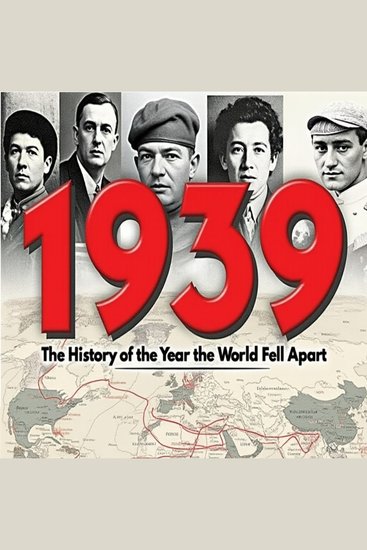
  • 1939: The History of the Year the World Fell Apart - cover

    1939: The History of the Year...

    Editors Charles River

    • 0
    • 0
    • 0
    Munich is widely reviled today and is held up as the epitome of appeasement, but historians still debate its effects on the Second World War, as well as Neville Chamberlain's character and motivations. Some believe the attempted appeasement of Nazi Germany hastened, or even caused, the mayhem occupying the next seven years. Others believe that the pact merely failed to alter war's inevitable arrival in either direction. Historians and authors alternately interpret Chamberlain as a bumbling, arrogant fool, a strong-willed statesman who simply miscalculated the nature of Hitler and Nazi Germany, or even a man with dictatorial ambitions surreptitiously inserting himself into the Fuhrer's orbit and prevented from further damaging democracy only by his fall and death from bowel cancer. Another possible interpretation, with considerable documentary support, asserts Chamberlain wished to enlist Germany's aid against the state most Europeans perceived as the true threat of the era, the Soviet Union. 
    Europe’s attempts to appease him, most notably at Munich in 1938, failed, as Nazi Germany swallowed up Austria and Czechoslovakia by 1939. Italy was on the march as well, invading Albania in April of 1939. The straw that broke the camel's back, however, was Germany's invasion of Poland on September 1 of that year. Two days later, France and Great Britain declared war on Germany, and World War II had begun in earnest. Of course, as most people now know, the invasion of Poland was merely the preface to the Nazi blitzkrieg of most of Western Europe, which would include Denmark, Belgium, and France by the summer of 1940.
    Show book
  • State of the Union 1985 - cover

    State of the Union 1985

    Ronald Reagan

    • 0
    • 0
    • 0
    The 1985 State of the Union Address delivered February 6, 1985, on Reagan’s 74th birthday, reports the strongest economic growth in 34 years, 3-year inflation of 3.9%, and more citizens working than ever before.  Despite progress Reagan notes “millions in our inner cities who long for real jobs, safe neighborhoods, and schools that truly teach” and people around the world “who struggle to break free from totalitarianism”.  
    “Our economy is not getting older and weaker; it's getting younger and stronger.” Reagan calls for further tax cuts to make America the investment capital of the world. He calls for enterprise zones, rejects policies that break up families and increase dependency, and says that “blacks, Hispanics, and all minorities will not have full and equal power until they have full economic power.” 
    “National security is government's first responsibility”. We “only have a military-industrial complex until a time of danger, and then it becomes the arsenal of democracy.” Reagan advocates the Strategic Defense Initiative against ballistic missiles as “the most hopeful possibility of the nuclear age” and looks forward to “the day when nuclear weapons are banned from this Earth forever.” Some say it will take a long time. The “answer to that is: Let’s get started.” 
    “Many countries in east Asia and the Pacific have few resources other than the enterprise of their own people. But through low tax rates and free markets they've soared ahead of centralized economies.” … “We've seen the benefits of free trade and lived through the disasters of protectionism. Tonight I ask all our trading partners, developed and developing alike, to join us in a new round of trade negotiations to expand trade and competition and strengthen the global economy …”   
    Audio recording courtesy of the Ronald Reagan Presidential Library. 
    AspenLeafMedia.com
    Show book
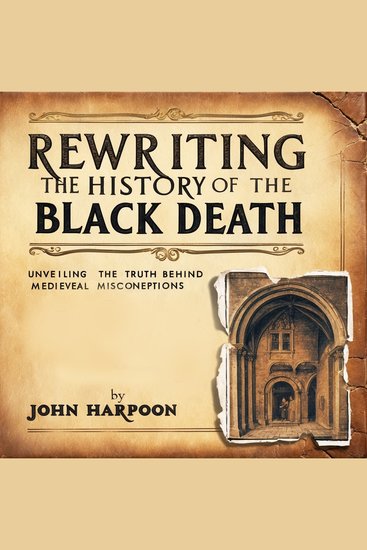
  • Rewriting the History of the Black Death - Unveiling the Truth Behind Medieval Misconceptions - cover

    Rewriting the History of the...

    John Harpoon

    • 0
    • 0
    • 0
    The Black Death, one of the most devastating pandemics in human history, left an indelible mark on the medieval world. From the mid-14th century, this catastrophic event wiped out an estimated one-third of Europe's population, with ramifications extending far beyond the immediate loss of life. Its legacy endures, not only in historical accounts but also in the cultural, social, and economic transformations it triggered. 
      
    The pandemic’s unparalleled scale of mortality created a sense of collective trauma that shaped the mindset of medieval society. Fear, uncertainty, and grief were pervasive, leading to widespread shifts in religious devotion and philosophical thought. For some, the plague strengthened their faith, prompting public acts of penance and increased church attendance. For others, it inspired skepticism about religious authority, paving the way for future reforms and dissent. This dual response reflects the Black Death's role as both a destroyer of tradition and a catalyst for change. 
      
    Economically, the pandemic dramatically altered the medieval labor market. The decimation of the population led to acute labor shortages, forcing landowners to offer better wages and conditions to retain workers. This shift empowered peasants and contributed to the gradual erosion of the feudal system, giving rise to a nascent middle class. The newfound leverage of laborers sowed the seeds of social mobility, challenging the rigid hierarchies that had long defined medieval life.
    Show book
  • Cage Eleven - Prison Writings from Long Kesh - cover

    Cage Eleven - Prison Writings...

    Gerry Adams

    • 0
    • 1
    • 0
    Long before he became President of Sinn Féin, Gerry Adams was a civil rights activist who took part in sit-ins, marches and protests in Northern Ireland. Along with hundreds of other men, Adams was interned on the Maidstone prison ship and in Long Kesh prison – without charge or trial – during the 1970s for his political activities. Women were interned also, in Armagh Women's Prison. Cage Eleven is his own account – sometimes passionate, often humorous – of life in Long Kesh. Written while Adams was a prisoner, the pieces were smuggled out for publication.
    This updated edition includes a new introduction and sketches drawn in Cage Eleven by another prisoner at the time, Danny Devenny.
    'Offers a unique insight into … the experience of internment … an unrivalled representation of the resilience and humour that were as much a part of the life of the political prisoner as the adherence to a set of political ideals.' Irish Herald
    Show book
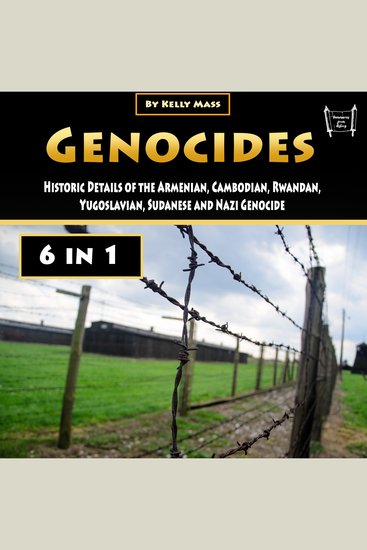
  • Genocides - Historic Details of the Armenian Cambodian Rwandan Yugoslavian Sudanese and Nazi Genocide - cover

    Genocides - Historic Details of...

    Kelly Mass

    • 0
    • 0
    • 0
    This book consists of 6 topics, all selected to describe some of the worst atrocities of mankind: Genocides, mass rapes, abuse, mutilation and murder. It contains these topics: 
    Armenian Genocide: At the time of World War I, the Ottoman Empire committed the Armenian genocide, which led to the organized death of around one million ethnic Armenians. It was primarily achieved by mass executions, death marches resulting in the Syrian Desert, and the pushed Islamization of Armenian women and kids. 
    Cambodian Genocide: The Cambodian genocide was the methodical abuse and death of Cambodians by the Khmer Rouge, led by Pol Pot, the general secretary of the Communist Party of Kampuchea, who pushed Cambodia towards being an entirely self-dependent agrarian socialist state.  
    Genocide in Darfur: The Darfur genocide describes the methodical killing of ethnic Darfuri people in Western Sudan throughout the existing dispute. It's considered the first genocide of the twenty-first century. The International Bad Guy Court (ICC) has prosecuted many individuals for criminal offenses against mankind, rape, mass relocations and deportations, and abuse because of the genocide being committed. 
    Holocaust: At the time of WWII, the Holocaust, was a genocide of European Jews. Between 1941 and 1945, Nazi Germany and its allies killed around 6 million Jews in German-occupied Europe, representing about two-thirds of Europe's Jewish population. 
    Rwandan Genocide: Throughout the Rwandan Civil War, between April seventh and July fifteenth, 1994, the Rwandan genocide happened. Equipped militias murdered members of the Tutsi minority ethnic group, and some moderate Hutu and Twa. 
    Yugoslavian Genocide: Throughout the Bosnian War of 1992-- 1995, the Yugoslavian or Bosnian genocide describes either the Srebrenica massacre or the larger criminal activities against mankind in areas controlled by the Army of Republika Srpska (VRS).
    Show book
  • Vampire Boys - True Tales from Operators of the RAF's First Single-Engined Jet - cover

    Vampire Boys - True Tales from...

    Charlotte Bailey

    • 0
    • 0
    • 0
    Sliding out of the shadows of World War Two, the de Havilland Vampire—accompanied by the distinctive whine of its Goblin engine—quickly proved itself an effective alternative to piston-powered fighters. After entering operational service with the RAF (as the service's first single-engine jet) in 1946, the Vampire—sought by air forces the world over—held a number of notable records: the first fighter to exceed 500 mph, the first to set a world altitude record of almost 60,000 feet, the first jet to take off and land from an aircraft carrier, and the first jet to cross the Atlantic Ocean. Not bad for something built partly of wood. Throughout this book, the "Vampire Boys" bring to life the trials and tribulations of operating a first-generation jet across the globe. Through their insightful anecdotes and exceptional experiences, listeners can follow squadrons across the dusty deserts of Iraq to exercises in West Germany. First-hand tales of training, aerial handling, incidents and accidents (including the much-maligned spin characteristics) and squadron life bring together a portrait of a pioneering time in aviation advancement, right up to the present day with the T.11 still flying from Coventry Airport.
    Show book