Join us on a literary world trip!
Add this book to bookshelf
Grey
Write a new comment Default profile 50px
Grey
Subscribe to read the full book or read the first pages for free!
All characters reduced
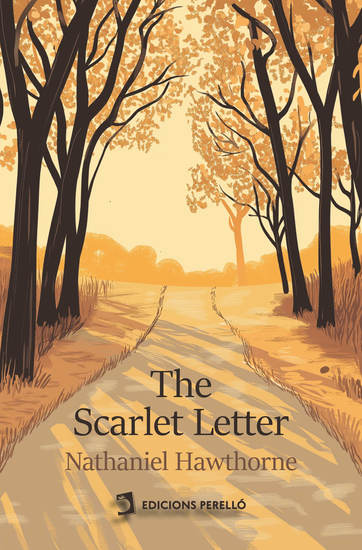
The Scarlet Letter - cover

The Scarlet Letter

Nataniel Hawthorne

Publisher: Edicions Perelló

  • 0
  • 0
  • 0

Summary

In a 17th-century Puritan colony, Hester Prynne is condemned for the sin of adultery and forced to wear a scarlet "A" on her chest as a mark of shame. Despite the social condemnation, Hester faces her fate with unshakable dignity, raising her daughter Pearl amid the rejection of the community. Throughout the novel, the deep moral conflicts of the protagonist are explored, along with the silent suffering of her secret lover and the weight of judgment in a society that does not forgive.

The Scarlet Letter is a profound reflection on guilt, redemption, and the complexity of the human heart.
Available since: 04/15/2025.
Print length: 200 pages.

Other books that might interest you

  • The Queen of Spades - The founder of modern Russian literatures most famous piece of prose The Queen of Spades explores themes of greed and risk wrapped in the ebb and flow of an ongoing struggle between supernatural and reality - cover

    The Queen of Spades - The...

    Alexander Pushkin

    • 0
    • 0
    • 0
    Alexander Sergeyevich Pushkin was born on 26th May 1799 in Moscow into a family of Russian nobility. 
     
    Raised by nursemaids and French tutors in French he learnt Russian only via the household staff. 
     
    He graduated from the prestigious Imperial Lyceum, near St Petersburg and plunged into the vibrant and raucous intellectual youth culture of what was then the capital of the Russian Empire.  
     
    In 1820, he published his first long poem, ‘Ruslan and Ludmila’, with much controversy about both subject and style.  Pushkin was heavily influenced by the French Enlightenment and gravitated, with other literary radicals, towards social reform angering the Government. 
     
    His early literary work and reputation was poetic and written as he travelled around the Empire or engaged himself in various rebellions against the Ottoman Empire.  A clash with his own government after his poem, ‘Ode to Liberty’, was found among the belongings of the Decembrist Uprising rebels meant two years of internal exile at his mother's rural estate.  His friends and family continually petitioned for his release, sending letters and meeting with Tsar Alexander I and then Tsar Nicholas I.   
     
    In 1825, whilst at his Mother’s estate, Pushkin wrote his most famous play, the drama ‘Boris Godunov’.  
     
    Upon meeting with Tsar Nicholas I, Pushkin obtained his release and began work as the Tsar's Titular Counsel of the National Archives.  However, because of the earlier problems the tsar retained control of everything Pushkin published, and he was banned from travelling at will. 
     
    Around 1828, Pushkin met the 16-year-old Natalia Goncharova, one of the most talked-about beauties of Moscow.  After much hesitation, Natalia accepted his marriage proposal after she received assurances that the government had no intentions to persecute the libertarian poet.  When the Tsar gave Pushkin the lowest court title, Gentleman of the Chamber, he became enraged, feeling that the Tsar intended to humiliate him. 
     
    In the year 1831, during Pushkin's growing literary influence, he met Nikolai Gogol.  Recognising his gifts Pushkin supported him and published his short stories in his own magazine ‘The Contemporary’. 
     
    By the autumn of 1836, Pushkin was falling into greater and greater debt and facing scandalous rumours that his wife was having an affair.  
     
    In January 1837, Pushkin sent a ‘highly insulting letter’ to his wife’s pursuer, Georges-Charles de Heeckeren d'Anthès.  The only answer could be a challenge to a duel. 
     
    It took place on 27th January.  D'Anthès fired first, critically wounding Pushkin; the bullet entered at his hip and penetrated his abdomen.  Two days later Alexander Pushkin died of peritonitis.  He was 37. 
     
    One of Pushkin’s most lauded stories ‘The Queen of Spades’ takes on gambling and the need for just a tiny piece of information that will turn the game in his favour and take life to a level that is sure to be both deserved and his by right.
    Show book

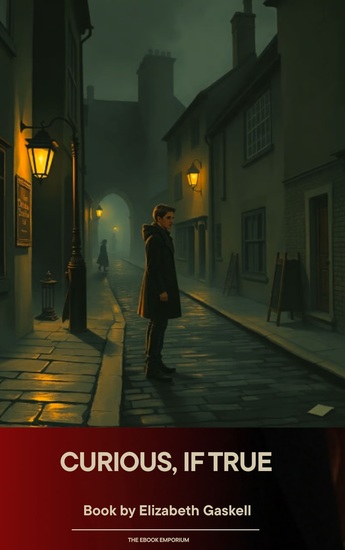
  • Curious if true - cover

    Curious if true

    Elizabeth Gaskell

    • 0
    • 0
    • 0
    "I had a feeling that I was in the presence of those who had lived for centuries."
    
    While traveling through the dense forests of France, a pragmatic Englishman named Richard Whittingham loses his way and stumbles upon a mysterious chateau. Inside, he is invited to a grand soirée populated by an assembly of aristocrats who seem strangely familiar. As the evening unfolds, he realizes he is a guest at a living reunion of legendary figures—from a sleeping lady just awakened to a gentleman with a penchant for glass slippers. Elizabeth Gaskell, the celebrated author of Northport and South, trades industrial realism for a sparkling, eerie, and witty deconstruction of the world's most famous folklore.
    
    A Sophisticated Literary Game: Curious, if true is a delight for lovers of intertextuality. Gaskell treats these mythical characters as aging French nobles, bound by the rigid etiquette of the 19th century. Through Whittingham's bewildered eyes, we see how the "happily ever after" would actually function in a society obsessed with lineage, marriage contracts, and social standing.
    
    Gaskell's Hidden Masterpiece: Often overlooked in favor of her larger novels, this story proves Gaskell's immense range. It balances a sense of "Gothic" atmosphere—the dark forest, the ancient house—with a sharp, satirical bite. It is a precursor to modern "fractured fairy tales," exploring the humanity, the vanity, and the lingering magic behind the legends we think we know.
    
    Step through the shadows of the forest and into the salon of legends. Purchase "Curious, if true" today and discover a different side of Elizabeth Gaskell.
    Show book
  • Von Kempelen and his Discovery - cover

    Von Kempelen and his Discovery

    Sampi Books, Edgar Allan Poe

    • 0
    • 0
    • 0
    Edgar Allan Poe's "Von Kempelen and his Discovery" tells of the fictional discovery of a way to turn lead into gold. The protagonist, a scientist, deceives the public and challenges concepts of credibility and greed, until his secret is tragically revealed.
    Show book
  • Old Man and His Grandson The - Story Time Episode 42 (Unabridged) - cover

    Old Man and His Grandson The -...

    Brothers Grimm

    • 0
    • 0
    • 0
    A man whose hands shook with the tremors of old age could not eat neatly and often spilled his soup, so his son and daughter-in-law barred him from their table and made him eat by the stove. When he broke the fine stoneware bowl from which he had been eating, they bought him a wooden bowl that could not break.
    Show book
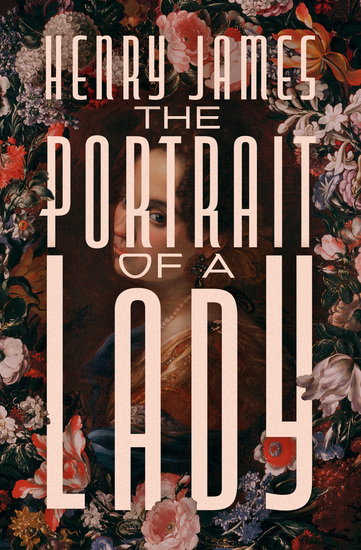
  • The Portrait of a Lady - cover

    The Portrait of a Lady

    Henry James

    • 0
    • 1
    • 0
    Henry James’s beloved novel about a young woman’s search for freedom in a world that seeks to tie her to convention In the wake of her father’s death, young Isabel Archer decides to travel to England to visit her aunt, leaving behind the life set out for her in America and spurning the romantic overtures of her Bostonian suitor. At her aunt’s country estate, Isabel is determined to plot a new course unburdened by routine. But, prodded by convention at every turn, Isabel makes a decision that not only undermines her longing for independence, but may seal her fate forever. Among one of Henry James’s most timeless works, The Portrait of a Lady is a rich and nuanced depiction of human psychology and the tension between the pull of social norms and the desire for autonomy. This ebook has been professionally proofread to ensure accuracy and readability on all devices.
    Show book
  • One Autumn Night - cover

    One Autumn Night

    Maxim Gorky

    • 0
    • 0
    • 0
    It's a touching tale of a young man who finds himself without shelter or food on a cold "Autumn Night" in Moscow. The strong opening lines of the narrator set the stage nicely: "Once in the autumn I happened to be in a very unpleasant and inconvenient position. In the town where I had just arrived and where I knew not a soul, I found myself without a farthing in my pocket and without a night's lodging."Scavenging for something to eat around the "steamship wharves," he encounters another poor wretch, the young woman, Natasha, in similar circumstance if for different reasons. Together they scrounge a loaf of bread and take refuge from the elements (a bitterly cold, freezing rain) under an upside down skiff. Here he learns a little of her circumstances, including how her face came to be marked up, although he could probably already guess that. Her abusive husband has thrown her out, leaving her with a somewhat low opinion of the male of the species: "What wretches all you men are! I'd burn you all in an oven; I'd cut you in pieces. If any one of you was dying I'd spit in his mouth, and not pity him a bit. Mean skunks! You wheedle and wheedle, you wag your tails like cringing dogs, and we fools give ourselves up to you, and it's all up with us! Immediately you trample us underfoot… Miserable loafers."Famous Novels of the author Maxim Gorky: Goremyka Pavel, Published in English as Orphan Paul, Foma Gordeyev, Three of Them,  Also translated as Three Men, The Mother, The Life of a Useless Man,  A Confession, Okurov City, The Life of Matvei Kozhemyakin, The Artamonov Business, Life of Klim Samgin.
    Show book