Join us on a literary world trip!
Add this book to bookshelf
Grey
Write a new comment Default profile 50px
Grey
Subscribe to read the full book or read the first pages for free!
All characters reduced
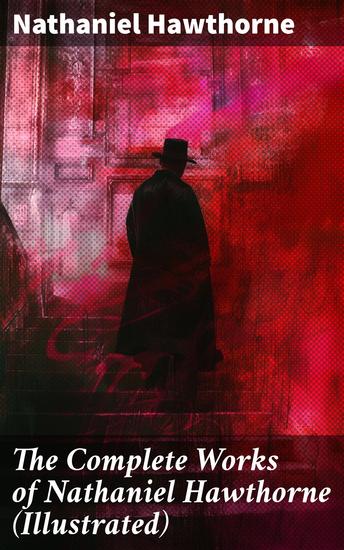
The Complete Works of Nathaniel Hawthorne (Illustrated) - Exploring Dark Romanticism and Moral Allegory in American Literature - cover

The Complete Works of Nathaniel Hawthorne (Illustrated) - Exploring Dark Romanticism and Moral Allegory in American Literature

Nataniel Hawthorne

Publisher: Good Press

  • 0
  • 0
  • 0

Summary

In 'The Complete Works of Nathaniel Hawthorne (Illustrated)', the reader encounters a masterful compilation of Hawthorne'Äôs oeuvre, which captures the complexities of human nature, moral dilemmas, and the intricate relationship between the individual and society. Characterized by his distinctive dark romanticism, Hawthorne's prose navigates transcendental themes, exploring guilt, sin, and redemption through a tapestry of rich detail and profound symbolism. The illustrations accompanying the text serve to enhance the emotional depth of his narratives, allowing readers to engage with the mesmerizing landscapes and characters that populate his imaginative worlds, from the Puritanical setting of 'The Scarlet Letter' to the allegorical depths of 'The House of the Seven Gables.' Nathaniel Hawthorne (1804-1864) stands as one of America's preeminent literary figures, his work deeply informed by his ancestry, particularly the legacy of the witch trials that colored his Massachusetts roots. A contemporary of Emerson and Thoreau, his writing reflects a keen awareness of both Romantic and Gothic traditions, as well as a deep exploration of psychological themes influenced by his own introspective nature. Hawthorne'Äôs pursuit of truth in human experience led him to delve into darker moral territories, presenting readers with intricate narratives that resonate on multiple levels. This pivotal collection is recommended for both new readers and seasoned scholars, as it provides a comprehensive exploration of Hawthorne'Äôs philosophical inquiries and artistic imagination. Offering a unique opportunity to appreciate the breadth of his genius, this illustrated volume is an essential addition to the library of anyone interested in American literature, morality, and the human condition.
Available since: 01/06/2024.
Print length: 4700 pages.
Other books that might interest you

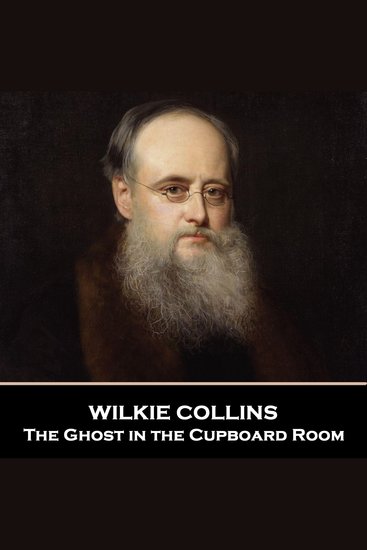
  • The Ghost in the Cupboard Room - From their pens to your ears genius in every story - cover

    The Ghost in the Cupboard Room -...

    Wilkie Collins

    • 0
    • 0
    • 0
    Wilkie Collins was born on 8th January 1824 in Marylebone, London.  
    The family moved several times in his early years before, at 12, they travelled to France and Italy for 2 years where the sights and atmosphere made a deep and lasting impression on him. 
    He resumed his education at Mr Cole’s private boarding school in Highbury, Islington.  Here, he began his literary career under unusual circumstances: the school bully would give him no peace until he had been told a bedtime story.  This ‘little brute’ helped create one of England’s greatest writers.  
    On leaving school, in 1841, he became a clerk at a tea merchant before, 2 years later, publishing his first short story.  However, his first novel was rejected and remained so during his lifetime.  
    A brief stint at Lincoln’s Inn to please his father and to acquire a steady income was halted by his father’s death.  Collins then wrote and published his fathers’ memoirs.  He then completed his legal education though he would never practice.  
    In March 1851, he was introduced to Charles Dickens and there now started a period of sustained literary output and a remarkable lifelong friendship.  His stories were published in Dicken’s magazines, and he toured with Dicken’s theatrical before the two of them travelled to the Continent. 
    By the early 1860’s worrying signs of ill-health appeared with rheumatic gout.  As it worsened, he sought respite and cures in German spa towns and gave up writing to help his recuperation. 
    His personal life had become very complicated.  He was living with the widowed Caroline Graves and conducting an affair with a much younger Martha Rudd.  With the serialised release of ‘The Moonstone’ and vicious attacks of gout Caroline left him and married another.  Collins was now prescribed opium and was soon its lifelong dependent.  Martha bore him two children and with the return of a now divorced Caroline Graves he now divided his time between the two women. 
    In 1874 he set aside writing to tour North America on a reading tour. 
    Throughout his later years he continued to write and publish.  In all 30 novels, 14 plays, 60 short stories and over a 100 non-fiction essays as well as many more collaborations with Dickens. 
    In 1884 the Society of Authors elected him as it’s Vice-President. 
    Wilkie Collins died from a paralytic stroke on September 23rd, 1889, in London. He was 65.
    Show book
  • Of Arcs and Circles - Insights from Japan on Gardens Nature and Art - cover

    Of Arcs and Circles - Insights...

    Marc Peter Keane

    • 0
    • 0
    • 0
    A renowned designer of Japanese gardens contemplates wildness, humanity, beauty, the liquid state of the world.
    
     
    From his vantage point as a garden designer and writer based in Kyoto, Marc Peter Keane examines the world around him and delivers astonishing insights through an array of narratives. 
    
     
    How the names of gardens reveal their essential meaning. A new definition of what art is. What trees are really made of. The true meaning of the enigmatic torii gate found at Shinto shrines. Why we give flowers as gifts. The essential, underlying unity of the world.
    Show book
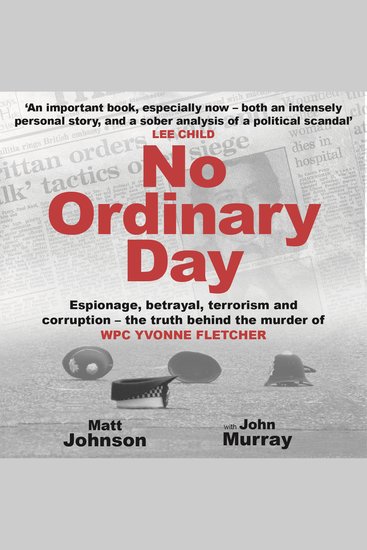
  • No Ordinary Day - Espionage betrayal terrorism and corruption - the truth behind the murder of WPC Yvonne Fletcher - cover

    No Ordinary Day - Espionage...

    Mat Johnson, John Murray

    • 0
    • 0
    • 0
    Winner of the Book of the Year and Reader's Choice awards at the 2024 CrimeCon True Crime Awards. Highly commended at the same awards for Outstanding Investigative Reporting. 
    Winner of the 2024 Capital Crime Fingerprint Award (True Crime). 
    Shortlisted for the 2024 Crime Writers Association ALCS Gold Dagger for non-fiction. 
    Behind one of the greatest tragedies in UK policing history lies an incredible political scandal 
    ‘An important book, especially now’ Lee Child 
    ‘Espionage, betrayal, terrorism, corruption and murder. All the ingredients of a Le Carré novel, only it’s real’ Matthew Hall 
    ‘A powerful and timely account’ John Sutherland 
    On 17 April 1984, as demonstrators gathered outside the Libyan embassy in London, two gunmen lay in wait inside. At 10.18 a.m. automatic gunfire rained down on the protestors and WPC Yvonne Fletcher fell, mortally wounded. 
    As his friend lay dying, PC John Murray made her a promise that he would not rest until those responsible had been brought to justice. Thirty-seven years would pass before he was able to fulfil that undertaking. 
    While researching this moving account of one man’s dogged pursuit of justice for a murdered colleague, Matt Johnson uncovered secret-service deals and government duplicity, all part of a plan to force an end to the National Union of Mineworkers’ strike. He discovered the real reason Yvonne’s killers were allowed to go free and how events that day led to thirty years of growing political control of policing, resulting in the disarray increasingly evident today. 
    This compelling account pulls seemingly unconnected threads into a coherent – and shocking – whole. It provides startling insights into how decisions taken by our politicians and the actions of our intelligence agencies, supposedly in our best interests, may be anything but.
    Show book
  • The Queen of Spades - The founder of modern Russian literatures most famous piece of prose The Queen of Spades explores themes of greed and risk wrapped in the ebb and flow of an ongoing struggle between supernatural and reality - cover

    The Queen of Spades - The...

    Alexander Pushkin

    • 0
    • 0
    • 0
    Alexander Sergeyevich Pushkin was born on 26th May 1799 in Moscow into a family of Russian nobility. 
     
    Raised by nursemaids and French tutors in French he learnt Russian only via the household staff. 
     
    He graduated from the prestigious Imperial Lyceum, near St Petersburg and plunged into the vibrant and raucous intellectual youth culture of what was then the capital of the Russian Empire.  
     
    In 1820, he published his first long poem, ‘Ruslan and Ludmila’, with much controversy about both subject and style.  Pushkin was heavily influenced by the French Enlightenment and gravitated, with other literary radicals, towards social reform angering the Government. 
     
    His early literary work and reputation was poetic and written as he travelled around the Empire or engaged himself in various rebellions against the Ottoman Empire.  A clash with his own government after his poem, ‘Ode to Liberty’, was found among the belongings of the Decembrist Uprising rebels meant two years of internal exile at his mother's rural estate.  His friends and family continually petitioned for his release, sending letters and meeting with Tsar Alexander I and then Tsar Nicholas I.   
     
    In 1825, whilst at his Mother’s estate, Pushkin wrote his most famous play, the drama ‘Boris Godunov’.  
     
    Upon meeting with Tsar Nicholas I, Pushkin obtained his release and began work as the Tsar's Titular Counsel of the National Archives.  However, because of the earlier problems the tsar retained control of everything Pushkin published, and he was banned from travelling at will. 
     
    Around 1828, Pushkin met the 16-year-old Natalia Goncharova, one of the most talked-about beauties of Moscow.  After much hesitation, Natalia accepted his marriage proposal after she received assurances that the government had no intentions to persecute the libertarian poet.  When the Tsar gave Pushkin the lowest court title, Gentleman of the Chamber, he became enraged, feeling that the Tsar intended to humiliate him. 
     
    In the year 1831, during Pushkin's growing literary influence, he met Nikolai Gogol.  Recognising his gifts Pushkin supported him and published his short stories in his own magazine ‘The Contemporary’. 
     
    By the autumn of 1836, Pushkin was falling into greater and greater debt and facing scandalous rumours that his wife was having an affair.  
     
    In January 1837, Pushkin sent a ‘highly insulting letter’ to his wife’s pursuer, Georges-Charles de Heeckeren d'Anthès.  The only answer could be a challenge to a duel. 
     
    It took place on 27th January.  D'Anthès fired first, critically wounding Pushkin; the bullet entered at his hip and penetrated his abdomen.  Two days later Alexander Pushkin died of peritonitis.  He was 37. 
     
    One of Pushkin’s most lauded stories ‘The Queen of Spades’ takes on gambling and the need for just a tiny piece of information that will turn the game in his favour and take life to a level that is sure to be both deserved and his by right.
    Show book
  • Top 10 Short Stories The - English Authors of the West Midlands - The top ten Short Stories of all time written by English authors born in the West Midlands - cover

    Top 10 Short Stories The -...

    George Eliot, Jerome K. Jerome,...

    • 0
    • 0
    • 0
    Short stories have always been a sort of instant access into an author’s brain, their soul and heart.  A few pages can lift our lives into locations, people and experiences with a sweep of landscape, narration, feelings and emotions that is difficult to achieve elsewhere. 
     
    In this series we try to offer up tried and trusted ‘Top Tens’ across many different themes and authors. But any anthology will immediately throw up the questions – Why that story? Why that author?  
     
    The theme itself will form the boundaries for our stories which range from well-known classics, newly told, to stories that modern times have overlooked but perfectly exemplify the theme.  Throughout the volume our authors whether of instant recognition or new to you are all leviathans of literature. 
     
    Some you may disagree with but they will get you thinking; about our choices and about those you would have made.  If this volume takes you on a path to discover more of these miniature masterpieces then we have all gained something. 
     
    In the heartlands of England, in its gritty and grimy industrial landscape, literary talent abounds.  Experiences learnt and observed here have found their way into many of the finest literary works this country has produced.  Genius has many names. 
     
    1 - The Top 10 - English Authors of the West Midlands - An Introduction 
    2 - The Lifted Veil - Part 1 by George Eliot 
    3 - The Lifted Veil - Part 2 by George Eliot 
    4 - The Absent Minded Man by Jerome K Jerome 
    5 - The Matador of the Five Towns by Arnold Bennett 
    6 - The Last House in C Street by Mrs Craik 
    7 - Reality or Delusion by Mrs Ellen Wood 
    8 - The Ghost in the Clock Room by Hesba Stretton 
    9 - Blessed Are the Meek by Mary Webb 
    10 - The Dust of Death by Fred M White 
    11 - Alexander the Ratcatcher by Richard Garnett 
    12 - Her Murderer by Mary Cholmondeley
    Show book
  • Solving the West Georgia Murder of Gwendolyn Moore - A Cry From the Well - cover

    Solving the West Georgia Murder...

    Clay Bryant

    • 0
    • 0
    • 0
    On a sultry August morning in 1970, the battered body of a young woman was hoisted from a dry well just outside Hogansville, Georgia. Author and investigator Clay Bryant was there, witnessing the macabre scene. Then fifteen, Bryant was tagging along with his father, Buddy Bryant, Hogansville chief of police. The victim, Gwendolyn Moore, had been in a violent marriage. That was no secret. But her husband had connections to a political machine that held sway over the Troup County Sheriff's Office overseeing the case. To the dismay and bafflement of many, no charges were brought. That is, until Bryant followed his father's footsteps into law enforcement and a voice cried out from the well three decades later.
    Show book