Join us on a literary world trip!
Add this book to bookshelf
Grey
Write a new comment Default profile 50px
Grey
Subscribe to read the full book or read the first pages for free!
All characters reduced
The Confessions of Nat Turner - cover

The Confessions of Nat Turner

Nat Turner

Publisher: DigiCat

  • 0
  • 0
  • 0

Summary

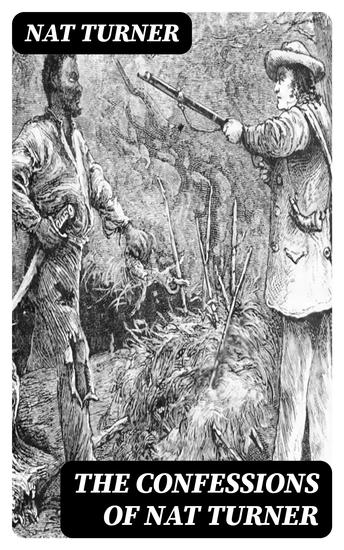
In "The Confessions of Nat Turner," the infamous leader of the 1831 slave rebellion presents a chilling and profound account of his life and motivations. This narrative intricately weaves together personal reflections, spiritual devotion, and fervent political ideology, offering insights into the psychological turmoil and existential crises faced by enslaved individuals. The book employs a poignant and evocative literary style, capturing both the visceral agony of bondage and the simmering desire for freedom through powerful imagery and rhythmic prose, reflective of the oral traditions of African American culture. Turner's confessions are set against the backdrop of America's antebellum society, amplifying its themes of racial conflict and moral reckoning within a historical moment of deep socio-political strife. Nat Turner was born into slavery in Virginia in 1800, and his religious fervor and experiences of oppression fueled his revolutionary spirit. Educated and deeply influenced by the Biblical narratives of liberation, Turner believed he was divinely chosen to lead his people out of slavery. His ultimate uprising, although met with brutal suppression, has become a symbol of resistance and a critical turning point in the national consciousness regarding slavery and human rights. This essential text is not only an autobiographical confession but also a compelling historical document that invites readers to grapple with the complexities of moral choice and the quest for justice. Recommended for scholars, historians, and anyone seeking to understand the enduring legacies of oppression and rebellion, Turner's confessions resonate powerfully in discussions about freedom, faith, and the fundamental struggle for human rights.
Available since: 08/15/2022.
Print length: 22 pages.
Other books that might interest you

  • Ottoman-Portuguese Conflicts The: The History and Legacy of the Military Encounters Between the Ottoman Empire and Portugal in the Indian Ocean - cover

    Ottoman-Portuguese Conflicts...

    Editors Charles River

    • 0
    • 0
    • 0
    The Ottoman conquest of Constantinople played a decisive role in fostering the Renaissance in Western Europe. The Byzantine Empire’s influence had helped ensure that it was the custodian of various ancient texts, most notably from the ancient Greeks, and when Constantinople fell, Byzantine refugees flocked west to seek refuge in Europe. Those refugees brought books that helped spark an interest in antiquity that fueled the Italian Renaissance and essentially put an end to the Middle Ages altogether.  
    	It was also roughly around this time that a period of European exploration began, and major factors that contributed to this period of exploration were introduced by the Chinese, albeit indirectly. The magnetic compass had already been developed and used by the Chinese sailors since the 12th century, although it had first been created in the 3rd century BCE as a divination device. The Song Dynasty then began using the device for land navigation in the 11th century and sailors began using it shortly after. The technology slowly spread west via Arab traders, although a case can be made for the independent European creation for the compass (Southey 1812: 210). Regardless, by the 13th century the compass had found its way to Western traders, coming at a time that trade had been increasing across Europe.  
    	The Portuguese started exploring the west coast of Africa and the Atlantic under orders from Prince Henry the Navigator. At this point, Europeans had not yet been capable of navigating completely around Africa since the ships being built were not yet fully capable of being able to sail very far from the coast and navigation in open waters was difficult, but the Portuguese continued pushing down the western African coast looking for ways to bypass the Ottomans and Muslims of Africa who had been making overland trade routes difficult. .
    Show book
  • Jiddu krishnamurti - cover

    Jiddu krishnamurti

    Vinitha R, Amol Raikar

    • 0
    • 0
    • 0
    "Truth is a pathless land. Truth, being limitless cannot be organised, nor should any organisation be formed to lead people along any particular path. If you first understand that, then you will see how impossible it is to organise a belief. I have now decided to disband  - The Order of the Star, as I happen to be its head. You can form other organisations and expect someone else. With that, I am not concerned, nor with creating new cages, new decorations for those cages. My only concern is to set man absolutely, unconditionally free."
    
    Jiddu Krishnamurti mistrusted all religions and denounced the Eastern convention of deifying living spiritual masters. Refusing the role of the chosen one, he claimed that truth could not be approached by way of a teacher and that enlightenment rendered all belief systems equally and inherently useless. Helping others find their way in a pathless land became Krishnamurti's avowed mission.
    Show book
  • Pandemic Diaries - The inside story of Britain's battle against Covid - cover

    Pandemic Diaries - The inside...

    Isabel Oakeshott, Matt Hancock

    • 0
    • 0
    • 0
    When Covid-19 swept the world, governments scrambled to protect their citizens and chart a course back to normality. As Health Secretary, Matt Hancock was at the forefront of Britain's battle against the virus, trying to steer the country through the crisis in a world where information was scarce, judgements huge and the roadmap non-existent.
    Drawing on a wealth of never-before-seen material, including official records, his notes at the time and communications with all the key players in Britain's Covid-19 story, this candid account reveals the inner workings of government during a time of national crisis, reflecting on both the successes and the failures.
    Recounting the most important decisions in the race to develop a vaccine in record time and to build a nationwide testing capacity from the ground up, Pandemic Diaries provides the definitive account of Britain's battle to turn the tide against Covid-19. Crucially, it also offers an honest assessment of the lessons we need to learn to be prepared for next time – because there will be a next time.
    Show book
  • The Rainbow Age of Television - An Opinionated History of Queer TV - cover

    The Rainbow Age of Television -...

    Shayna Maci Warner

    • 0
    • 0
    • 0
    With the last decade's television boom across a multitude of platforms, American audiences are being treated to a cascade of shows that some have trumpeted as a second Golden Age. But something completely new is stirring, too—the Rainbow Age. For the first time in the history of American television, we have shows in which LGBTQIA+ characters have evolved from being an anomaly to being an almost given and celebrated presence on the small screen. But what more can queer TV do? Is each new queer character really breaking ground? And has the curse of the fictional dead lesbian finally been defeated? 


    The Rainbow Age of Television tackles these questions and more as author Shayna Maci Warner tracks the history and evolution of LGBTQIA+ icons across the televised ages and into the future—from the first televised queer kiss (we think) to the shows that are making household names and heroes of queer characters. Warner uses original interviews with queer TV icons along with detailed history to investigate the constraints under which queer people have been allowed to exist on American television. The Rainbow Age of Television explores why queer people are so invested in—and conflicted by—the kinds of storytelling that TV has to offer. Above all, it's a celebration of the LGBTQIA+ shows, their characters, and their creators that define this new age in television.
    Show book
  • I Will Ruin You - The Twisted Truth Behind The Kit Martin Murder Trial - cover

    I Will Ruin You - The Twisted...

    Emilio Corsetti

    • 0
    • 0
    • 0
    Did the State of Kentucky convict an innocent man? Moments before boarding a passenger flight on 11 May 2019 as the first officer, pilot Christian "Kit" Martin, a former army ranger, was arrested by a swarm of heavily armed officers for the murders of three of his neighbors. The arrest captured global attention as Martin's mugshot, clad in a pilot's uniform, spread across the internet, sparking a media firestorm with headlines such as "Monster in the Cockpit." A combat helicopter pilot, Kit Martin had seen his life unravel after seeking a divorce. His wife's threatening words, "If you leave me, I will ruin your life …," overheard by his daughter, seemed to have become a grim reality, escalating to a court-martial and culminating in a high-stakes murder trial at which he was convicted. I WILL RUIN YOU: The Twisted Truth Behind the Kit Martin Murder Trial delves into the complex circumstances behind Martin’s story. It looks beyond the sensational headlines and legal turmoil into the heart of this controversial case. With an investigative journalist’s eye, author Emilio Corsetti III presents the facts of the crime that led to the arrest and the extraordinary lengths used to secure a conviction in this unforgettable true crime page-turner.
    Show book
  • Black Consciousness - A Love Story - cover

    Black Consciousness - A Love Story

    Hlumelo Biko

    • 0
    • 0
    • 0
    ‘If Steve Biko were alive today, we would have a country that gladly embraces African culture as the dominant driving force for how society is organised ...’ 
    In 1968, two young medical students, Steve Biko and Mamphela Ramphele, fell in love while dreaming of a life free from oppression and racial discrimination. Their love story is also the story of the founding of the Black Consciousness Movement (BCM) by a group of 15 principled and ambitious students at the University of Natal in Durban in the early 1970s. 
      
    In this deeply personal book, Hlumelo Biko, who was born of Steve and Mamphela’s union, movingly recounts his parents’ love story and how the BCM’s message of black self-love and self-reliance helped to change the course of South African history. 
      
    Based on interviews with some of the BCM’s founding members, Black Consciousness describes the early years of the movement in vivid detail and sets out its guiding principles around a positive black identity, black theology and the practice of Ubuntu through community-based programmes. 
      
    In spiritual conversation with his father, Hlumelo re-examines what it takes to live a Black Consciousness life in today’s South Africa. He also explains why he believes his father – who was brutally murdered by the apartheid police in 1977 – would have supported true radical economic transformation if he were alive today.
    Show book