Join us on a literary world trip!
Add this book to bookshelf
Grey
Write a new comment Default profile 50px
Grey
Subscribe to read the full book or read the first pages for free!
All characters reduced
World Cup Facts - cover

World Cup Facts

Nakoa Rainfall

Translator A AI

Publisher: Publifye

  • 0
  • 0
  • 0

Summary

World Cup Facts explores the captivating history of the FIFA World Cup, revealing its significance as more than just a soccer tournament, but as a reflection of global culture and international relations. The book dissects legendary matches, such as the controversial 1966 final, and examines significant upsets, like Senegal's victory over France in 2002, that have challenged established soccer norms. By focusing on iconic players and their contributions, the book highlights how their individual stories are woven into the evolving tactics and strategies of the game.

 
The book begins by tracing the origins and early evolution of the tournament. It analyzes key moments and influential figures, demonstrating how the World Cup has grown into the world's most-watched sporting event. Drawing from FIFA archives, historical match footage, and player interviews, World Cup Facts adopts a narrative non-fiction style, blending meticulous fact-checking with engaging storytelling.

 
The book is structured around three main sections, starting with legendary matches that defined eras. It then examines significant upsets, and concludes by celebrating the iconic players who have graced the World Cup. This approach provides readers with a deeper understanding of the World Cup's historical significance, its impact on global culture, and the unforgettable stories behind its most memorable moments.
Available since: 02/19/2025.
Print length: 50 pages.

Other books that might interest you

  • What's Right With America - And How We Can Keep It That Way! - cover

    What's Right With America - And...

    Hon. Paul Johnson, Larry Aldrich

    • 0
    • 0
    • 0
    Is America's future as bright as its past? What's Right With America argues that not only is the answer "Yes," but the nation's most incredible days are yet to come. Despite the challenges and divisions we face, America's true strength lies in its core principles and the resilient spirit of its people. 


    From the vision of our Founding Fathers to the resilience and determination that have shaped our history, What's Right With America explores what makes the country uniquely capable of thriving in times of change. With inspiring stories and thought-provoking analysis, authors Paul Johnson and Larry Aldrich reveal how America's prosperity is rooted in more than just economic might—it's grounded in values like freedom, individual empowerment, and deep commitment to justice and liberty. 


    Johnson and Aldrich have identified five defining characteristics that have propelled the United States to greatness, showing how these ideals can guide us through current and future challenges. Whether you're concerned about politics, society, or the economy, What's Right With America offers a powerful reminder that America's strength is more than just its leadership—it's in every citizen who believes in the promise of a better future.
    Show book
  • Victimization - The Process of Making Someone a Victim - cover

    Victimization - The Process of...

    Cito Harder

    • 0
    • 0
    • 0
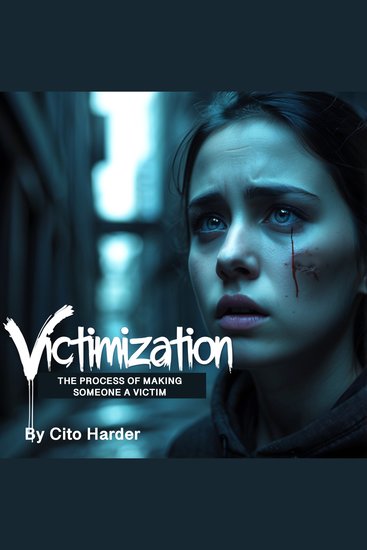
    Victimization is a complex and multifaceted process that occurs when an individual or group is subjected to harm, oppression, or injustice. It is not merely the result of a singular event but often an ongoing experience shaped by societal structures, personal relationships, and systemic forces. Understanding victimization requires examining both the immediate and long-term effects on those who suffer, as well as the roles played by perpetrators, bystanders, and institutions that enable or prevent such harm. 
    At its core, victimization involves the exercise of power and control, where one party imposes harm—whether physical, psychological, emotional, or financial—upon another. This harm can be intentional, as in cases of abuse, assault, or discrimination, or unintentional, where systems and structures create disadvantages that lead to victimhood. The process of victimization is not always overt; it can be subtle, embedded within social norms, policies, and expectations that gradually erode a person’s autonomy, dignity, and sense of self-worth. 
    One of the key challenges in defining victimization lies in the perception of victims themselves. Some individuals openly recognize and acknowledge their victim status, while others may resist the label due to fear, shame, or social stigma. Society often imposes expectations on victims—either portraying them as weak and helpless or, conversely, blaming them for their circumstances. This duality can make it difficult for individuals to seek support or justice, reinforcing cycles of suffering and silence.
    Show book
  • Blind Obedience and Denial - The Nuremberg Defendants - cover

    Blind Obedience and Denial - The...

    Andrew Sangster

    • 0
    • 0
    • 0
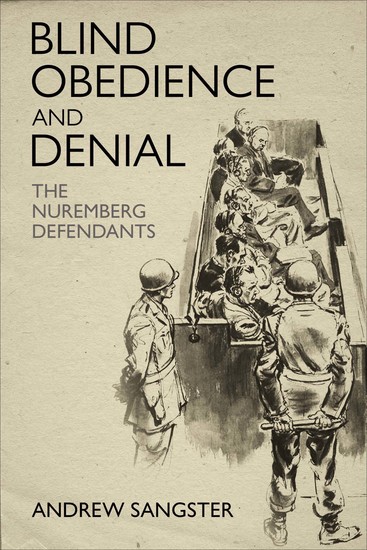
    "...offers a unique and valuable insight into the psychology of human beings who violate the laws of war. Anyone interested in war crimes generally and the IMT in particular should read this interesting book." — Journal of Military HistoryA revealing yet accessible examination of the Nuremberg trial, and most crucially all 23 men who stood accused, not just the most infamous—Speer, Hess, and Göring. This account sets the scene by explaining the procedures, the legal context, and the moments of hypocrisy in the Allies’ prosecution—ignoring the fact that the Katyn massacre was a Soviet crime and overlooking carpet bombing.  Author Andrew Sangster discusses how the word “Holocaust” was not used until long after the trial, probably due to Russian objection as they had lost many more people, and because the Allies generally were not innocent of anti-Semitism themselves, especially Russia and Vichy France. However, the defendants to a person immediately recognized that this was the singular issue which placed them on the steps of the gallows, and their various defenses on this charge are therefore crucial to understanding the trial. Sangster also explores how the prisoners related to one another in their approach to defending themselves on the charge of genocide and extermination camps, especially in facing the bully-boy Göring.  This new study utilizes not only the trial manuscripts, but the pre-trial interrogations, the views of the psychiatrists and psychologists, and the often-overheard conversations between prisoners—who did not know their guards spoke German—to give the fullest exploration of the defendants, their state of mind, and their attitudes towards the Third Reich, Hitler and each other as they faced judgement by the victors of the war.
    Show book
  • The Auschwitz Photographer - The Forgotten Story of the WWII Prisoner Who Documented Thousands of Lost Souls - cover

    The Auschwitz Photographer - The...

    Luca Crippa, Maurizio Onnis

    • 0
    • 0
    • 0
    The Nazis asked him to swear allegiance to Hitler, betraying his country, his friends, and everything he believed in. 
    He refused. 


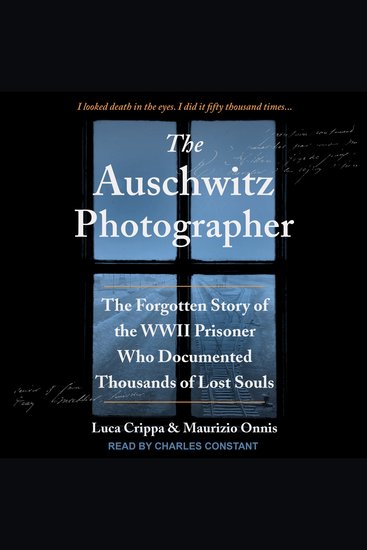
    Poland, 1939. Professional photographer Wilhelm Brasse is deported to Auschwitz-Birkenau and finds himself in a deadly race to survive, assigned to work as the camp's intake photographer and take "identity pictures" of prisoners as they arrive by the trainload. Brasse soon discovers his photography skills are in demand from Nazi guards as well, who ask him to take personal portraits for them to send to their families and girlfriends. Behind the camera, Brasse is safe from the terrible fate that so many of his fellow prisoners meet. But over the course of five years, the horrifying scenes his lens capture, including inhumane medical "experiments" led by Josef Mengele, change Brasse forever. 


    Based on the true story of Wilhelm Brasse, The Auschwitz Photographer is a stark black-and-white reminder of the horrors of the Holocaust. This gripping work of World War II narrative nonfiction takes readers behind the barbed wire fences of the world's most feared concentration camp, bringing Brasse's story to life as he clicks the shutter button thousands of times before ultimately joining the Resistance, defying the Nazis, and defiantly setting down his camera for good.
    Show book
  • Sounds Fake But Okay - An Asexual and Aromantic Perspective on Love Relationships Sex and Pretty Much Anything Else - cover

    Sounds Fake But Okay - An...

    Sarah Costello, Kayla Kaszyca

    • 0
    • 0
    • 0
    "Somehow, over time, we forgot that the rituals behind dating and sex were constructs made up by human beings and eventually, they became hard and fast rules that society imposed on us all." 


    True Love. Third Wheels. Dick pics. "Dying alone." Who decided this was normal? 


    Sarah and Kayla invite you to put on your purple aspec glasses—and rethink everything you thought you knew about society, friendship, sex, romance, and more. 


    Drawing on their personal stories, and those of aspec friends all over the world, prepare to explore your microlabels, investigate different models of partnership, delve into the intersection of gender norms and compulsory sexuality, and reconsider the meaning of sex—when allosexual attraction is out of the equation. 


    Spanning the whole range of relationships we have in our lives—to family, friends, lovers, society, our gender, and ourselves, this book asks you to let your imagination roam, and think again what human connection really is. 


    Includes audio exclusive commentary from the authors.
    Show book
  • Ora - Healing Ourselves – Indigenous Knowledge Healing and Wellbeing - cover

    Ora - Healing Ourselves –...

    Linda Tuhiwai Smith, Leonie Pihama

    • 0
    • 0
    • 0
    This collection brings together indigenous thinkers and practitioners from Aotearoa and internationally to discuss the effects of
    trauma on indigenous peoples across social, economic, political and cultural environments.
    The authors explore understandings and practices of indigenous people, grounded in the knowledge of ancestors and based on
    research, that facilitate healing and wellbeing. The first part of the book focuses on research findings from He Oranga Ngākau:
    Māori Approaches to Trauma Informed Care, which supports health providers working with whānau experiencing trauma. It
    discusses tikanga Māori concepts, decolonising approaches and navigating mauri ora.
    The subsequent chapters explore indigenous models of healing, focusing on connections to land and the environment, whakapapa
    connections and indigenous approaches such as walking, hunting, and growing and accessing traditional foods for wellbeing.
    Show book