Join us on a literary world trip!
Add this book to bookshelf
Grey
Write a new comment Default profile 50px
Grey
Subscribe to read the full book or read the first pages for free!
All characters reduced
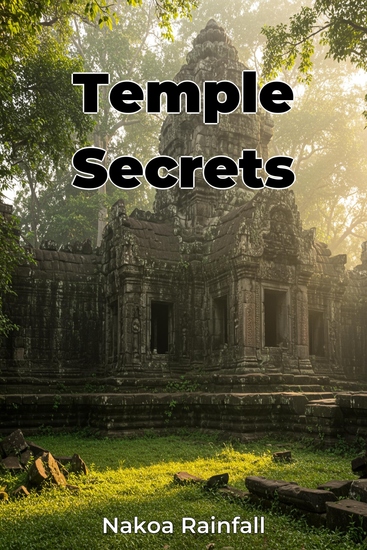
Temple Secrets - cover

Temple Secrets

Nakoa Rainfall

Translator A AI

Publisher: Publifye

  • 0
  • 0
  • 0

Summary

Temple Secrets unveils the enigmatic world of ancient temples, exploring their profound influence on history, religion, and the development of early civilizations. This captivating book examines temples not merely as places of worship, but as active agents in shaping religious beliefs, social structures, and cultural identities.

 
Discover how the architectural designs of these sacred spaces often reflected complex cosmological beliefs, aligning with astronomical events and embodying a worldview connecting the earthly and divine realms. The book journeys from the earliest Neolithic structures to the grand temples of Egypt, Greece, and Rome, reconstructing the rituals, sacrifices, and initiations that occurred within these sacred spaces.

 
By analyzing archaeological evidence and ancient texts, Temple Secrets reveals how these temple rituals played a crucial role in shaping religious experiences and fostering social cohesion. The book progresses across three parts, beginning with the symbolic language of temple architecture, then delving into specific case studies of temples from various cultures, before synthesizing findings to draw broader conclusions about the role of temples in human history.

 
Drawing upon archaeology, anthropology, and religious studies, the book presents a holistic view of temples' role in human culture. It emphasizes the importance of understanding the social and political contexts in which temples were constructed to fully grasp their symbolic meaning and function within ancient cultures. This exploration offers readers a deeper understanding of humanity's spiritual past and the enduring quest for meaning and transcendence.
Available since: 02/27/2025.
Print length: 63 pages.

Other books that might interest you

  • Göbekli Tepe: The History and Mystery of One of the World’s Oldest Neolithic Sites - cover

    Göbekli Tepe: The History and...

    Editors Charles River

    • 0
    • 0
    • 0
    The Neolithic period came before the Bronze Age and is generally regarded as the final subdivision of the Stone Age. During this time, communities domesticated plants and certain animals but still relied on hunting and gathering to a considerable extent, and beginning sometime around 7000 BCE, handmade pottery was developed, along with more advanced stone axes that enabled people to clear vast forests. Thanks to tools like that, the sizes of these Neolithic communities ranged from thousands to as few as a hundred, and they spread across the world with a variety of cultures and languages. One aspect these cultures had in common was that they relied on similar tools made of stone, wood, and bone. 
    Despite the fact some Neolithic communities grew to considerable sizes, they’re typically not considered when people think of the first ancient civilizations or the first major cities, so when German archaeologists discovered the archaeological site of Göbekli Tepe in southeastern Turkey in the 1990s, it created an academic firestorm that is still raging. Far from being just another settlement, Göbekli Tepe has been described as the world’s first temple and perhaps one of the locations where human civilization began. Subsequent archaeological work at Göbekli Tepe has revealed that the site was a spiritual center for the local population during a time when humans were undergoing a transition as hunter-gatherers in the Paleolithic Period to a more sedentary lifestyle in the Neolithic Period, more than 10,000 years ago. Further research in the disciplines of anthropology, religion, and history indicate that the activity at Göbekli Tepe subsequently set the tone for elements of Neolithic and Bronze Age religion and ideology in the Near East, especially in Anatolia (roughly equivalent with modern Turkey).
    Show book
  • The Words We Lost (A Fog Harbor Romance) - cover

    The Words We Lost (A Fog Harbor...

    Nicole Deese

    • 0
    • 0
    • 0
    Three friends. Two broken promises. One missing manuscript.  
     
    As a senior acquisitions editor for Fog Harbor Books in San Francisco, Ingrid Erikson has rejected many a manuscript for lack of defined conflict and dramatic irony--two elements her current life possesses in spades. In the months following the death of her childhood best friend and international bestselling author Cecelia Campbell, Ingrid has not only lost her ability to escape into fiction due to a rare trauma response, but she's also desperate to find the closure she's convinced will come with Cecelia's missing final manuscript. 
     
    After Ingrid jeopardizes her career, she fears her future will remain irrevocably broken. But then Joel Campbell--the man who shattered her belief in happily-ever-afters--offers her a sealed envelope from his late cousin, Cecelia, asking Joel and to put their differences aside and retrieve a mysterious package in their coastal Washington hometown. 
     
    Honoring Cecelia's last request will challenge their convictions and test their loyalties, but through it all, will Ingrid and Joel be brave enough to uncover a twice-in-a-lifetime love? 
     
    "The Words We Lost is thought-provoking and tender, capturing the transformative beauty of surviving."--T.I. LOWE, bestselling author of Under the Magnolias 
     
    "A poignant, masterful exploration of the enduring power of friendship and love."--IRENE HANNON, author of the bestselling Hope Harbor series
    Show book
  • The Fear Anger & Love Collection - cover

    The Fear Anger & Love Collection

    Ram Dass

    • 0
    • 0
    • 0
    We've pulled together some of our best Ram Dass titles for a specially priced compilation that comes at an amazing discount. This offer will get you some of his best titles.
     
    This compilation Includes: 
    
      The Balance of Mind and Heart
      Suffering
      How Can We Help
    
     
    Ram Dass explains that we must first acknowledge our humanity, if we hope to be an instrument of presence and peace. When we embrace our humanness, we create the space necessary for compassion to arise. We learn to balance the suffering we encounter with the innate empathy of the human heart. We awaken through our life experiences, which become the curriculum for our incarnation. Our humanity itself is the vehicle through which our spirit can manifest. The help we offer is who we are, our very being.
     
    Ram Dass asks us to consider the ways in which our culture’s pervading myth of unbridled individualism has generated the destabilizing forces confronting us. "Injustice is rooted in a frightened heart."To remain open to the tremendous suffering we encounter requires an exquisite balance of the rational mind and intuitive heart. Ram Dass' exploration of practical methods for expanding our awareness without closing our hearts offers a blueprint for how we might navigate an ever-changing universe and return home to that quality of being where there is only one of us.
    Show book
  • Lingala Audio Bible – Lingala Contemporary Bible - cover

    Lingala Audio Bible – Lingala...

    Zondervan Zondervan

    • 0
    • 0
    • 0
    Enjoy this voice-only audio recording of the Lingala Contemporary Bible™, read by two different readers. The Lingala Contemporary Bible™ offers a faithful rendering of Scripture’s original word order while also delivering the most comprehensive and clear translation of the Bible’s stories and concepts in the Lingala language.
    Show book
  • Hallowed Ground - The Folklore of Churches and Churchyards - cover

    Hallowed Ground - The Folklore...

    Mark Norman

    • 0
    • 0
    • 0
    Hallowed Ground examines the surprising traditions, customs, superstitions, and secular imagery found in Christian churches and churchyards, with a particular emphasis on the traditional rural protestant church.   Beginning with stories associated with the construction of church buildings themselves and the role that they played in the community, the book moves through a number of subjects where everything might not be as it would seem it should be in the Christian church and its grounds.   Expect vestiges of pagan symbols hidden in the fabric of the church building and clergymen rumored to hold strange arcane knowledge of their own, kept within their personal occult libraries. Learn the ways in which you can use the church and its grounds to divine who might die in the next twelve months, where you might find love, and how you might cure illnesses.   Watch out for a number of figures you wouldn’t expect to find on such holy ground, from run-ins with the devil to spectral figures inhabiting the church or its graves. Discover some of the ways in which magic and witchcraft seep into the hallowed ground of the churchyard from outside.  Hallowed Ground will offer more than a few surprises about the folklore that surrounds the church and churchyard and a fascinating insight into the social history of our place of traditional Sunday worship, all delivered with the academic rigor and accessible, engaging style for which the author is known.
    Show book
  • Know Thyself - Catholic Classical Education and the Discovery of Self - cover

    Know Thyself - Catholic...

    Andrew Youngblood

    • 0
    • 0
    • 0
    Across the United States and around the world, there has been an ongoing resurgence in classical education, including among Catholics. The classical model, rooted in the ancient Socratic method, is flourishing, and classical Catholic schools continue to multiply and grow. But classical education also has its detractors. Some parents and teachers worry that it is impractical, outdated, or, worse, judgmental.       In Know Thyself, Andrew Youngblood, an educator with decades of experience in classical learning as both a student and teacher, introduces readers to this exciting education alternative and its intellectual and spiritual benefits. Youngblood defines the essence of classical Catholic education, explores its integrated and narrative approach to learning, and presents its transformative power and beauty.       Through brief vignettes, personal anecdotes from students and teachers, and examples from the classroom, Know Thyself makes a positive case for an education journey that teaches students to see themselves through God’s eyes—and to truly know themselves and who they are called to be. 
    Show book