Join us on a literary world trip!
Add this book to bookshelf
Grey
Write a new comment Default profile 50px
Grey
Subscribe to read the full book or read the first pages for free!
All characters reduced
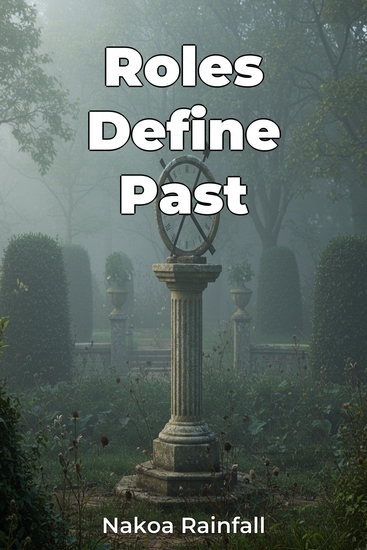
Roles Define Past - cover

Roles Define Past

Nakoa Rainfall

Translator A AI

Publisher: Publifye

  • 0
  • 0
  • 0

Summary

"Roles Define Past" delves into the historical influence of gender roles and how they've shaped societies. It examines how these roles, often seen as social constructs rather than innate traits, have dictated access to resources, power, and social standing across various cultures. The book argues that although explicit gender constraints are lessening, their subtle echoes persist, affecting everything from the wage gap to career choices. Readers will gain insight into how patriarchal structures influenced historical events and the confinement of women to domestic spheres.

 
The book progresses by first exploring the overt manifestations of gender roles in history, then analyzing their gradual erosion due to industrialization and social activism. Finally, it uncovers the subtle persistence of these gendered expectations in modern society. The book draws on diverse sources, including historical accounts, sociological studies, and economic data, to present a comprehensive picture.

 
It connects to fields like sociology and economics to provide a richer understanding of how gender duties impact labor markets and social dynamics. What sets "Roles Define Past" apart is its focus on the interplay between historical forces and individual agency, acknowledging constraints while highlighting resistance. It avoids jargon, aiming to engage a broad audience interested in understanding the evolution and relevance of gender duties, making it valuable for educators, policymakers, and individuals seeking self-reflection.
Available since: 02/27/2025.
Print length: 62 pages.


Other books that might interest you

  • Learning To Be Grateful - cover

    Learning To Be Grateful

    Jim Colajuta

    • 0
    • 0
    • 0
    According to the World Health Organization (WHO), mental health is a condition of well-being. Individuals recognize their own strengths, cope with daily challenges, work well, and contribute to their community.Gratitude has long been recognized as a desirable attribute that can improve one's well-being, from ancient religious texts to modern scientific evidence-based study. According to the evidence, the advantages of gratitude practice can be grouped into the following categories: increased happiness and life satisfaction; successful dealing with hardship; strengthened social relationships; improved health; and broadening civic, moral, and spiritual dimensions. On the other hand, gratitude is not an innate response to life conditions. It must be intentionally nurtured through gratitude-inducing activities.It's simple to see why focusing on what you have rather than what you don't is a good idea. Developing an appreciation for all of life's great qualities that you may have neglected allows you to focus on feelings of fulfillment, happiness, and abundance rather than longing, frustration, and bitterness. People who constantly reflect on their blessings are happier, better equipped to make decisions to improve their condition, and less prone to depression. People who start keeping a thankfulness journal regularly generally notice an improvement in their attitude. It's because gratitude lists are so popular. After all, they're a simple act that involves minimal effort yet yields tremendous effects.Most of us understand the importance of thanking those who assist us or simply acknowledging what we are grateful for in life. Gratitude has been connected to various benefits, including enhancing your immune system and sleep patterns, feeling more hopeful and experiencing more joy and pleasure, being more helpful and generous, and feeling less lonely and alienated, according to research. Gratitude is a means for people to appreciate what they already have rather than con
    Show book
  • Issue between Black & White The (Vol1) - The Real War - cover

    Issue between Black & White The...

    Pen of Venom

    • 0
    • 0
    • 0
    This is the first of what I expect to be many, covering 'The Real War', "The RACE-WAR!" The struggles of Whites, Blacks and Ethnic minorities to co-exist peacefully, with historical events, current affairs, controversial ideologies and much more, in an attempt to bring clarity and context to perhaps the most polarizing subject known to man besides Politics and Religion..."Race!"
    Show book
  • A Short History of Tomb-Raiding - The Epic Hunt for Egypt’s Treasures - cover

    A Short History of Tomb-Raiding...

    Maria Golia

    • 0
    • 0
    • 0
    A spine-tingling exploration of a venture as ancient as the pyramids themselves. 


    To secure a comfortable afterlife, ancient Egyptians built fortress-like tombs and filled them with precious goods, a practice that generated staggering quantities of artifacts over the course of many millennia—and also one that has drawn thieves and tomb-raiders to Egypt since antiquity. Drawing on modern scholarship, reportage, and period sources, this book tracks the history of treasure-seekers in Egypt and the social contexts in which they operated, revealing striking continuities throughout time. Listeners will recognize the foibles of today's politicians and con artists, the perils of materialism, and the cycles of public compliance and dissent in the face of injustice. In describing an age-old pursuit and its timeless motivations, A Short History of Tomb-Raiding shows how much we have in common with our Bronze Age ancestors.
    Show book
  • American Hero - The Life and Death of Audie Murphy - cover

    American Hero - The Life and...

    Charles Whiting

    • 0
    • 0
    • 0
    As a teenager Audie Murphy left his home in Texas to join in the fight against the Nazis. By the end of the war, he had fought in the bloody battle of Anzio, helped liberate Rome, marched his way across France, repelled German counterattacks in Alsace, before finishing in Germany. He was wounded three times, killed over two hundred enemies, and won every medal for valor that the United States had to offer. 


    Charles Whiting charts Murphy's journey through World War Two, shedding light on his courageous actions. 


    Yet what price did young Audie Murphy pay for becoming America's most decorated soldier of the Second World War? 


    Rather than simply focusing on Murphy's achievements in combat, Whiting also explores his life after the war when he struggled with post-traumatic stress disorder, addiction problems, and even twenty years after the war slept with the lights on and a loaded Walther pistol beneath his pillow. 


    American Hero draws upon numerous contemporary sources and a wealth of information drawn from interviews with Murphy's friends and comrades to provide insight into the rise and fall of Audie Murphy.
    Show book
  • War of the Keys The: The History and Legacy of the Military Conflict Between the Holy Roman Empire and the Vatican - cover

    War of the Keys The: The History...

    Editors Charles River

    • 0
    • 0
    • 0
    It has been famously pointed out that the Holy Roman Empire was neither holy, nor Roman, but it was also not an empire in the sense people expect when hearing the term. In theory, the emperor was the highest prince in Christendom, and his dominion extended the length and breadth of Western Europe. The empire had been created by the papacy when Pope Leo III famously crowned the supposedly unwitting Charlemagne in Saint Peter’s Basilica, intending to recreate the Western Roman Empire. In truth, the imperial power did not extend beyond central Europe, which by the beginning of the 16th century included Germany, northern Italy, and the Netherlands. Even in these lands, however, the emperor struggled to command obedience. His dominion over northern Italy was theoretical only, the cities of the Netherlands were deeply conscious of their ancient rights and privileges, and Germany had long ceased to be compliant. The latter had become a collection of principalities, dukedoms and bishoprics which vied with each other and pursued their own agendas. They were, however, united in only one sense: denying the emperor power and resisting attempts to centralize the government. 
    The clergy occupied a privileged place in medieval society. Europe had inherited Christianity from the Roman Empire, and the concept of a united Christendom and empire were practically synonymous. Indeed, there was no real consciousness of the Roman Empire ever having ended. After the Western Roman Empire collapsed in the late 5th century, the Germanic rulers of Western Europe continued to recognize the Eastern Emperor in Constantinople until Charlemagne, and after the dissolution of the Frankish Empire, the imperial seat was transferred to Otto I, King of East Francia in modern Germany. 
    By the late 10th century, however, the emperor’s reach was rarely felt beyond Germany and northern Italy, and the question of who was supposed to be the imperial head was unresolved.
    Show book
  • Christian Academic Writing - Twelve Practices and Principles for Becoming a Successful Writer - cover

    Christian Academic Writing -...

    Benjamin L. Merkle, Adrianne...

    • 0
    • 1
    • 0
    The journey of writing and publishing includes obstacles such as writer's block, fear of rejection, getting overwhelmed by information, feeling inadequate, and not finding enough time. How is it that some are able to consistently produce work while others struggle to cross the finish line? 
     
    This concise guide to writing in Christian academic settings offers twelve practices and principles for becoming a successful writer. It is written by two authors with a proven track record of publishing success who have a passion for helping students and budding authors improve their writing. This book distills their years of experience to offer inspiration and encouragement for writing and publishing academic works. It is ideal for students writing papers in Christian academic settings and for young academics who want to further develop their writing skills. 
     
    Christian Academic Writing is full of helpful and proven advice that will motivate readers to reach their goals. It focuses on best practices and emphasizes the finished product. Each short, readable chapter includes questions inviting readers to take their writing to the next level.
    Show book