Join us on a literary world trip!
Add this book to bookshelf
Grey
Write a new comment Default profile 50px
Grey
Subscribe to read the full book or read the first pages for free!
All characters reduced
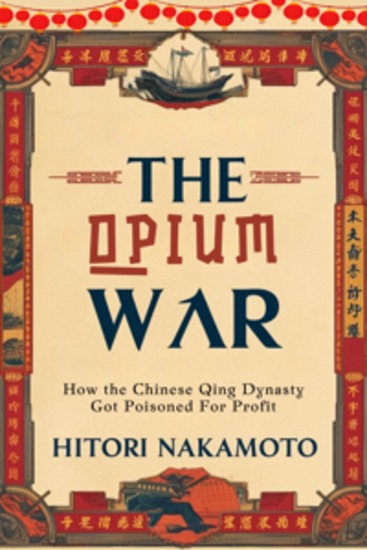
The Opium War - How the Chinese Qing Dynasty Got Poisoned For Profit - cover

The Opium War - How the Chinese Qing Dynasty Got Poisoned For Profit

Nakamoto Hitori

Publisher: Hitori-Nakamoto

  • 0
  • 0
  • 0

Summary

Imagine a world where a single commodity holds the power to unravel an empire. A substance that is so strong, so addictive, it courses through the veins of a whole civilization, making merchants into monarchs, emperors into desperate bargainers. This is the story of opium in China — a story not just of drugs and war, but also of greed, diplomacy and unintended consequences.If we take the long view, 19th century China was an altogether self-sufficient superpower. The Qing Dynasty, with its inflexible traditions and isolationist practices, ruled over a formidable and prosperous empire. Chinese silk, porcelain, and, most of all, tea were in high demand in Britain.  
Available since: 03/01/2025.

Other books that might interest you

  • Raising a Bilingual Child - A step-by-step guide for parents - cover

    Raising a Bilingual Child - A...

    Barbara Zurer Pearson

    • 0
    • 0
    • 0
    Raising a Bilingual Child is a guidebook for what to do and what to expect when you're parenting a bilingual-to-be. It can be used as a quick reference to help with a specific strategy, but also provides the bigger picture of the stages learners go through on their path to language and literacy in one, two, or more languages. The book includes many inspirational accounts from parents and childhood bilinguals. It dispels myths about bilingualism and explains how learning multiple languages at a young age can enhance your child's overall intellectual and emotional development. This version is abridged by the author to focus on the most practical advice.
    Show book
  • Imagination - A Very Short Introduction - cover

    Imagination - A Very Short...

    Jennifer Anna Gosetti-Ferencei

    • 0
    • 0
    • 0
    Imagination: A Very Short Introduction explores imagination as a cognitive power and an essential dimension of human flourishing, demonstrating how imagination plays multiple roles in human cognition and shapes humanity in profound ways. Examining philosophical, evolutionary, and literary perspectives on imagination, the author shows how this facility, while potentially distorting, both frees us from immediate reality and enriches our sense of it, making possible our experience of a meaningful world. Long regarded by philosophers as an elusive and mysterious capacity of the human mind, imagination has been the subject of extraordinary ambivalence, described as both dangerous and divine, as merely peripheral to rationality and as essential to all thinking. Drawing on philosophy, aesthetics, literary and cognitive theory, as well as the human sciences, this book engages the dramatic conceptual history of imagination together with contemporary explanations of its role in cognition to explain its importance in everyday life as well as the exquisite creativity of the arts, scientific discovery, and invention. Engaging examples from cave paintings to modern painting, performance art to pop art, physics to phenomenology, technological inventions to literary worlds, the Nazca geoglyphs to dramatic theater, poetry, and jazz improvisation, the author illuminates with clarity and vision the philosophy of imagination and the stakes of its involvement in human thinking.
    Show book
  • St Catherine of Siena - About the Author Mystic and Activist - cover

    St Catherine of Siena - About...

    Kelly Mass

    • 0
    • 0
    • 0
    Catherine of Siena (who lived from March 25, in 1347 to April 29th, in the year 1380), a Dominican laywoman, was a mystic, activist, and writer who impacted Italian literature and the Catholic Church significantly. She was canonized in 1461 and is a Medical professional of the Church. 
    She was born and raised in Siena and, regardless of her parents' desires, desired dedicate her life to God from an early age. She ended up being a member of the "mantellate," a casual Dominican spirituality group of pious women, mainly widows. Pope Gregory XI's choice to leave Avignon for Rome was affected by her impact. He then dispatched her to Florence to organize a peace treaty. 
    She went back to Siena after Gregory XI's death and the peace agreement was signed. Her spiritual writings, The Discussion of Divine Providence, were determined to secretaries. Catherine of Siena accompanied the pope to Rome as a result of the Great Schism of the West. She wrote some letters to princes and cardinals, advising them to obey Pope Urban VI and protect the "vessel of the Church." She passed away on April 29th, 1380, tired from her stringent fasting. In Rome's Basilica of Santa Maria sopra Minerva, Urban VI held her funeral service and burial. 
    Let’s explore the exceptional life of this catholic saint, who made a significant impact on the culture, the city, and the entire country at the time.
    Show book
  • Fiction Writing Made Easy - Your Creative Writing Companion that Will Help Unlock Your Writing Potential - cover

    Fiction Writing Made Easy - Your...

    Sally Rae Martin

    • 0
    • 0
    • 0
    Fiction Writing Made Easy: Your Creative Writing Companion that Will Help Unlock Your Writing PotentialUnleash Your Creative Genius with "Fiction Writing Made Easy"!Introducing "Fiction Writing Made Easy: Your Creative Writing Companion that Will Help Unlock Your Writing Potential" – the audiobook that will transform your writing journey from daunting to delightful.Are you an aspiring writer eager to craft captivating stories but not sure where to start? Or perhaps you're an experienced author seeking to simplify your creative process? Look no further – this audiobook is your trusted companion on the path to becoming a skilled and confident fiction writer.Explore the art of fiction writing, made effortlessly simple:📖 Your Creative Muse: Learn how to tap into your imagination and channel it into compelling stories that captivate readers.🖋️ Crafting Characters: Master the art of character development, breathing life into your protagonists and antagonists.🌟 Plot Perfection: Discover the secrets to constructing engaging plots that keep readers turning pages.📚 Writing Essentials: Explore the fundamentals of storytelling, from dialogue and pacing to world-building and more.🚀 Unlock Your Potential: Gain the confidence and skills to bring your creative visions to life, no matter your writing experience.It's time to let your creativity soar. This audiobook is your key to unlocking your full writing potential, providing you with the guidance, inspiration, and practical advice needed to embark on a successful fiction writing journey.Don't miss your chance to become the author you've always dreamed of being. Get your copy of "Fiction Writing Made Easy" today, and embark on a writing adventure filled with imagination, mastery, and the satisfaction of knowing you've simplified the art of storytelling. Prepare to captivate readers with your words and create stories that linger in their hearts and minds forever. Your journey to becoming a skilled fiction
    Show book
  • Hannah on Hungerstrike - cover

    Hannah on Hungerstrike

    William T McCartney

    • 0
    • 0
    • 0
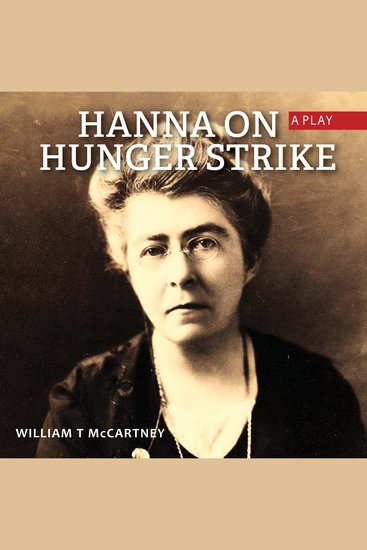
    This play is about Hanna Sheehy Skeffington on hunger strike in Mountjoy. She is joined by James Connolly in Mountjoy prison. In 1913 both were in Mountjoy prison and both went on hunger strike. The people are real and of great historical importance. The events are real. The dialogue is fictitious and is the author’s attempt to simulate the issues at that time. A degree of artistic nuance has been applied to the setting. The content therefore, while based on real events and people, is not a factual historical record but just the opinion of the author.
    Show book
  • Who Killed Truth? - A History of Evidence - cover

    Who Killed Truth? - A History of...

    Jill Lepore

    • 0
    • 0
    • 0
    Many historians and cultural observers argue we live in a post-truth world—but if truth is dead, who killed it? And how did it die? Join celebrated historian Jill Lepore as she cracks the case by examining key moments in the history of truth, doubt, and evidence across the last century. 
     
    In Who Killed Truth? acclaimed Harvard historian and New Yorker staff writer Jill Lepore traces the origins of our current post-truth crisis. In a series of spellbinding stories, Lepore investigates murders, hoaxes, lies and delusions to reckon with the instability of truth and fiction in the twenty-first century. Listeners will follow Lepore through a fascinating, erudite, and antic journey through the thorny problem of how we know what we know, and why it seems sometimes as if we don't know anything at all anymore.  
      
    Revisiting key moments in U.S. history—from the Scopes Monkey Trial in 1925 to the 1977 National Women’s Convention to the first election predicted by computer, and more—Lepore uncovers the secrets of the past the way a detective might, hot on the trail of the killer of truth. 
      
    Please note: This collection includes content that has been previously released in The Last Archive podcast.
    Show book