Join us on a literary world trip!
Add this book to bookshelf
Grey
Write a new comment Default profile 50px
Grey
Subscribe to read the full book or read the first pages for free!
All characters reduced
Iran - How far women have come - cover

Iran - How far women have come

Nadia Pizzuti

Publisher: All Around srl

  • 0
  • 0
  • 0

Summary

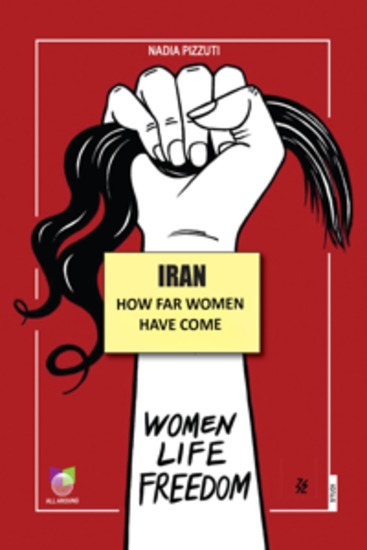
It was young Iranian women who first took to the streets after the killing of Jina Mahsa Amini in September 2022. Many defied the regime by tearing off their veils and casting them into the flames. For months, the protests that followed were carried forward by Generation Z — the daughters, sons, and grandchildren of those who, back in 1997, had voted in large numbers for Mohammad Khatami in the presidential elections.His victory did not democratize the theocratic system, but it did open the way to a series of reforms that gave new momentum to civil society, despite the harsh backlash of the regime’s hardliners. The most recent wave of unrest stems, in part, from the awareness of rights acquired during that season of reforms.To understand what is happening in Iran today, one must look back to those events, which the author witnessed firsthand as a correspondent for the ANSA news agency. In the updated edition of her memoir, the experiences of the protagonists of change intertwine with her own, revealing a multifaceted and often contradictory reality.Journalist, writer, and filmmaker, Nadia Pizzuti worked for 25 years in the foreign news desk of ANSA, focusing in particular on the Arab-Muslim world. She served as correspondent in Tehran, where she lived from 1997 to 2000. She has directed three documentaries, two devoted to figures of Italian feminism and the latest to the life of a Roman female partisan.
Available since: 01/26/2026.


Other books that might interest you

  • The Re-Creation of the World as Expressed Through Myth - cover

    The Re-Creation of the World as...

    Michael Meade

    • 0
    • 0
    • 0
    Meade advises us that we must break the spell of normalcy itself and we must accept the presence of uncertainty. However, the good news is that with every ending there is a new beginning. This deep dialogue explores the collective rite of passage we are experiencing and how using the wisdom of myths gives us a roadmap to the renewal of life itself.
    Show book
  • Bloody Perfect - A Female Female F Short Vampire Romance: Finding Pleasure In Her Monthly Cycle - cover

    Bloody Perfect - A Female Female...

    Lola Bliss

    • 0
    • 0
    • 0
    For Mia Chen, menstruation has always been an inconvenience—until she downloads MonsterFling on a frustrated Friday night. When a vampire named Elise matches with her and specifically asks about her period, Mia discovers her monthly "curse" might actually be a blessing in disguise. 
    What begins as curiosity turns into the most intense night of Mia's life when she meets the elegant, centuries-old vampire who sees her menstruation not as something disgusting, but as something precious and desirable. As a naturally dominant woman, Mia is intrigued to find Elise—powerful enough to snap her in half—willingly submitting to her commands. 
    In this spicy LGBTQ short story, vampire feeding and period play become an unexpected path to pleasure as Mia discovers the erotic potential of embracing what society has taught her to hide. When Elise's cool tongue brings waves of ecstasy, their passionate encounter challenges both women's expectations. 
    As their night of bloodstained sheets and earth-shattering orgasms unfolds, Mia finds herself drawn to more than just Elise's supernatural abilities. The dominant human female and submissive vampire female discover a connection neither expected from a hookup app—one that might last beyond sunrise. 
    Diverse, inclusive, and deliciously explicit, this FF vampire romance explores the beauty of embracing natural cycles and supernatural desires, proving that sometimes the most liberating pleasure comes when someone thirsts for exactly what makes you unique. 
    ONE NIGHT WITH A MONSTER: Sometimes one night is all you need. 
    Author's note: the ending of this short story is Happy For Now.
    Show book
  • Becoming machines 400 Years of Combat Between Man and Machine - cover

    Becoming machines 400 Years of...

    Denis Collin

    • 0
    • 0
    • 0
    For four centuries, the modern world has been dominated by machinery. It was born with capitalist production. It quickly became symbiotic with capitalist development, which found its driving force in mechanics. Calculation, predictability, the power of abstraction - the categories of modern science were well suited to this new mode of production, which was about to invade the planet. However, all trends that lead to the elimination of life in favor of the mechanical lead to a general commodification of human life and a loss of our being-in-the-world. Turning nature into a mere raw material, replacing vital processes with mechanical procedures - all this leads to treating human beings as things, turning them into predictable beings. We therefore need to think in terms of resistance to this movement. The involution of the great Enlightenment movement towards the formation of a techno-scientific steel cage poses the task of rediscovering a sense of nature and life, of rethinking rootedness beyond what Simone Weil had outlined, of remaking nature as a sphere of resonance.
    Show book
  • The American Operations in WW2: North Apennines - cover

    The American Operations in WW2:...

    History U.S. Army Center of...

    • 0
    • 0
    • 0
    World War II was the largest and most violent armed conflict in the history of mankind. Highly relevant today, World War II has much to teach us, not only about the profession of arms, but also about military preparedness, global strategy, and combined operations in the coalition war against fascism. This book follows military operations of the US Army in the Northern Italy from 10 September 1944 to 4 April 1945. 
    By the end of the first week of August 1944 members of the British Eighth Army stood on the Ponte Vecchio, bridging the Arno River in recently liberated Florence, Italy. The Eighth Army had just completed a campaign, in conjunction with the U.S. Fifth Army, that had kept Axis forces in Italy in full retreat, unable to halt the Allied drive north of Rome that had begun with Operation DIADEM the previous May. For the first time since the Italian campaign had begun, Allied leaders were optimistic that they were on the verge of pushing the Germans out of the northern Apennines and sweeping through the Po Valley beyond. After that, many hoped for a rapid advance into the Alps, the Balkans, and perhaps into Austria, before winter and the enemy could stem their advance...
    Show book
  • The Battle of Agincourt - England's Triumph in France - cover

    The Battle of Agincourt -...

    Nova Ashford

    • 0
    • 0
    • 0
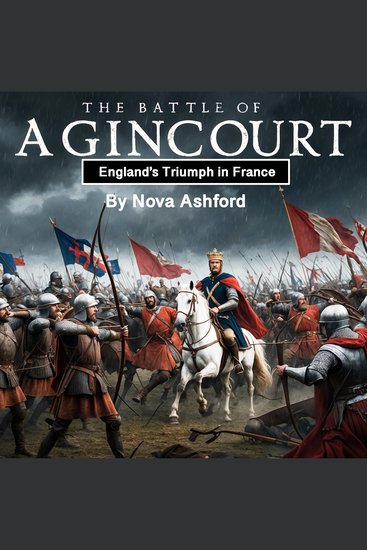
    The Battle of Agincourt, fought on October 25, 1415, stands as one of the most celebrated military victories in English history. It was a defining moment in the Hundred Years’ War, a prolonged conflict between England and France that spanned over a century. Agincourt not only showcased the military brilliance of King Henry V but also demonstrated the effectiveness of the English longbow against heavily armored French knights. The battle’s significance goes beyond a single day of combat—it influenced the course of the war, shaped national identities, and left an enduring legacy in both military history and cultural memory. 
    To fully understand Agincourt, one must first examine the broader conflict in which it took place. The Hundred Years’ War (1337–1453) was a series of intermittent battles and political struggles between England and France, primarily over territorial claims and the right to rule France. The origins of the war can be traced back to the complex feudal relationships of medieval Europe. The English monarchy held vast territories in France, including Aquitaine, a rich and strategically important region. However, growing tensions between the English and French crowns, combined with disputes over succession, led to open warfare. 
    A key factor in the war was the question of who had the legitimate right to the French throne. In 1328, the death of Charles IV of France left the French crown without a direct male heir. Under French succession laws, Philip VI of the House of Valois was chosen as king. However, England’s King Edward III, who was the grandson of a previous French king through his mother, claimed the throne as well. His assertion of this right in 1337 marked the official beginning of the Hundred Years’ War.
    Show book
  • The Power of the Other - The startling effect other people have on you from the boardroom to the bedroom and beyond-and what to do about it - cover

    The Power of the Other - The...

    Anonymous

    • 0
    • 0
    • 0
    An expert on the psychology of leadership and the bestselling author of Integrity, Necessary Endings, and Boundaries For Leaders identifies the critical ingredient for personal and professional wellbeing. 
    Most leadership coaching focuses on helping leaders build their skills and knowledge and close performance gaps. These are necessary, but not sufficient. Using evidence from neuroscience and his work with leaders, Dr. Henry Cloud shows that the best performers draw on another vital resource: personal and professional relationships that fuel growth and help them surpass current limits. 
    Popular wisdom suggests that we should not allow others to have power over us, but the reality is that they do, for better or for worse. Consider the boss who diminishes you through cutting remarks versus one who challenges you to get better. Or the colleague who always seeks the limelight versus the one who gives you the confidence to finish a difficult project. Or the spouse who is honest and supportive versus the one who resents your success. No matter how talented, intelligent, or experienced, the greatest leaders share one commonality: the power of the others in their lives. 
    Combining engaging case studies, persuasive findings from cutting-edge brain research, and examples from his consulting practice, Dr. Cloud argues that whether you’re a Navy SEAL or a corporate executive, outstanding performance depends on having the right kind of connections to fuel personal growth and minimize toxic associations and their effects. Presenting a dynamic model of the impact these different kinds of connections produce, Dr. Cloud shows readers how to get more from themselves by drawing on the strength and expertise of others. You don’t have a choice whether or not others have power in your life, but you can choose what kinds of relationships you want.
    Show book