Join us on a literary world trip!
Add this book to bookshelf
Grey
Write a new comment Default profile 50px
Grey
Subscribe to read the full book or read the first pages for free!
All characters reduced
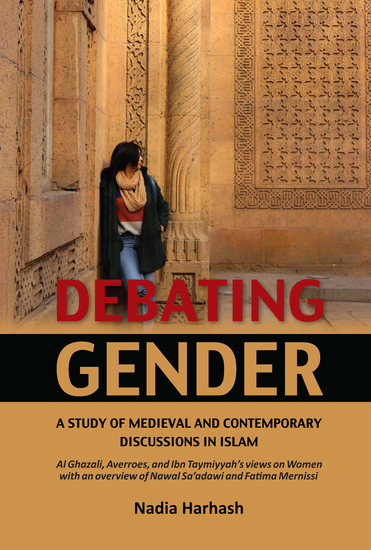
Debating Gender - A Study of Medieval and Contemporary Discussion in Islam - cover

Debating Gender - A Study of Medieval and Contemporary Discussion in Islam

Nadia Harhash

Publisher: Al Nasher Technical Services

  • 0
  • 0
  • 0

Summary

This work is an in-depth examination of medieval and contemporary discussions of gender in Islam, focusing in particular on views of women.
Ms. Harhash wisely introduces the discussion by clarifying the legal status of women in medieval Islam, which provides a useful framework for her discussion.
While her sympathy clearly lies with Averroes, I was particularly impressed by the chapter on al Ghazali, which traces a nuanced picture of al Ghazali's approach to women, highlighting striking differences in his various works and connecting his (to the modern ear) unpalatable claims about women- to his embracement of Sufism.
While Ms. Harhash is attracted to the "progressive" view of Averroes, she offers a lucid analysis of his core egalitarian statements in the commentary on the Republic without omitting to point out that his philosophical position is in some tension with the more traditional position in forming his legal decisions.
Ibn Taymiyyah is probably the biggest villain in Ms. Harhash's narrative and is portrayed as a kind of antipode to Averroes.
With respect to modern discussion, she focuses on Nawal El Saadawi and Fatima Mernissi, where she situates the modern discussion vis a vis its medieval counterpart and highlights differences and commonalities.
Ms. Harhash does a good job showing how the critique of the oppression of women in modern days leads to the same question that she had already addressed in Averroes, namely whether a critique of unjust structures in contemporary Islamic societies can be separated from a critique of Islam itself.
Overall, the thesis is a remarkable achievement. Ms. Harhash reconstructs the medieval and modern discussion with intellectual confidence and independence and brings out similarities and differences that are genuinely illuminating.
Available since: 05/31/2024.
Print length: 108 pages.

Other books that might interest you

  • Binge Killer - cover

    Binge Killer

    Brittany Forrester

    • 0
    • 0
    • 0
    Research on Binge Eating Disorders is limited compared to studies on other eating disorders, including Anorexia Nervosa and Bulimia Nervosa. Given that Binge Eating Disorder recently became an independent diagnosis in the DSM-5, has significant medical implications, and commonly involves psychiatric comorbidity, it is worthwhile to explore contributing factors and evidence-based treatment for the disorder. Cognitive Behavioral Therapy is an evidence-based treatment for Binge Eating Disorder, and most experts agree that while it yields positive treatment results, there is room for improvement in treatment. Shame is an essential contributing factor in developing and maintaining Binge Eating Disorder. Cognitive behavioral therapy focuses on the premise that an individual’s thoughts, feelings, and behaviors are intertwined and can ultimately be restructured to support more effective actions. Historically routed in treating depression and anxiety, CBT is becoming more prevalent in eating disorder treatment settings, particularly more recently, with Binge Eating Disorder.CBT focuses on three phases of treatment: the behavioral phase, the cognitive phase, and the maintenance and relapse phase.
    Show book
  • The Expanding Circle - Ethics Evolution and Moral Progress - cover

    The Expanding Circle - Ethics...

    Peter Singer

    • 0
    • 0
    • 0
    What is ethics? Where do moral standards come from? Are they based on emotions, reason, or some innate sense of right and wrong? For many scientists, the key lies entirely in biology—especially in Darwinian theories of evolution and self-preservation. But if evolution is a struggle for survival, why are we still capable of altruism? 


    In his classic study The Expanding Circle, Peter Singer argues that altruism began as a genetically based drive to protect one's kin and community members but has developed into a consciously chosen ethic with an expanding circle of moral concern. Drawing on philosophy and evolutionary psychology, he demonstrates that human ethics cannot be explained by biology alone. Rather, it is our capacity for reasoning that makes moral progress possible. In a new afterword, Singer takes stock of his argument in light of recent research on the evolution of morality.
    Show book
  • Empire Unraveled - cover

    Empire Unraveled

    Anonymous

    • 0
    • 0
    • 0
    This book charts the turbulent twilight of the Mongol imperium and the astonishing resilience of the world it rewired. Beginning with the succession crises after Kublai Khan, it follows the splintering of the Yuan, Ilkhanate, Chagatai, and the Golden Horde—revealing how court intrigue, climate shocks, and the Black Death intersected with finance, technology, and faith. Across nine deeply researched chapters, the book uncovers how postal roads became arteries for ideas as much as armies; how blue-and-white porcelain, paper finance, and siege machines moved across languages and borders; and how legal reforms and city-building created bureaucratic habits that endured long after dynasties fell.
    Show book
  • On Benefits - cover

    On Benefits

    Lucius Annaeus Seneca

    • 0
    • 0
    • 0
    The original Latin name of this important essay by Seneca, written around 60 CE, was De Beneficiis, which is why it is generally translated as ‘On Benefits’. However, it is more usefully titled ‘On Favours’, because this is what it is essentially about: the giving and receiving of favours, with all the implications of such transactions. Seneca is concerned with demonstrating that while such exchanges can be straightforward and beneficial to both parties, often there are pitfalls and hidden complications that, sooner or later, result in problems. Though some centuries later Shakespeare summed it up concisely with Polonius’s warning: ‘Neither a borrower nor a lender be,’ Seneca is well aware that in all levels and activities of society, benefits or favours play an undoubtedly crucial role. This was certainly true of Roman society, but little has changed since. Seneca deals with the subject in detail, considering the purposes of role of the giver, of which ‘kindness’, he says, is an important aspect – but not the only one by any means. Similarly, the role and attitude of the receiver, plays its part – and ‘gratitude’ is again only one response. Seneca’s background as a Stoic underpins his approach, so he warns against the inappropriate giving and receiving of benefits, which extend far beyond just material goods: it includes influence, wives, patronage and all manner of vice and immorality. In short, Seneca points out that the giving and receiving of favours can be, and often is a pernicious and dangerous affair, resulting in later disaster. Something to be exercised with caution.
    Show book
  • Stop Social Anxiety Sleep Hypnosis - cover

    Stop Social Anxiety Sleep Hypnosis

    Dreamy Hypnosis

    • 0
    • 0
    • 0
    Are you tired of social anxiety dictating your life? Do you yearn to interact confidently and effortlessly with those around you? Do you wish for restful sleep and a peaceful mind? 
    Introducing a unique audio solution that combines sleep hypnosis and social anxiety management, designed just for you. This audiobook is a powerful tool that will help you overcome social fears, develop stronger self-confidence, and promote a healthier, happier you. 
    Utilizing the potent power of hypnotherapy, the audiobook gently guides you into a deep, restful sleep. As you slumber, the carefully crafted script works on your subconscious, replacing anxiety and fear with self-assurance and calmness.  
    Wake up feeling refreshed, confident, and ready to embrace social interactions without fear. Picture yourself conversing easily, engaging with others, and enjoying social events without a hint of anxiety. It's not a distant dream but a reality you can achieve. 
    Take control of your social anxiety and sleep now. Start your journey to a worry-free life filled with confident interactions, positive mindsets, and restful nights. Embrace the transformation that awaits with our Stop Social Anxiety Sleep Hypnosis audiobook. Let this be the first step to the freedom you deserve.
    Show book
  • Playful Materialities - The Stuff That Games Are Made Of - cover

    Playful Materialities - The...

    Gundolf S. Freyermuth, Benjamin...

    • 0
    • 0
    • 0
    Game culture and material culture have always been closely linked. Analog forms of rule-based play (ludus) would hardly be conceivable without dice, cards, and game boards. In the act of free play (paidia), children as well as adults transform simple objects into multifaceted toys in an almost magical way. Even digital play is suffused with material culture: Games are not only mediated by technical interfaces, which we access via hardware and tangible peripherals. They are also subject to material hybridization, paratextual framing, and processes of de-, and re-materialization.
    Show book