Join us on a literary world trip!
Add this book to bookshelf
Grey
Write a new comment Default profile 50px
Grey
Subscribe to read the full book or read the first pages for free!
All characters reduced
Sri Guru & Sampaka Gita - In English Rhyme - cover

Sri Guru & Sampaka Gita - In English Rhyme

Munindra Misra

Publisher: Munindra Misra

  • 0
  • 0
  • 0

Summary

Sri Guru Gita in English rhyme enlightens who is the true Guru, his characteristics & how he enlightens his student to liberation and salvation.
 
Hidden ignorance, absence of knowledge be, Of Self, Maya, body—due to ignorance only By whose grace knowledge of Self got be, He is known by the name ‘Guru’ assuredly.
 
Sri Sampaka Gita in English rhyme is a part of the ancient Mahabharat.Sri Sampaka Gita is a dialogue between Yudhishthira and Bhishma
 
Yudhishthira:'Grandsire! How the happiness and misery,Achieved by the rich and poor in actuality?And who live in the observance in reality,Do tell different practices and rites worldly?
 
Bhishma's reply concludes as follows:For this reason, I regard Renunciation clearly,To be the foremost of all things unquestionably.
Available since: 01/02/2023.
Print length: 50 pages.
Other books that might interest you

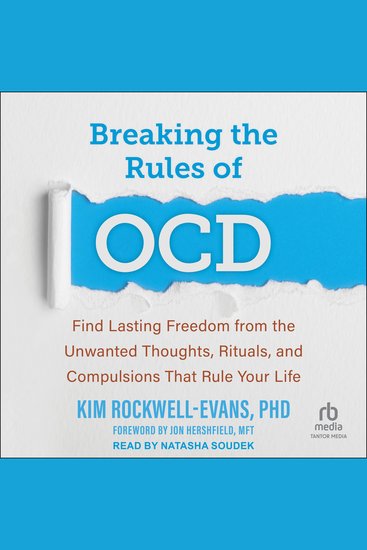
  • Breaking the Rules of OCD - Find Lasting Freedom from the Unwanted Thoughts Rituals and Compulsions That Rule Your Life - cover

    Breaking the Rules of OCD - Find...

    PhD Kim Rockwell-Evans

    • 0
    • 0
    • 0
    If you have obsessive-compulsive disorder (OCD), you may feel like you have to follow a rigid set of rules to successfully get through your day. And if you're like many others, your OCD rule list may look something like this: You must always control your internal experiences; The presence of any anxiety means you are in danger; You alone are responsible if you fail to prevent harm; Pay attention to every single thought you have; Always keep your OCD hidden from others! 


    These rules can keep you feeling stuck, anxious, and unable to move forward in your life. This book will help you break ALL your OCD rules, and will help you understand why that's a good thing. 


    Written by an OCD expert, and grounded in evidence-based exposure and response prevention therapy (ERP), this book addresses the seven most common rules that people with OCD create for themselves, and shows you how to break each one—so you can find freedom from the repetitive thoughts, compulsions, and shame they generate. With practice, you'll be able to move beyond your OCD symptoms and behaviors. 


    If you're ready to toss the OCD rulebook aside and start living with more freedom than ever before, this book can help you step by step.
    Show book
  • Monsters of Wisconsin - Mysterious Creatures in the Badger State - cover

    Monsters of Wisconsin -...

    Linda S Godfrey

    • 0
    • 0
    • 0
    The noted cryptozoologist gives readers a rundown of the Wisconsin unknowns—from creatures of the sky to lake dwellers, aliens to lumberjack legends.   “These riveting accounts of monsters in the heart of America are expertly chronicled by Linda S. Godfrey. The numerous detailed eyewitness reports will open your mind to the real possibility of ‘unknowns’ that may live at the edge of our driveways and backyards.” —Doug Hajicek, producer/creator of History Channel’s MonsterQuest   Bizarre beasts of the Badger State featured in this volume include:    The Beast of Bray Road  Sasquatch  Rocky of Rock Lake  Dragons of Green Bay  Werewolves  Flying lizard men  Out-of-place kangaroos  Goat men
    Show book
  • The Lost Art of Dying - Reviving Forgotten Wisdom - cover

    The Lost Art of Dying - Reviving...

    Anonymous

    • 0
    • 0
    • 0
    A Columbia University physician inspires us to rethink death and offers insights on how we can learn to embrace the art of dying well in this wise, clear-eyed book that is as compelling and soulful as Being Mortal, When Breath Becomes Air, and Smoke Gets in Your Eyes. 
     
    As a specialist in both medical ethics and the treatment of older patients, Dr. Lydia Dugdale knows a great deal about the end of life. Far too many of us die poorly, she argues. Our culture has overly medicalized death: dying is often institutional and sterile, prolonged by unnecessary resuscitations and other intrusive interventions. We are not going gently into that good night—our reliance on modern medicine can actually prolong suffering and strip us of our dignity. Yet our lives do not have to end this way. 
    Centuries ago, in the wake of the Black Plague, a text was published offering advice to help the living prepare for a good death. Written during the late Middle Ages, Ars moriendi—The Art of Dying—made clear that to die well, one first had to live well. When Dugdale discovered this Medieval book, it was a revelation. Inspired by its holistic approach to the final stage we must all one day face, she draws from this forgotten work, combining its wisdom with the knowledge she has gleaned from her long medical career. The Lost Art of Dying is filled with much-needed insight and thoughtful guidance that will change our perceptions. Dr. Dugdale offers a hopeful perspective on death and dying as she shows us how to adapt the wisdom from the past to our lives today.  
    Part of living well means preparing for the end, Dr. Dugdale reminds us. By recovering our sense of finitude, confronting our fears, accepting how our bodies age, developing meaningful rituals, and involving our communities in end-of-life care, we can discover what it means to both live and die well.  
    The Lost Art of Dying is a vital, affecting book that reconsiders death, death culture, and how we can transform how we live each day, including our last. 
    Supplemental enhancement PDF accompanies the audiobook.
    Show book
  • Giving My All - An Autobiography of Earl Martin Phalen - cover

    Giving My All - An Autobiography...

    Earl Martin Phalen

    • 0
    • 0
    • 0
    Giving My All captures the journey of Earl Martin Phalen as he navigates family, self-identity and purpose.As a black boy adopted into a large, loving Irish Catholic family at age two, Earl discovered at a young age that he was meant to stand out. Yet whether it was on the basketball court or early in his career as a young and ambitious “edupreneur,” Earl encountered opportunities that required him to give his all, but often found himself holding back. Earl faced both subtle and overt racism in his predominantly white neighborhoods, but with the love and unrelenting support of his family, he was able to overcome much—facing it most directly and intentionally for the first time when he arrived on Yale campus as a young athlete scholar. While at Yale, Earl gained a new sense of pride and purpose as he connected with his black and African American heritage. This would continue throughout his studies and into graduate school at Harvard Law, where his calling to education—particularly that of black and brown children—came to life. Earl has dedicated his life to improving the access poor, black and brown children have to quality education and opportunities.
    Show book
  • Of Bears and Weight Loss - How to Manage Triggers Lose Weight and Enjoy Getting Fit - cover

    Of Bears and Weight Loss - How...

    Dr. Brian King

    • 0
    • 0
    • 0
    Psychologist, stand-up comedian, and bestselling author Dr. Brian King reveals the techniques he used to lose one hundred pounds, and provides guidance and humor to make your weight loss journey a healthy, sustainable, and even enjoyable one. 


    Dr. Brian King studied neuroscience and psychology before touring the world as a stand-up comedian and public speaker. Yet despite giving life guidance to others, he was carrying an extra one hundred pounds, taking up too much space in airplane seats and keeping the opposite sex at bay. 


    When Dr. Brian committed to change, he embraced his understanding of human behavior and mindsets to reframe his approach to a healthy lifestyle. Now having lost most of the weight, he uses his signature combination of humor and neuroscience to delve deep into mindfulness, stress, habits, willpower, diet, exercise, and much more to guide listeners in losing weight and keeping it off. 


    Whether you are looking to shed those final five, the COVID fifteen, or the weight of another adult, Of Bears and Weight Loss offers life-changing tips and instructions that will have you embracing change with humor and the power to finally see your goals through to completion.
    Show book
  • Spain’s Explorers in the Age of Discovery - cover

    Spain’s Explorers in the Age of...

    Editors Charles River

    • 0
    • 0
    • 0
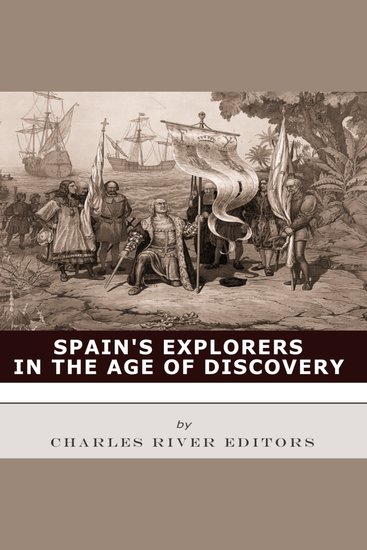
    The most seminal event of the last millennium might also be its most controversial. As schoolchildren have been taught for over 500 years, “In 1492 Columbus sailed the ocean blue.” In October of that year, the Italian Christopher Columbus immortalized himself by landing in the New World and beginning the process of European settlement in the Americas for Spain, bringing the Age of Exploration to a new hemisphere with him. Ironically, the Italian had led a Spanish expedition, in part because the Portugese rejected his offers in the belief that sailing west to Asia would take too long. 
    If Columbus and Cortés were the pioneers of Spain’s new global empire, Pizarro consolidated its immense power and riches, and his successes inspired a further generation to expand Spain’s dominions to unheard of dimensions. Furthermore, he participated in the forging of a new culture: like Cortés, he took an indigenous mistress with whom he had two mixed-race children, and yet the woman has none of the lasting fame of Cortés’s Doña Marina. With all of this in mind, it is again remarkable that Pizarro remains one of the less well-known and less written about of the explorers of his age. 
    Today Ferdinand Magellan is remembered as the first man to circumnavigate the globe, an ironic legacy given that he died half a world away from completing that journey. But though it ended catastrophically for Magellan and most of his crew, his expedition accomplished its objective, and in economic terms, the opening up of new trade routes with Asia was a more significant development than the conquest of the Americas for the Europeans of the early 16th century.
    Show book