Sanatan Dharma Scriptures - In English Rhyme
Munindra Misra
Publisher: Munindra Misra
Summary
An Overview of the Scriptures of the Sanatan Dharma to provide an understanding of the huge literature available therein.
Publisher: Munindra Misra
An Overview of the Scriptures of the Sanatan Dharma to provide an understanding of the huge literature available therein.
On Compromise is an argument against contemporary liberal society’s tendency to view compromise as an unalloyed good—politically, ethically, and artistically. In a series of clear, convincing essays, Rachel Greenwald Smith discusses the dangers of thinking about compromise as an end, rather than as a means. To illustrate her points, she recounts her stint in a band as a bass player, fighting with her bandmates about “what the song wants,” and then moves outward to Bikini Kill and the Riot Grrrl movement, the Iowa Writers’ Workshop, Poetry magazine, the resurgence of fascism, and other wide-ranging topics.Smith’s arguments are complex and yet have a simplicity to them, as she writes in a concise, cogent style that is eminently readable. By weaving examples drawn from literature, music, and other art forms with political theory and first-person anecdotes, she shows the problems of compromise in action. And even as Smith demonstrates the many ways that late capitalism demands individual compromise, she also holds out hope for the possibility of lasting change through collective action. Closing with a piercing discussion of the uncompromising nature of the COVID-19 pandemic and how global protests against racism and police brutality after the murder of George Floyd point to a new future, On Compromise is a necessary and vital book for our time.Show book
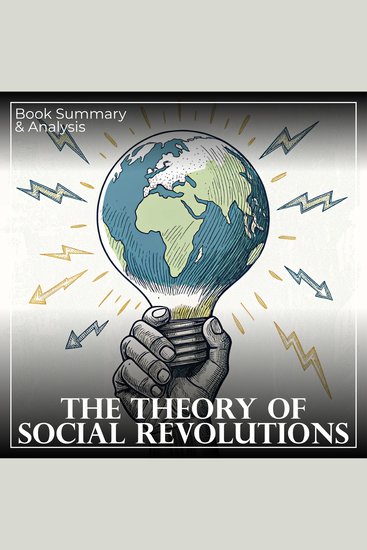
This is a concise summary and analysis of The Theory of Social Revolutions, by Brooks Adams. It is not the original book and is not affiliated with or endorsed by Brooks Adams. Ideal those seeking a quick and insightful overview. In The Theory of Social Revolutions, the author examines the rise and fall of societies through the lens of history, economics, and human behavior. By analyzing the interplay of power, wealth, and governance, the book explores the inevitable cycles of social and political change that shape civilizations. Blending historical insight with sharp social critique, this work offers a timeless perspective on the forces driving revolutions and the consequences they bring. Ideal for readers interested in understanding the dynamics of societal upheaval and the patterns of history, this book remains as relevant today as when it was first written.Show book
How did our brains change over the course of evolution, and what did it mean for our ancestors? Why do we behave the way we do today? Evolutionary psychology is the only framework that allows us to fully understand the nuances of humans' motivations, emotions, cognitions, and behaviors. Our bodies have evolved over time, and so too have our brains. How we respond to situations emotionally, our thoughts, our motivations, and our behaviors have a deep heritage based on the successes of our ancestors in meeting their survival or reproductive needs.In this Very Short Introduction, Maryanne L. Fisher and T. Joel Wade unfold the intriguing idea that our brain, like every other body part, has been shaped over time by natural and sexual selection. Fisher and Wade consider the contexts in which our ancestors thrived and explore how people today think and act using an evolutionary compass. This research-oriented exploration addresses diverse topics, organized into chapters on the principles underlying this approach, survival issues, group alliances, aggression, family dynamics, and mating strategies. It touches on a broad array of topics like fears, disgust, attraction, sibling conflict, friendship, and homicide.Show book
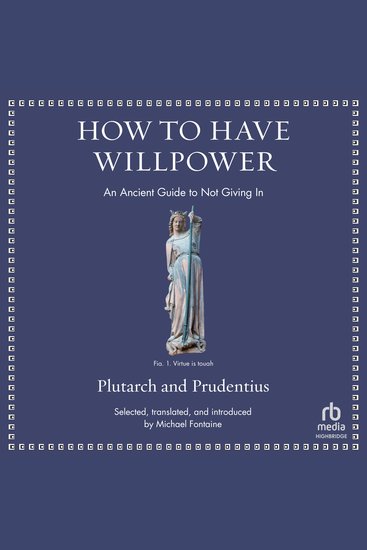
How to Have Willpower brings together two profound ancient meditations on how to overcome pressures that encourage us to act against our own best interests—Plutarch's essay On Dysopia or How to Resist Pressure and Prudentius's poetic allegory Psychomachia or How to Slay Your Demons. Challenging the idea that humans are helpless victims of vice, these works—introduced and presented in vivid, accessible new prose translations by Michael Fontaine—emphasize the power of personal choice and the possibility of personal growth, as they offer insights and practical advice about resisting temptation. In the spirit of the best ancient self-help writing, Plutarch, a pagan Greek philosopher and historian, offers a set of practical recommendations and steps we can take to resist pressure and to stop saying "yes" against our better judgment. And in a delightfully different work, Prudentius, a Latin Christian poet, dramatizes the necessity to actively fight temptation through the story of an epic battle within the human soul between fierce warrior women representing our virtues and vices. Plutarch and Prudentius insist that we allow pressure or temptations to get the best of us. But they also agree that we can do something about it. And their wisdom can help.Show book
America's decision to go to war in Iraq in 2003 is arguably the most important foreign policy choice of the entire post–Cold War era. Nearly two decades after the event, it remains central to understanding current international politics and US foreign relations. In Confronting Saddam Hussein, the eminent historian of US foreign policy Melvyn P. Leffler analyzes why the US chose war and who was most responsible for the decision. Employing a unique set of personal interviews with dozens of top officials and declassified American and British documents, Leffler vividly portrays the emotions and anxieties that shaped the thinking of the president after the shocking events of 9/11. He shows how fear, hubris, and power influenced Bush's approach to Saddam Hussein's Iraq. At the core of Leffler's account is his compelling portrait of Saddam Hussein. Rather than stressing Bush's preoccupation with promoting freedom or democracy, Leffler emphasizes Hussein's brutality, opportunism, and unpredictability and illuminates how the Iraqi dictator's record of aggression and intransigence haunted the president and influenced his calculations. Throughout, Leffler highlights the harrowing anxieties surrounding the decision-making process after the devastating attack on 9/11 and explains the roles of contingency, agency, rationality, and emotion.Show book
"Revolver and Rebellion" delves into the untold stories of women who defied convention and transformed the landscape of Northern Ireland's Troubles. This book uncovers the hidden contributions of female fighters who played pivotal roles in the conflict, challenging traditional narratives and offering a fresh perspective on their complex involvement. This book reveals how these women navigated a world dominated by men, balancing their revolutionary zeal with the harsh realities of gender expectations. From the covert operations of the IRA to the embattled Loyalist factions, "Revolver and Rebellion" explores these remarkable women's diverse motivations, struggles, and triumphs. "Revolver and Rebellion" is essential for anyone interested in the hidden histories of conflict, the power dynamics of gender, and the extraordinary resilience of women who rose to challenge the status quo.Show book