


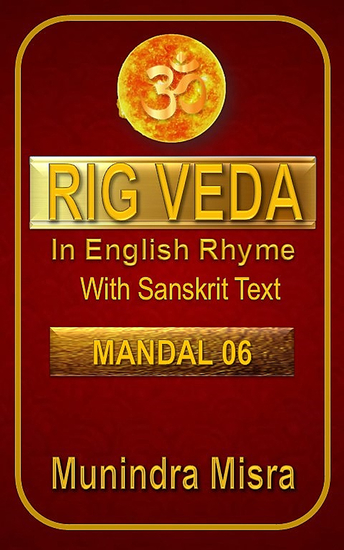
Rig Veda Mandal 6 - In English rhyme
Munindra Misra
Editora: Munindra Misra
Sinopse
The Rig Veda - Mandal 06 with 75 Shuktas in English rhyme
Disponível desde: 05/07/2025.
Comprimento de impressão: 178 páginas.

Editora: Munindra Misra
The Rig Veda - Mandal 06 with 75 Shuktas in English rhyme

Explore Revolutionary Ideologies: Karl Marx's Legacy of Deception and Destruction
Seeking to enhance your understanding of revolutionary ideologies and uncover the hidden truths behind Karl Marx's theories?
Your search ends here!
This audiobook is your definitive companion for deepening your knowledge, engaging critically with Marx's ideas, and unraveling their implications. With this resource, you are equipped for insightful exploration.
Key features of this enriched guide:
- Profound insights into revolutionary ideologies and their impacts
- Detailed exploration of Karl Marx's theories
- Effective strategies for critical examination and discourse
Our audiobook distinguishes itself through comprehensive coverage, essential for a full understanding. Concepts are explored with precision, not merely skimmed over.
Please note that this audiobook is not affiliated with any official entity and is purely an independent resource for your benefit.
Designed with a clear structure and easy-to-understand language, our audiobook ensures smooth transitions between topics. Say goodbye to dense jargon and welcome clear, precise, and technically accurate content.
Why wait? Click the BUY NOW button, secure your audiobook, and begin your journey into the insights of revolutionary ideologies.
Ver livro
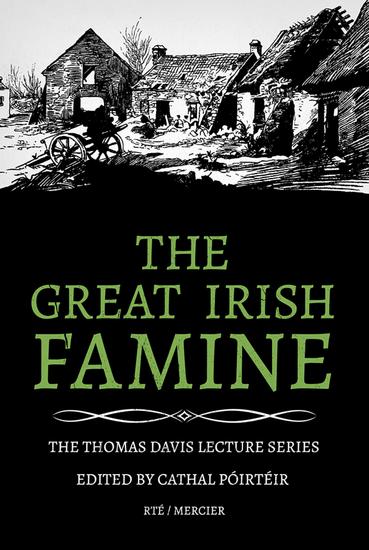
This is the most wide-ranging series of essays ever published on the Great Irish Famine, and will prove of lasting interest to the general reader. Leading historians, economists and geographers – from Ireland, Britain and the United States – have assembled the most up-to-date research from a wide spectrum of disciplines including medicine, folklore and literature, to give the fullest account yet of the background and consequences of the Famine. Contributors include Dr Kevin Whelan, Professor Mary Daly, Professor James Donnelly and Professor Cormac Ó Gráda. The Great Irish Famine was the first major series of essays on the Famine published in Ireland for almost fifty years.Ver livro

Do you want the keys to silencing a parasitic and overthinking mind ?Would you like to radically improve your understanding of yourself and others through the experience of a real clinical psychologist?
With “How to master your emotions”, you'll discover the secrets of:Therapeutic self-analysis and emotional intelligence: You'll discover the power of self-awareness and understanding the sources of your own emotions.Interpersonal communication: You'll discover the secrets of effective communication that strengthens relationships.Interpersonal relationships: Understand the dynamics of healthy relationships and how to deal with toxic people.Spiritual development: You'll find a path to inner harmony and a deeper understanding of yourself.
What's more, this reading will have a very positive impact on:Well-being: You'll find peace within yourself and increase your life energy.Self-confidence: you'll build a solid foundation of self-confidence and self-acceptance.Emotional stability: better management of hypersensitivity and anger. Positive impact on bipolar and borderline disorders.Imposter syndrome, self-sabotage: you'll understand where this comes from, why inner rebellion is essential, and how to lead it.Over-control: OCD and other excessive controlling behaviors.
In a nutshell, this book is a real support and a toolbox for those who are going through a difficult phase in their lives and need a change right now.Discover this unique work on personal transformation to empower yourself and unleash your full potential!
Ver livro
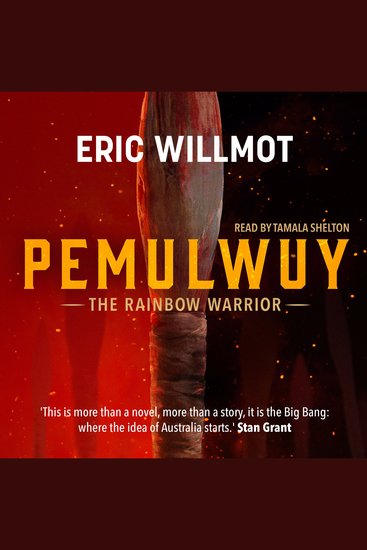
This is the story of one of Australia's first true heroes Pemulwuy. A proud and feared Aboriginal warrior Pemulwuy leads an uncompromising twelve-year war against British colonial oppression and makes the supreme sacrifice in order to guide his people to safety.Most histories of Australia start with the First Fleet and the hard times the colonists had with the climate and unruly convicts. Very few mention what really happened or the blood that was spilled in the wars never spoken of.Pemulwuy a Bidjigal man unites the neighbouring peoples runaway convicts bushrangers and an escaped African known as Black Caesar in a guerilla war that pushes the invading English to the brink. This novel was conceived out of Pemulwuy's legend and the historical events between 1788 and 1802. It is a story that all Australians should know.'This is more than a novel, more than a story, it is the Big Bang: where the idea of Australia starts.' Stan GrantVer livro

The acclaimed author of Byzantium and the Crusades "offers a fresh take on this fabled but hidden civilization" across eleven centuries of history (Colin Wells).


For more than a millennium, the Byzantine Empire presided over the juncture between East and West, as well as the transition from the classical to the modern world. Rather than recounting the standard chronology of emperors and battles, leading Byzantium scholar Jonathan Harris focuses on a succession of archetypal figures, families, places, and events.


Harris's introduction presents a civilization rich in contrasts, combining orthodox Christianity with paganism, and classical Greek learning with Roman power. Though frequently assailed by numerous armies, Byzantium survived by dint of its unorthodox foreign policy. Over time, its sumptuous art and architecture flourished, helping to establish a deep sense of Byzantine identity in its people.


Synthesizing a wealth of sources to cover all major aspects of the empire's social, political, military, religious, cultural, and artistic history, Harris's study illuminates the heart of Byzantine civilization and explores its remarkable and lasting influence on the modern world.
Ver livro

Run! tells the story of how LGBTQ+ people in San Jose/Silicon Valley progressed from being political outcasts to becoming a force that gained political power, equality, and acceptance.
Having lived and breathed queer activism for almost 40 years, Ken Yeager is uniquely positioned to tell the story of how this happened. The strategies he used and the lessons he learned will serve as a guide for activists organizing to counter the current uptick of anti-gay and anti-trans hostilities in their communities.
Run! also serves as a primer for LGBTQ+ people thinking of running for office. As the first openly gay elected official in Santa Clara County who served 26 years in public office, Ken Yeager details his numerous campaigns and provides a checklist for how to achieve electoral victory.
 Winning by itself isn’t enough. It’s what you do while in office that matters. Known as one of the most effective local elected officials, read how Ken Yeager crafted landmark legislation to improve the quality of life of LGBTQ+ people and all residents of Santa Clara Valley.
After reading his book, you’ll be inspired to take him up on his call to Run, Baby, Run! for office.
Visit kenyeagerrun.com for more info.
Ver livro





