


Rig Veda Mandal 1 - In English rhyme
Munindra Misra
Publisher: Munindra Misra
Summary
Rig Veda Mandal 1 in English rhyme with 191 Mandals
Available since: 07/05/2025.
Print length: 450 pages.

Publisher: Munindra Misra
Rig Veda Mandal 1 in English rhyme with 191 Mandals
Inviting new translations of classical Buddhist texts about why the self is an illusion—and why giving it up can free us from suffering


From self-realization and self-promotion to self-help and the selfie, the modern world encourages us to be self-obsessed. We are even told that finding ourselves is the key to happiness. Better to lose yourself! More than 2,500 years ago, the Buddha argued that the self is an illusion—and that our belief in it is the cause of most, if not all, of our suffering. How to Lose Yourself presents lively, accessible, and expert new translations of ancient Buddhist writings about the central, unique, and powerful Buddhist teaching of "no-self."


Drawn from three important Buddhist traditions, these essential Indian, Tibetan, and Chinese writings provide a rich sampling of the ways Buddhist philosophers have understood the idea that we are selfless persons—and why this insight is so therapeutic. When we let go of the self, we are awakened to the presence of all things as they truly are, and we let go of the anxiety, fear, greed, and hatred that are the source of all suffering.
Show book

Many Christians lived in Asia Minor (later Turkey) before the Armenian and Greek genocide by the Muslims at the outset of the twentieth century. The author; Planes, cronicals his father’s true life experience in an effort to make clear the precious freedoms that we have in the United States.
This book presents the true story of a Christian boy and his escape from the genocide of Greek and Armenian Christians. This is a true story of the life of this boy who was born in Asia Minor in 1908; howhe, with his family managed to escape the genocide of Greek and Armenian Christians at the hands of Kamel Ataturk on September 13, 1922; how the boy’s family lived as refugees of genocide on the Island of Crete Greece where they survied World War II; how the boy left his family and immigrated to America; and the boy’s life in America. The book draws a contraxt of the family’s experiences as genocide refugees living in Crete and the boy’s life in America; how these events and those of World War II on the Greek island of Crete influenced them and their children; and his relationship as adults with the boy’s son, the author. The author emphasizes the Christian Orthodox Faith which was tousht to him by his parents. In response to a question about his Faith, the book and why he has written this book, the author stated “It was a lesson by my father to his kids that no matter what you’re confronted with in life if you trust in Christ and you believe without a doubt that Christ is with you, you can get through anything. That was what we learned at a very early age and that’s what stuck with me throughout my life.".....
Show book
"The Elements of Style is an American English writing style guide in numerous editions. The original was written by William Strunk Jr. in 1918, and it was published by Harcourt in 1920, comprising eight "elementary rules of usage," ten "elementary principles of composition," "a few matters of form," a list of 49 "words and expressions commonly misused," and a list of 57 "words often misspelled." Strunk concentrated on the cultivation of good writing and composition; the original 1918 edition exhorted writers to "omit needless words," use the active voice, and employ parallelism appropriately."Show book
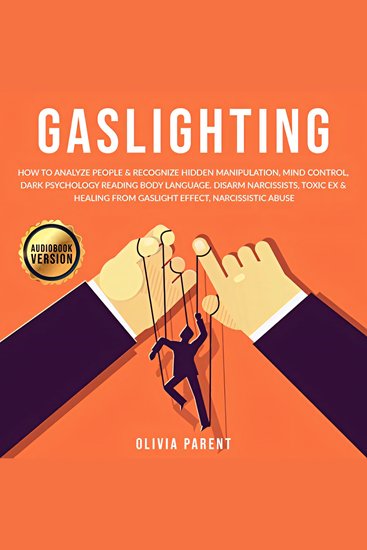
Are you questioning your own sanity in your relationship? Do you feel like you're constantly walking on eggshells, confused about what's real and what's not?
You're not alone. Many people suffer from the manipulative tactics of narcissists and gaslighters. This book is your essential guide to understanding and overcoming gaslighting, a form of emotional abuse that can leave you feeling isolated, insecure, and powerless.Here's what you'll discover:What gaslighting is and how it works (including the science behind it)Clear signs you're being gaslighted in a relationship or workplaceThe specific words and phrases narcissists use to manipulate youHow to read body language to spot hidden manipulation tacticsProven strategies to disarm a gaslighting manipulatorPractical steps to defend yourself and keep your life gaslighting-freePowerful healing techniques to recover from narcissistic abuseEven if you've never heard of gaslighting before, this book will equip you with the knowledge and tools you need to:Regain your confidence and self-worthSet healthy boundaries in your relationshipsBreak free from the cycle of abuse and reclaim your life
Don't wait another day to stop feeling confused and regain control. This book is your path to healing and a life free from gaslighting.Stop feeling like you're crazy! Learn how to identify and stop gaslighting so you can finally have healthy, supportive relationships. Get your copy today!
Show book

The Philanthropist Handbook: Finding Meaning in the Endowment of Humanity by Clay M. Grayson is a guide for those who wish to leave a lasting legacy through planned giving. Over the next twenty years, the Baby Boomer generation is expected to donate $12 trillion to nonprofits. With 80 percent of this giving expected to be made through their estate planning, this transfer of wealth to nonprofit organizations will transform American society in amazingly positive ways. Clay, a distinguished attorney in nonprofit law, shares his experience representing some of the largest and oldest nonprofit organizations in the United States to guide readers through the transformative power of charitable giving.The book is divided into four parts, covering the historical role of philanthropy, the disciplines necessary for effective charitable giving, the evaluation of nonprofit organizations, and the creation of a personal philanthropic plan. Readers will find practical tools, detailed case studies, and actionable advice to maximize the impact of their giving.By following the guidance in this handbook, you can learn to build trust-based relationships with nonprofits, understand the legal and financial aspects of charitable giving, and find your place in the continuum of human experience as a philanthropist in your own right. Ideal for donors, nonprofit professionals, and volunteers, The Philanthropist Handbook is an essential resource for anyone looking to make an enduring impact in this world. Embrace the power of charitable giving and transform your philanthropic vision into reality.Show book
Nourish to Flourish: Embrace the Food Revolution Today
⭐⭐ Simplified Audio Guide with Explanations ⭐⭐
Are you ready to transform your relationship with food and harness the benefits of nourishing, wholesome, natural ingredients?
Searching for a comprehensive resource that equips you with everything you need to fully embrace the food revolution?
Your quest ends here!
This guide is your essential companion for deepening your understanding of how to nourish your body, apply practical skills, and engage in hands-on culinary practices. With this knowledge, you're on the path to thriving.
Updated to reflect the latest insights in wholesome nutrition for 2024.
Key features of this enriched guide include:
- In-depth knowledge about the food revolution
- Comprehensive explanations of nourishing, wholesome foods
- Effective strategies for creating and maintaining healthy eating habits
Our guide stands out due to its thorough exploration of topics, which is crucial for your success. Concepts are not merely glossed over; they are examined in detail and clarity.
Please note that this guide is an independent resource and is not affiliated with any official nutrition organization.
Crafted with a logical structure and straightforward language, our guide ensures easy navigation between topics. Say farewell to complicated jargon and embrace clear, precise, and accurate information.
So, why hesitate? Click the BUY NOW button, secure your guide, and embark on your journey towards a nourished, flourishing life!
Start your journey to embracing the food revolution today!
Show book





