Join us on a literary world trip!
Add this book to bookshelf
Grey
Write a new comment Default profile 50px
Grey
Subscribe to read the full book or read the first pages for free!
All characters reduced
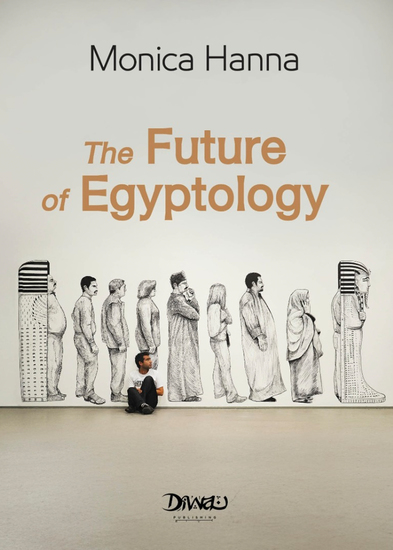
The Future of Egyptology - cover

The Future of Egyptology

Monica Hanna

Publisher: Diwan

  • 0
  • 0
  • 0

Summary

When ancient Egypt is mentioned, images often come to mind of tombs covered in hieroglyphs being opened by Victorian-era explorers, revealing "wonderful things"—as Howard Carter famously described upon first glimpsing the treasures of Tutankhamun. But how did Egyptology become the preserve of wealthy Europeans? And what can be done today to restore agency and rightful ownership to the country where this field was born?
Available since: 05/03/2025.
Print length: 128 pages.

Other books that might interest you

  • The Analysis of Mind - cover

    The Analysis of Mind

    Bertrand Russell

    • 0
    • 0
    • 0
    "The Analysis of Mind" by Bertrand Russell is a philosophical book that explores the nature of the mind and consciousness. In this work, Russell argues that mental phenomena can be analyzed and understood through the principles of logic and mathematics. He posits that the mind can be divided into two categories: the "conscious mind" and the "unconscious mind". The conscious mind is the part of the mind that we are aware of, while the unconscious mind is the part that we are not aware of but which still influences our behavior. Read in English, unabridged.
    Show book
  • The Civil Wars Book 1 - cover

    The Civil Wars Book 1

    Julius Caesar

    • 0
    • 0
    • 0
    The Civil Wars is a firsthand account of the pivotal conflict between Julius Caesar and Pompey the Great, written by Caesar himself. Covering the events leading to the war, his strategic campaigns in Italy, Spain, and Greece, and culminating in Pompey’s defeat at Pharsalus, the narrative showcases Caesar’s military genius, political resolve, and justification for seizing power. Written in a clear, detached tone, the work presents Caesar’s perspective as a commander fighting for legitimacy against a corrupt Senate. Though unfinished—ending before his ultimate victory—it remains a crucial historical document offering insight into Roman politics, loyalty, and the fall of the Republic. A foundational text of military and political history.
    Show book
  • Reforming Criminal Justice - A Christian Proposal - cover

    Reforming Criminal Justice - A...

    Matthew T. Martens

    • 0
    • 0
    • 0
    Noted Attorney and Seminary Graduate Matthew T. Martens Answers the Question: Does the Design and Operation of the American Criminal Justice System Reflect Christian Love of Neighbor? 
    Jesus told his followers that the entirety of the Old Testament's law is encapsulated in the commands to love God and to love their neighbors as themselves. In Reforming Criminal Justice: A Christian Proposal, Matthew T. Martens argues that love of neighbor must be the animating force for true reformation of the criminal justice system, obligating us to seek the best for both the criminally victimized and the criminally accused. 
    Using his theological training Martens reveals how Scripture provides several guideposts (accuracy, due process, accountability, impartiality, and proportionality) for loving our neighbors as it relates to criminal justice. Then, drawing on his near quarter century practicing criminal law, he examines how America's justice system falls short of the biblical standard. By understanding how our current system operates and considering how love of neighbor relates to issues of crime and justice, we will be better equipped to seek true Christian reform of the justice system.
    
    - A Biblical Perspective on Criminal Justice: Offers a biblical framework for thinking about the concept of justice for both the victim and the perpetrator
    - Examines the History of the American Criminal Justice System: Surveys the evolution of the criminal justice system in the United States with a focus on its misuse from the time of the Civil War to the civil rights movement
    - Assesses the Criminal Justice System: Examines the operation of the American justice system today, including plea bargains, assistance of counsel, the death penalty, and more
    - Foreword by Derwin L. Gray: Pastor of Transformation Church in Indian Land, South Carolina, and the author of How to Heal Our Racial Divide and Building a Multiethnic Church
    Show book
  • The Re-Creation of the World as Expressed Through Myth - cover

    The Re-Creation of the World as...

    Michael Meade

    • 0
    • 0
    • 0
    Meade advises us that we must break the spell of normalcy itself and we must accept the presence of uncertainty. However, the good news is that with every ending there is a new beginning. This deep dialogue explores the collective rite of passage we are experiencing and how using the wisdom of myths gives us a roadmap to the renewal of life itself.
    Show book
  • The Children of Athena - Greek writers and thinkers in the Age of Rome 150 BC–AD 400 - cover

    The Children of Athena - Greek...

    Charles Freeman

    • 0
    • 0
    • 0
    A compelling and fascinating portrait of the continuing intellectual tradition of Greek writers and thinkers in the Age of Rome. 
     
    In 146 BC, Greece yielded to the military might of the Roman Republic; sixty years later, when Athens and other Greek city-states rebelled against Rome, the general Lucius Cornelius Sulla destroyed the city of Socrates and Plato, laying waste to the famous Academy where Aristotle had studied. However, the traditions of Greek cultural life would continue to flourish during the centuries of Roman rule that followed, in the lives and work of a distinguished array of philosophers, doctors, scientists, geographers, travellers and theologians. 
     
    Charles Freeman's accounts of such luminaries as the physician Galen, the geographer Ptolemy and the philosopher Plotinus are interwoven with contextual 'interludes' that showcase a sequence of unjustly neglected and richly influential lives. Like the author's The Awakening, The Children of Athena is a cultural history on an epic scale: the story of a rich and vibrant tradition of Greek intellectual inquiry across a period of more than five hundred years, from the second century BC to the start of the fifth century AD.
    Show book
  • Battle of Saipan The: The History and Legacy of the Pacific D-Day - cover

    Battle of Saipan The: The...

    Editors Charles River

    • 0
    • 0
    • 0
    Just over one week after the landings in Normandy, American troops took part in a massive amphibious invasion of Saipan, but intense public interest in operations in Europe meant that this invasion received less media coverage at the time, and it has been the subject of far less interest from historians and writers since. Part of the reason seems to be the different perception of the war in the Pacific. During the war in Europe, Allied troops were, for the most part, welcomed as liberators by the inhabitants of the countries they occupied. Combat was generally conducted according to the accepted rules of war, with troops who surrendered becoming prisoners of war.  
    	In the Pacific Theater, combat was very different. The clash between American and Japanese troops was not just a battle between two modern nations; it was a conflict between two very different cultures and ideologies. Many Japanese soldiers fought according to the tenets of Bushido, the ancient warrior code first employed by the Samurai. This held that death was infinitely preferable to surrender, and that suicide was regarded as a legitimate and even praiseworthy act. The Japanese soldiers who did surrender were regarded with contempt, and enemy soldiers who fell into Japanese hands were treated with extreme cruelty. To American soldiers, the Japanese troops they encountered seemed to fight with fanatical zeal.  
    	As a result, the fighting on Saipan was bloody and intense. Although the battle lasted less than one month, almost 50,000 soldiers died or became casualties on the island, and many Japanese soldiers chose death, either through suicide or assaults on the enemy that had no real prospect of success. Civilians also suffered horrendous casualties on Saipan - more than 20,000 died, with many committing suicide rather than becoming prisoners of the Americans. 
    Show book