Join us on a literary world trip!
Add this book to bookshelf
Grey
Write a new comment Default profile 50px
Grey
Subscribe to read the full book or read the first pages for free!
All characters reduced
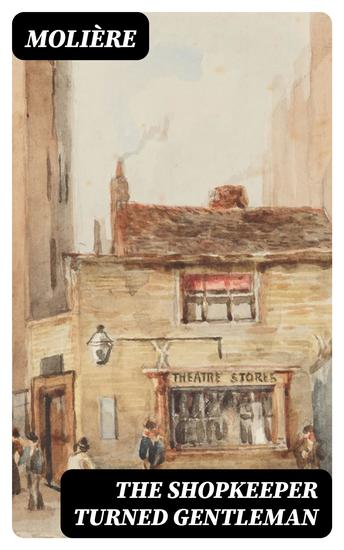
The Shopkeeper Turned Gentleman - cover

The Shopkeeper Turned Gentleman

Molière Molière

Translator Charles Heron Wall

Publisher: DigiCat

  • 0
  • 0
  • 0

Summary

In "The Shopkeeper Turned Gentleman," Molière crafts a brilliant comedy that satirizes social pretensions and the absurdities of class ambition. The play unfolds the story of Monsieur Jourdain, a bourgeois shopkeeper who aspires to ascend the social ladder by adopting the manners of the nobility. Molière employs sharp wit and intricate dialogue, interspersed with farcical elements, to expose the folly of those who seek to reinvent themselves without the requisite understanding of the culture they wish to join. The work is steeped in the rich context of 17th-century France, where the rise of the bourgeois class was met with both admiration and ridicule, illustrating the tensions between social mobility and established aristocratic norms. Molière, born Jean-Baptiste Poquelin in 1622, was a pioneering figure in French theatre known for his incisive critiques of contemporary society. His own experiences in the world of theater and his observations of social dynamics profoundly influenced his writing. "The Shopkeeper Turned Gentleman" reflects Molière's disdain for the superficiality of social climbers, likely inspired by his encounters with the complexities of class distinctions in his own life. This timeless comedy is highly recommended for readers interested in the intersection of humor and social commentary. Molière's masterful observation of human folly and desire for acceptance makes this work resonate even today, inviting reflection on our own societal constructs and the masks we wear. Dive into this delightful narrative and relish Molière's enduring wit and wisdom.
Available since: 09/04/2022.
Print length: 52 pages.

Other books that might interest you

  • The Ballad of Reading Gaol - cover

    The Ballad of Reading Gaol

    Oscar Wilde

    • 0
    • 0
    • 0
    This audiobook is narrated by an AI Voice.   
    He did not wear his scarlet coat, 
    For blood and wine are red, 
    And blood and wine were on his hands 
    When they found him with the dead, 
    The poor dead woman whom he loved, 
    And murdered in her bed.
    Show book
  • Mother Goose for Grown-Ups - cover

    Mother Goose for Grown-Ups

    Guy Wetmore Carryl

    • 0
    • 0
    • 0
    "Mother Goose for Grown-Ups" is a delightful reinvention of classic nursery rhymes tailored for a more mature audience. In this witty and irreverent collection, Carryl puts a humorous spin on beloved childhood favorites such as "Humpty Dumpty," "Jack and Jill," and "Mary Had a Little Lamb," with each rhyme being transformed into a clever and comical tale. If nostalgia is calling your name, but the intellectual side of your brain won't let you be whimsical, throw this on your headphones and let Guy Wetmore Carryl appeal to both sides of your fancy with "Mother Goose for Grown-Ups!"
    Show book
  • Songs from Fern's Pond - Composing a Life with Courage Gratitude and Joy - cover

    Songs from Fern's Pond -...

    Sheryl Pothier Harmer

    • 0
    • 0
    • 0
    Reminiscent of Mary Oliver’s A Thousand Mornings and Amanda Thomson’s Belonging, this evocative blend of poetry, prose, and personal letters unfurls a story of an untamed, beautiful place—and one woman’s choice to spend the last chapter of her life making it her home. 
    At age sixty-two, Fern started a new life. 
    Recently widowed, she found a piece of neglected acreage above the Snake River on which to build a home, forge a community—and find renewed purpose. On the land around Fern’s Pond, she nurtured a vineyard, an abundant garden, and a small farm of sheep, one cow, a goat, and chickens. She befriended wild ducks and harvested trout in her waters, and she used the materials that grew around the pond and springs to weave baskets—unique works of art that captured the elegance of the natural world. 
    Songs from Fern’s Pond is a collage of poetry, letters, and prose that captures the universal resilience of the human spirit through the humor and courage of a woman who fearlessly pursued the life she dreamed of. A duet of text between mother and daughter, it’s a transcendent vision of the rough, wild, and beautiful landscape of the heart—and a reminder that every chapter is worth living to its fullest.
    Show book
  • Lovin Safari II - cover

    Lovin Safari II

    Dean Hamid

    • 0
    • 0
    • 0
    Lovin Safari II: Gunzz and roses 
    Safari Kennedy and Zues Beloit finally get a Opportunity to share life and love together. The beautiful shores of Belize, Mexico is the backdrop for their well deserved bliss. 
    Gunzz Black has been put away for good. Or has he? 
    Gunzz has escaped from his maximum security prison and is hell bent on revenge, causing havoc and murder along the way. Extending as far away as their own front door. 
    Zues and Safari realize that until Gunzz is stopped permanently, they will never be free of him. Zues takes it on himself to put a end to his devious tirades, and makes a move on his own, not telling Safari. Along with Thomi, his brother in law, he prepares for the insinuating standoff between them. 
    Safari enlist the help of friends, Missouri District Attorney, Tabitha Wallace, and another friend, Private Detective Aniah Myers to not only seek out the whereabouts of Zues, but to finally end St. Louis of Gunzz's scourge. 
    Will Zues finally come face to face with his mortal enemy Gunzz? Will Safari struggles put a end to Gunzz's never ending efforts to rid her of obtaining happiness? Or will something or someone stand in her way. 
    Dean Hamid weaves a genuine classic tale of action-thriller, romance and drama in the telling of Lovin Safari ll / Gunzz and roses...
    Show book
  • King Richard the Second - cover

    King Richard the Second

    William Shakespeare

    • 0
    • 0
    • 0
    Richard the Second is a poet’s play, full of great speeches and fine writing rather than subtle character drawing and keen insight. Performed by Sir John Gielgud, Jeremy Brett, and a Full Cast.
    Show book
  • A Ballad of Death - A poetic examination of grief and lost love - cover

    A Ballad of Death - A poetic...

    Algernon Charles Swinburne

    • 0
    • 0
    • 0
    Algernon Charles Swinburne was born on April 5th, 1837, in London, into a wealthy Northumbrian family.  He was educated at Eton and at Balliol College, Oxford, but did not complete a degree.  
    In 1860 Swinburne published two verse dramas but achieved his first literary success in 1865 with Atalanta in Calydon, written in the form of classical Greek tragedy. The following year "Poems and Ballads" brought him instant notoriety. He was now identified with "indecent" themes and the precept of art for art's sake.  
    Although he produced much after this success in general his popularity and critical reputation declined. The most important qualities of Swinburne's work are an intense lyricism, his intricately extended and evocative imagery, metrical virtuosity, rich use of assonance and alliteration, and bold, complex rhythms.  
    Swinburne's physical appearance was small, frail, and plagued by several other oddities of physique and temperament. Throughout the 1860s and 1870s he drank excessively and was prone to accidents that often left him bruised, bloody, or unconscious. Until his forties he suffered intermittent physical collapses that necessitated removal to his parents' home while he recovered.  
    Throughout his career Swinburne also published literary criticism of great worth. His deep knowledge of world literatures contributed to a critical style rich in quotation, allusion, and comparison. He is particularly noted for discerning studies of Elizabethan dramatists and of many English and French poets and novelists. As well he was a noted essayist and wrote two novels. 
    In 1879, Swinburne's friend and literary agent, Theodore Watts-Dunton, intervened during a time when Swinburne was dangerously ill. Watts-Dunton isolated Swinburne at a suburban home in Putney and gradually weaned him from alcohol, former companions and many other habits as well.  
    Much of his poetry in this period may be inferior but some individual poems are exceptional; "By the North Sea," "Evening on the Broads," "A Nympholept," "The Lake of Gaube," and "Neap-Tide."  
    Swinburne lived another thirty years with Watts-Dunton. He denied Swinburne's friends access to him, controlled the poet's money, and restricted his activities. It is often quoted that 'he saved the man but killed the poet'.  
    Swinburne died on April 10th, 1909 at the age of seventy-two.
    Show book