Join us on a literary world trip!
Add this book to bookshelf
Grey
Write a new comment Default profile 50px
Grey
Subscribe to read the full book or read the first pages for free!
All characters reduced
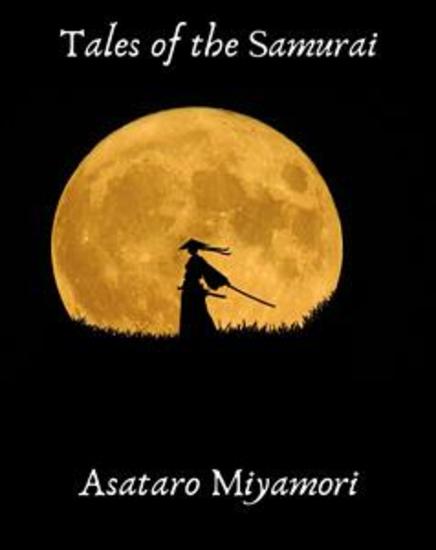
Tales of the Samurai - cover

Tales of the Samurai

Miyamori Asataro

Publisher: Skyline

  • 0
  • 0
  • 0

Summary

The following tales of the samurai, the knights of old Japan, are based largely on real facts. They have been adapted from among traditional stories related by kōdanshi , story-tellers, who nightly delight large audiences with romances and historical stories, especially the noble deeds of the samurai. There are also numerous Japanese books and magazines devoted to stories of this description, which are read with keen interest by all classes of our countrymen, in particular by young people.
Available since: 03/19/2022.

Other books that might interest you

  • On Decline - Stagnation Nostalgia and Why Every Year is the Worst One Ever - cover

    On Decline - Stagnation...

    Andrew Potter

    • 0
    • 0
    • 0
    A Winnipeg Free Press Top Read of 2021
    		 
    What if David Bowie really was holding the fabric of the universe together?
    		 
    The death of David Bowie in January 2016 was a bad start to a year that got a lot worse: war in Syria, the Zika virus, terrorist attacks in Brussels and Nice, the Brexit vote—and the election of Donald Trump. The end-of-year wraps declared 2016 “the worst … ever.” Four even more troubling years later, the question of our apocalypse had devolved into a tired social media cliché. But when COVID-19 hit, journalist and professor of public policy Andrew Potter started to wonder: what if The End isn’t one big event, but a long series of smaller ones?
    		 
    In On Decline, Potter surveys the current problems and likely future of Western civilization (spoiler: it’s not great). Economic stagnation and the slowing of scientific innovation. Falling birth rates and environmental degradation. The devastating effects of cultural nostalgia and the havoc wreaked by social media on public discourse. Most acutely, the various failures of Western governments in their responses to the COVID-19 pandemic. If the legacy of the Enlightenment and its virtues—reason, logic, science, evidence—has run its course, how and why has it happened? And where do we go from here?
    Show book
  • Metaphysics - The Philosophy That Studies the Basic Structure of Reality - cover

    Metaphysics - The Philosophy...

    Hector Davidson

    • 0
    • 0
    • 0
    Metaphysics is a branch of philosophy that explores the fundamental nature of reality, addressing the most profound questions about existence, the nature of objects, time, space, causality, and the universe itself. As one of the oldest areas of philosophical inquiry, metaphysics seeks to answer questions that lie at the core of our understanding of the world and our place within it. The term "metaphysics" derives from the Greek words "meta" (beyond) and "physika" (the physical), reflecting the idea of examining that which transcends the physical world and investigates the very structure of reality. 
    At its core, metaphysics asks: What is there? What is it like? How do things exist, and what is the nature of their existence? These questions are timeless, and their answers have evolved over centuries, often influencing or being influenced by developments in other branches of philosophy, science, and theology. In examining the nature of reality, metaphysicians delve into topics like the nature of objects and their properties, the concept of identity and change, the structure of time and space, and the possibility of alternate realities. 
    The scope of metaphysical inquiry is vast. One of the primary areas it addresses is ontology, which concerns the study of being and existence. Ontological questions include inquiries into the types of entities that exist, whether abstract entities (like numbers or concepts) exist independently of human thought, and whether the universe is fundamentally composed of matter or something more fundamental, like energy or consciousness.
    Show book
  • Atlantis Mermaids Pixies Giants and our untold History - Everything is connected! - cover

    Atlantis Mermaids Pixies Giants...

    Ian Paterson

    • 0
    • 0
    • 0
    Introducing "Atlantis, Mermaids, Pixies, Giants, and Our Untold History," the highly anticipated sequel to the bestselling "Black Op's, Aliens, Spirits, Bigfoot, and Our Untold History," which garnered widespread acclaim in both paperback and audiobook formats. Building upon the foundation laid by its predecessor, this new book delves even deeper into the mysteries of the unknown, exploring not only the enigmatic subjects outlined in the title but also delving into a plethora of captivating topics such as the Bermuda Triangle, telepathy, and the origins of the great flood.
    Show book
  • Cellophane - Dramatic story - cover

    Cellophane - Dramatic story

    Amr Mounir

    • 0
    • 0
    • 0
    How can a man live if he loves a woman who does not reciprocate his feelings and marries him for his money? And how will he face the blame he feels when she goes through a health crisis that makes him think he is responsible?
    Show book
  • Great Zimbabwe - Stone Cities Trade Networks and the Mystery of Southern Africa - cover

    Great Zimbabwe - Stone Cities...

    Rolf Hedger

    • 0
    • 0
    • 0
    The rise of Great Zimbabwe was shaped by geography, economic opportunities, and social organization, allowing it to become one of Africa’s most influential civilizations. Emerging around the 9th century, the settlement developed into a thriving political and economic center by the 11th century, reaching its peak between the 13th and 15th centuries. Its growth was fueled by abundant natural resources, a strategic location, and participation in regional and international trade. 
    The Zimbabwean plateau, with its fertile soil and favorable climate, provided ideal conditions for agriculture. The Shona people, who founded Great Zimbabwe, cultivated sorghum and millet, which sustained the growing population. In addition to farming, cattle herding played a crucial role in the economy. Cattle were a measure of wealth and social status, serving as currency in trade and marriage negotiations. The presence of large herds further reinforced the power of the elite, who controlled access to grazing lands and water sources. 
    Beyond agriculture, Great Zimbabwe’s location made it a key player in long-distance trade. The city was situated between the goldfields of southern Africa and the coastal trade hubs of the Swahili city-states. Gold mining became a major economic activity, with miners extracting the metal from riverbeds and underground deposits. This gold was traded with merchants from Kilwa, Sofala, and other Swahili ports, where it was exchanged for luxury goods such as Persian ceramics, Chinese porcelain, and Indian textiles. The wealth generated from trade allowed Great Zimbabwe to expand, attracting artisans, traders, and skilled laborers.
    Show book
  • Black Power Scorecard - Measuring the Racial Gap and What We Can Do to Close It - cover

    Black Power Scorecard -...

    Andre M. Perry

    • 0
    • 0
    • 0
    From the creator of “a unified field theory of racism” (NPR’s Planet Money), a dollars-and-cents reckoning of the state of Black America and a new framework to close the power gap Historically, Black Americans’ quest for power has been understood as an attempt to gain equal protections under the law. But power in America requires more than basic democratic freedoms. It is inextricably linked with economic influence and ownership—of one’s self, home, business, and creations. Andre M. Perry draws on extensive research and analysis to quantify how much power Black Americans actually have. Ranging from property, business, and wealth to education, health, and social mobility, Black Power Scorecard moves across the country, evaluating people’s ability to set the rules of the game and calculating how that translates into the ultimate means of power—life itself, and the longevity of Black communities. Along the way, Perry identifies woefully overlooked areas of investment that could close the racial gap and benefit everyone. An expansive take on power supported by documentation and data, Black Power Scorecard is a fresh contribution to the country’s reckoning with structural inequality, one that offers a new approach to redressing it.A Macmillan Audio production from Metropolitan Books.
    Show book