Join us on a literary world trip!
Add this book to bookshelf
Grey
Write a new comment Default profile 50px
Grey
Subscribe to read the full book or read the first pages for free!
All characters reduced
The Innovation of the Phoenicians - Traders and Navigators of the Ancient World - cover

The Innovation of the Phoenicians - Traders and Navigators of the Ancient World

Minerva Smith

Publisher: Heritage Books

  • 0
  • 0
  • 0

Summary

The Phoenicians were more than just legendary seafarers. They were innovators who revolutionized trade, navigation, and communication in the ancient world. From perfecting maritime technology to developing one of history’s first alphabets, their influence stretched across the Mediterranean, shaping the civilizations that followed.


This book explores the groundbreaking achievements of the Phoenicians, their advanced shipbuilding techniques, extensive trade networks, and the cultural exchanges that connected distant lands. Discover how these master traders laid the foundations for modern commerce, inspired future explorers, and left a lasting legacy that still echoes in today’s world.


For history enthusiasts, maritime scholars, and anyone fascinated by ancient ingenuity, this compelling account brings to life the Phoenicians’ remarkable contributions to human progress.
Available since: 02/06/2025.
Print length: 57 pages.
Other books that might interest you

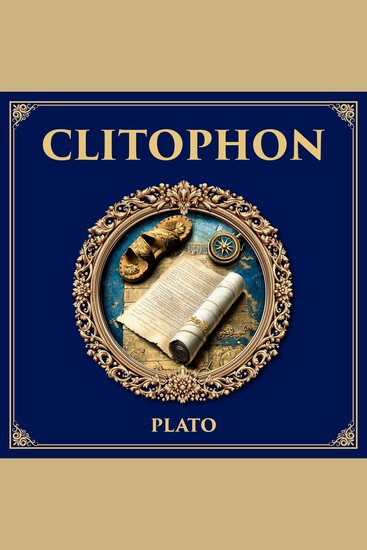
  • Clitophon - The Unfinished Conversation – Plato’s Mysterious and Brief Challenge to Socrates’ Teaching - cover

    Clitophon - The Unfinished...

    Plato, Tim Zengerink

    • 0
    • 0
    • 0
    What if the most admired teacher in philosophy couldn’t show you how to live well? 
    In Clitophon, Plato gives voice to a disillusioned disciple. Clitophon, once captivated by Socrates’ speeches, now questions their value—arguing that Socrates inspires but never instructs. In this brief yet bold exchange, the roles of teacher and student are reversed. 
    This modern translation captures the tension, ambiguity, and unresolved nature of Plato’s shortest dialogue—offering a powerful look at the limits of inspiration without action. 
    What you'll discover inside: 
    •	A Direct Challenge to Socratic Philosophy – Clitophon accuses Socrates of failing to guide others to virtue 
    •	A Dialogue Unlike Any Other – Brief, mysterious, and unresolved—leaving interpretation open 
    •	The Limits of Inspiration – Explore the gap between admiration and transformation 
    •	A Clear, Thoughtful Translation – Perfect for anyone studying the role of philosophy in real-life virtue 
    Experience Clitophon, Plato’s most cryptic confrontation, and decide for yourself—can words alone lead to wisdom?
    Show book
  • As the Crow Dies - cover

    As the Crow Dies

    Ken Casper

    • 0
    • 0
    • 0
    Vietnam took his legs. A murderer took his father. Somehow, Jason Crow has to take a stand. 
    Jason Crow comes home to Texas on clumsy, prosthetic legs, struggling with his lost dreams and the pitying curiosity of friends and strangers. But there's no time for him to brood, because his father has just been shot to death. 
    Unable to convince the police that his father was murdered, Jason begins his own investigation. In the process he uncovers family secrets that shake him to his core and make him question everyone and everything around him, including the love of Michiko, the beautiful Eurasian-American nurse he met in Japan. 
    While fighting his own insecurity as a double amputee, Jason must challenge forces capable of destroying him and those he loves to pursue the person who robbed him of his greatest hero: His dad. 
    This debut book in Ken Casper's Jason Crow West Texas Mystery Series treats readers to a powerful new voice in mystery fiction.
    Show book
  • The Story Economy - How Sharing Your Truth Can Be Your Most Valuable Asset - cover

    The Story Economy - How Sharing...

    William Welser

    • 0
    • 0
    • 0
    How do you value your private data? What about your job? The truth is someone is selling your data, and your job may be among the countless others being lost to AI at record rates. Because of this abuse of technology among many others, most people have lost all agency over their technology, devices, and information. But technologist William Welser IV has a plan to help us regain control.Enter The Story Economy, a guide that provides fresh purchasing power in a world where opportunity feels harder and harder to grasp. Within, Welser outlines the need for an alternative economy where stories can become solutions to overwhelming new problems. His entirely new marketplace allows us to use our stories as currency, putting the data we've voluntarily given to good use—allowing us to purchase goods and services and giving us the power to see exactly where our data is going and to whom.In this exciting and sometimes scary world of AI, Big Tech is using all of its tools against us to create a society in which we're lonely, broke, and lost. We must take back our power and make the technology work for us to close the healthcare, education, and wealth divide—and in the process, foster self-awareness to help us become astute decision-makers and stay ahead of technology. The Story Economy provides the innovative blueprint to get started.
    Show book
  • The EU and the South Caucasus: European Neighborhood Policies between Eclecticism and Pragmatism 1991-2021 - With a foreword by Nicholas Ross Smith - cover

    The EU and the South Caucasus:...

    Daviti Mtchedlishvili

    • 0
    • 0
    • 0
    This book delves into the complex and often contradictory relations between the South Caucasus and European Union (EU).
    Show book
  • Eastern Han Dynasty The: A History of China - cover

    Eastern Han Dynasty The: A...

    Hui Wang

    • 0
    • 0
    • 0
    The Eastern Han Dynasty: A History of China, PART ONE takes you on an unforgettable journey through one of China's most transformative eras. Once fractured by war, the Han Empire finds hope in Liu Xiu—a noble who rises through chaos to become Emperor Guangwu of Han. But claiming the throne is only the beginning. To rebuild an empire torn apart, he must outmaneuver rivals, crush rebellions, and restore order. 
    From the fall of the Chimei Army to the eruption of the Three Rebellions, Liu Xiu's reign is marked by endless trials. Allies become threats, and loyalty is tested—especially for Wei Xiao, a trusted officer with dangerous ambitions. Meanwhile, the empire expands into Longyou and sets its sights on resource-rich Shu, where political intrigue runs deep. 
    Military legends like General Ma Yuan rise, shaping China's future with brilliant campaigns. As peace returns, loyal ministers help rebuild the government. But power shifts within the court, and when the crown prince unexpectedly steps down, the influential Yin Family begins to dominate the throne's inner circle. 
    A new era begins with Emperor Ming, who faces his own battles—reforms, alliances, and unrest. Yet Han is no longer limited by borders. Ban Chao’s bold expeditions to the Western Regions spark a wave of imperial ambition, paving the way for the rise of a new conqueror who will take Han’s influence farther than ever before. 
    This is not just a chronicle of events—it's a sweeping epic of ambition, war, strategy, and legacy. If you’re drawn to tales of empire-building, battlefield brilliance, and court intrigue, The Eastern Han Dynasty: Part One is a journey you won’t want to miss.
    Show book
  • The Ming Dynasty - Maritime Exploration and the Forbidden City - cover

    The Ming Dynasty - Maritime...

    Jun Liu

    • 0
    • 0
    • 0
    The Ming Dynasty, one of China's most influential and enduring dynasties, emerged in the aftermath of the Mongol-led Yuan Dynasty’s decline. It was a period marked by great transformation, political consolidation, and cultural revival. The dynasty's establishment under Zhu Yuanzhang, later known as Emperor Hongwu, signified the restoration of Han Chinese rule and the reinforcement of Confucian governance. Through military conquest, administrative reforms, and strategic centralization of power, the Ming Dynasty laid the foundation for a strong and prosperous China. 
    The fall of the Yuan Dynasty was driven by internal corruption, economic mismanagement, and widespread discontent. Mongol rulers faced difficulties controlling the vast empire, and their reliance on foreign administrators alienated the native Chinese population. Heavy taxation and frequent natural disasters exacerbated social unrest, leading to a series of revolts across the country. Among these rebellions, the Red Turban Rebellion, a movement rooted in peasant uprisings and religious discontent, played a crucial role in undermining Yuan authority. It was within this turbulent period that Zhu Yuanzhang, a former Buddhist monk turned military leader, rose to prominence. His leadership and military strategies enabled him to unify rebel factions and ultimately overthrow the Mongols in 1368, marking the beginning of the Ming Dynasty. 
    Upon ascending the throne, Emperor Hongwu sought to consolidate power and rebuild a nation weakened by war and misrule. His first priority was to eliminate threats to his rule, which led to purges against those he suspected of disloyalty. To prevent a recurrence of Yuan-era administrative failures, he restructured the government, reducing the influence of court eunuchs and emphasizing Confucian ideals in governance. He also reinstated the civil service examination system, ensuring that officials were selected based on merit rather than birthright.
    Show book