Join us on a literary world trip!
Add this book to bookshelf
Grey
Write a new comment Default profile 50px
Grey
Subscribe to read the full book or read the first pages for free!
All characters reduced
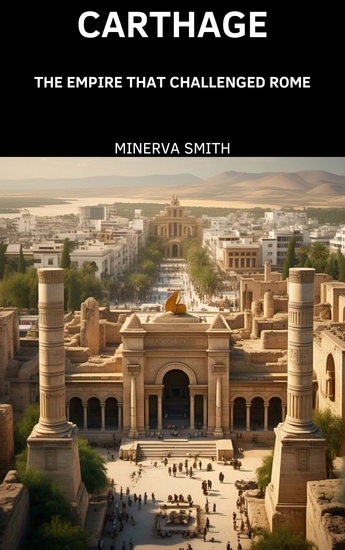
Carthage - The Empire That Challenged Rome - cover

Carthage - The Empire That Challenged Rome

Minerva Smith

Publisher: Heritage Books

  • 0
  • 0
  • 0

Summary

For centuries, Carthage stood as one of the greatest powers of the ancient world, dominating trade, innovation, and military strategy. Rising from a humble Phoenician colony to a formidable empire, Carthage became Rome’s fiercest rival, engaging in legendary conflicts that shaped history.


This book explores the rise and fall of Carthage, from its powerful navy and Hannibal’s daring campaigns to the brutal Punic Wars that sealed its fate. Discover the city’s rich culture, brilliant tactics, and the legacy it left behind despite Rome’s relentless destruction.


A gripping tale of ambition, resilience, and rivalry. Step into the world of Carthage and witness the empire that dared to challenge Rome.
Available since: 02/06/2025.
Print length: 67 pages.

Other books that might interest you

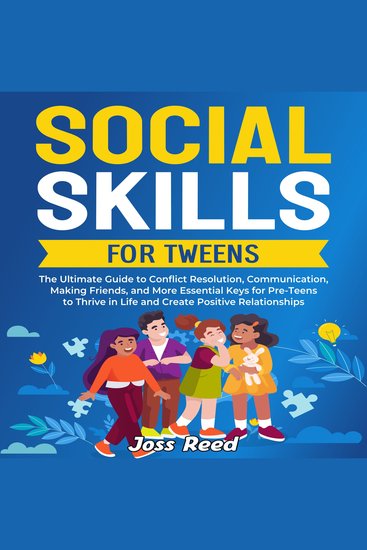
  • Social Skills for Tweens: The Ultimate Guide to Conflict Resolution Communication Making Friends and More Essential Keys for Pre-Teens to Thrive in Life and Create Positive Relationships - cover

    Social Skills for Tweens: The...

    Joss Reed

    • 0
    • 0
    • 0
    Unleash Your Child's Social Superpowers!  
    Does your child feel lost in social situations, as if everyone else knows a secret code of making friends they don't? "Social Skills for Tweens" is the bridge to a world where your child navigates social waters with ease and confidence.  
    Here's why this guide will be transformative:Effective Communication: Unlock the secrets to expressing thoughts clearly and confidently, turning interactions into opportunities. Emotional Intelligence: Equip your tween with the tools to understand and manage their emotions, fostering resilience and empathy. Making and Keeping Friends: Discover the art of building lasting friendships, based on mutual respect and understanding. Conflict Resolution: Master the skills of resolving disagreements constructively, setting the foundation for healthy relationships. Family Bonds: Strengthen the family connection through improved communication and understanding. This isn't just a book; it's a journey to transforming your tween into the most socially savvy version of themselves. Say goodbye to social awkwardness and hello to a lifetime of meaningful connections!  
    Don't wait to make a difference in your child's social journey. Click "Add to Cart" now and watch them soar! 
    Show book
  • Troubling the Water - The Urgent Work of Radical Belonging - cover

    Troubling the Water - The Urgent...

    Ben McBride

    • 0
    • 0
    • 0
    From one of the most courageous and visionary leaders of our time comes Troubling the Water, an immersive book about the violence and injustice that threaten to drown us all. Ben McBride recounts how he first waded into the water: from the Kill Zone in Oakland, where he moved with his young family, to the uprising in Ferguson, to the moral impoverishment of the white evangelical church. In the truth-telling tradition of Bryan Stevenson and Bishop William Barber, McBride leads us right into the fury and fragmentation of our moment, and then steadies us once we're there. 


    What would it take to truly belong to each other? Radical belonging, McBride argues, means looking at our implicit biases, at our faulty understandings of power, and at how we "other"—or "same"—people. Sometimes it even means troubling the waters—speaking hard truths in situations that appear calm but that cloak injustice. 


    With a blend of provocation and good humor, McBride leads us beyond inaction on the one hand and polemic on the other. What results is an indelible manifesto—a troublemaking reverend's call to the most urgent task of our time. As inequality, racism, and alienation weaken our common life, well-meaning people ask: What do I need to do to create a world where all can belong? But McBride asserts that instead, we need to ask: Who do I need to become?
    Show book
  • Human Aura The - Astral Colors and Thought Forms - cover

    Human Aura The - Astral Colors...

    William Walker Atkinson

    • 0
    • 0
    • 0
    "The Human Aura - Astral Colors and Thought Forms" by William Walker Atkinson is a classic work that delves into the mystical concept of the human aura, exploring its nature, colors, and the thought forms it generates. Atkinson, a prolific writer on esoteric and metaphysical topics, offers insights into how the aura reflects an individual's thoughts, emotions, and spiritual state. Through detailed descriptions and explanations, he guides readers on understanding and interpreting the subtle energies surrounding the human body.
    Show book
  • Waterfall - True strange tales - cover

    Waterfall - True strange tales

    Susan Specht Oram

    • 0
    • 0
    • 0
    Mystery-thriller author Susan Specht Oram shares strange but true tales in this eighth book in the Strangers on a Train series, including a disastrous boating incident, a bizarre business conversation, a job offer with shocking hidden expectations, a surprise visit to a sacred pool and other captivating, complicated anecdotes. 
     
    This short collection of weird real-life situations might make you laugh and cry. Join her and share the surprising happenings of her life, with her humiliations and triumphs. Pick up your copy today!
    Show book
  • The Expansion of the European Union - New Member States Challenges and the Future of European Integration - cover

    The Expansion of the European...

    Fredrich Hazelton

    • 0
    • 0
    • 0
    The European Union (EU) stands as one of the most ambitious projects of regional integration in modern history. The concept of a unified Europe, born out of the devastation of World War II, has evolved from an economic community among six founding nations to a political and economic powerhouse with 27 member states. The expansion of the EU has been a gradual process, driven by the desire to promote peace, stability, and prosperity across the continent. This expansion has not only reshaped the political landscape of Europe but also influenced the global order in profound ways. 
      
    The early history of the EU was marked by the establishment of the European Economic Community (EEC) in 1957, aimed at fostering economic cooperation and reducing the likelihood of future conflicts. Over time, the EEC transformed into the European Union, encompassing broader goals such as political cooperation, human rights, and environmental standards. Each enlargement of the EU has brought new nations into this framework, solidifying the idea of a united Europe. The process of integrating new member states, however, has not been without its challenges. Issues of economic disparity, political alignment, and social integration have tested the limits of the union and sparked debates about the future direction of the EU. 
      
    The most significant expansion occurred in 2004, when ten countries, predominantly from Central and Eastern Europe, joined the EU in a historic enlargement. This expansion marked the end of the Cold War divide and brought former communist nations into the European fold. Yet, it also highlighted the complexities of integrating countries with differing political histories, economic conditions, and social structures. The subsequent expansions in 2007 and 2013 saw Romania, Bulgaria, and Croatia join the EU, furthering the union’s reach into the Balkans.
    Show book
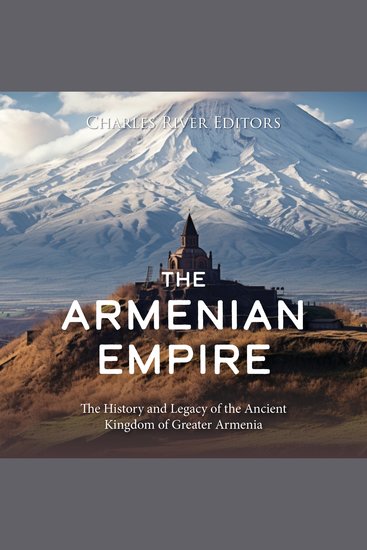
  • Armenian Empire The: The History and Legacy of the Ancient Kingdom of Greater Armenia - cover

    Armenian Empire The: The History...

    Editors Charles River

    • 0
    • 0
    • 0
    During the reign of the Artaxiad dynasty, Armenia became a hub of trade and commerce, connecting the Silk Road and the Mediterranean world. The Armenian kings encouraged the development of agriculture, commerce, and arts, and the kingdom became renowned for its skilled artisans, writers, and philosophers. Of course, given its central location, the dynasty also faced numerous challenges, including repeated invasions by the Roman and Parthian empires, internal conflicts, and economic hardships. The dynasty’s resilience and adaptability enabled it to survive for nearly two centuries, leaving behind a rich cultural and political legacy that has endured in the region, even as its historical memory was overshadowed by its more powerful neighbors.  
    After the collapse of the Artaxiad dynasty (at the onset of the 1st century BCE), Rome and the kingdom of Parthia engaged in a competition for political influence in the vast territory of Greater Armenia. The Parthian Arshakunis endeavored to expel Rome from the region, aiming to establish the dominance of their own lineage. The political strategy devised by Parthian King Artabanus III, however, remained unrealized, as his sons Vorodes and Arshak I, who held the throne in Great Armenia, were deposed due to the intervention of the Roman Emperor Tiberius. By inciting the Alban, Georgian, and other neighboring tribes against the Armenians, Tiberius facilitated the ascendancy of Mithridates, the brother of Iberian King Pharasmanes, to the throne of Greater Armenia in the year 36.  
    This set the pattern by which the Roman Empire sought to preserve its influence in Greater Armenia by employing foreign kings as proxies. In contrast, the Armenian people and their rulers strived to emancipate themselves from Roman hegemony and the dominance of their allies.
    Show book