
Join us on a literary world trip!
Add this book to bookshelf
Grey
Write a new comment Default profile 50px
Grey
Subscribe to read the full book or read the first pages for free!
All characters reduced
Supply Chain Strain - cover

Supply Chain Strain

Miles Kendrick

Translator A AI

Publisher: Publifye

  • 0
  • 0
  • 0

Summary

Global supply chains, the intricate networks that deliver goods worldwide, face unprecedented pressures, a theme explored in "Supply Chain Strain". The book investigates how events like pandemics and geopolitical tensions expose vulnerabilities in these systems, originally optimized for efficiency, not necessarily for resilience. For example, the Suez Canal blockage highlighted how a single point of failure can disrupt global trade, costing billions in lost revenue. The book argues for a shift towards prioritizing robustness to ensure economic stability and national security. 

 
"Supply Chain Strain" presents a comprehensive analysis, starting with the evolution of supply chain management and then dissecting major disruptive events and their impacts. It delves into strategies for building resilience, such as diversifying sourcing and adopting technologies like blockchain, and examines the role of government policies. The book uses quantitative modeling and case studies to assess disruption scenarios and evaluate resilience strategies. 

 
Ultimately, this work offers insights for businesses and policymakers alike, helping them navigate the trade-offs between efficiency and resilience in an increasingly uncertain global environment. By providing a framework for informed decision-making, "Supply Chain Strain" equips readers with the knowledge to fortify supply chains against future shocks.
Available since: 05/05/2025.
Print length: 95 pages.

Other books that might interest you

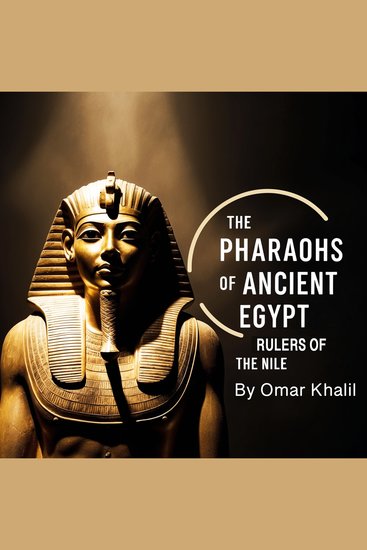
  • The Pharaohs of Ancient Egypt - Rulers of the Nile - cover

    The Pharaohs of Ancient Egypt -...

    Omar Khalil

    • 0
    • 0
    • 0
    The emergence of the pharaohs marked the beginning of one of history’s most iconic civilizations. In the early dynastic period around 3100 BCE, Egypt underwent a dramatic transformation as Upper and Lower Egypt were unified under a single ruler, traditionally identified as King Narmer or Menes. This unification not only established centralized rule but also laid the foundations for a dynastic tradition that would endure for millennia. The pharaoh, whose name means “great house,” came to be seen as both a political leader and a divine figure, embodying the will of the gods on earth. 
    As Egypt’s first kings consolidated power, they created administrative systems to manage resources, command armies, and oversee large-scale construction projects. Hierarchical governance emerged, with officials and scribes acting under the pharaoh’s authority to maintain order throughout the land. This new system allowed the pharaohs to centralize authority, control the fertile Nile Valley, and ensure the production and redistribution of grain and other goods, which became critical for sustaining a growing population and for asserting royal dominance. 
    Religious ideology played a key role in solidifying the power of the pharaohs. They were often depicted as the sons of deities, particularly associated with the sun god Ra and the sky god Horus. Temples were erected not just as places of worship, but as instruments of royal propaganda, showcasing the divine legitimacy of the ruler. Rituals, festivals, and monumental inscriptions reinforced the pharaoh’s sacred status and his role in maintaining ma’at, the cosmic order of balance and harmony.
    Show book
  • Preventing Bullying in Schools - A Social and Emotional Learning Approach to Prevention and Early Intervention - cover

    Preventing Bullying in Schools -...

    Catherine P. Bradshaw, Tracy...

    • 0
    • 0
    • 0
    Nearly a third of students are directly involved in bullying by the time they graduate from high school. 


    A range of strategies have been shown to improve peer interactions and reduce bullying behaviors. Yet many teachers struggle to detect bullying and to respond to it effectively. This book is a much-needed guide to evidence-based methods for prevention and intervention in K–12 classrooms.
    Show book
  • The Nature of the Beast - cover

    The Nature of the Beast

    David J. Anderson

    • 0
    • 0
    • 0
    Does your dog get sad when you leave for the day? Does your cat purr because she loves you? Do bears attack when they’re angry? You can’t very well ask them.  
     
    In fact, scientists haven’t been able to reach a consensus on whether animals even have emotions like humans do, let alone how to study them. Yet studies of animal emotion are critical for understanding human emotion and mental illness. 
     
    In The Nature of the Beast, pioneering neuroscientist David J. Anderson describes a new approach to solving this problem. He and his colleagues have figured out how to study the brain activity of animals as they navigate real-life scenarios, like  
    fleeing a predator or competing for a mate. His research has revolutionized what we know about animal fear and aggression. Here, he explains what studying emotions and related internal brain states in animals can teach us about human  
    behavior, offering new insights into why isolation makes us more aggressive, how sex and violence connect, and whether there’s a link between aggression and mental illness. 
     
    Full of fascinating stories, The Nature of the Beast reconceptualizes how the brain regulates emotions—and explains why we have them at all.
    Show book
  • ATI TEAS Study Guide - The Most Comprehensive and Up-to-Date Manual to Ace the Nursing Exam on Your First Try with Key Practice Questions In-Depth Reviews and Effective Test-Taking Strategies - cover

    ATI TEAS Study Guide - The Most...

    Angela Glover

    • 0
    • 0
    • 0
    Ace the Nursing Exam on Your First Try Guide 
    Eager to pass the Nursing Exam on your initial attempt? This guide is precisely what you need. Filled with indispensable insights, authoritative advice, and an extensive collection of practice questions, it's crafted to guide you directly to success. 
    What You Will Learn:Critical Reading for Comprehension: Master techniques to quickly pinpoint essential information, vital for the reading section.Anatomy and Physiology: Delve into the complexities of the human body, preparing you for the science questions.Essentials of Life Sciences: Understand genetics and cell biology, key areas in the exam's science section.English Language Mastery: Sharpen your grammar and vocabulary, crucial for the exam's English and language usage section.Application of Knowledge: Navigate through medical terminology and understand body systems, genetics, and more, tailoring your learning to the ATI TEAS specifics. 
    and much more! 
    Make Today the Day You Commit to Your Future 
    Embrace this chance to prepare with purpose and precision. Grab your copy now and start paving your way to acing the ATI TEAS exam on your first attempt. Your future in nursing awaits, and this guide is the companion you need to make it happen.
    Show book
  • History of the United Kingdom - Events and Details from Scottish and Irish History - cover

    History of the United Kingdom -...

    Kelly Mass

    • 0
    • 0
    • 0
    This is a book with 6 different titles, all related to Great Britain and its history. The titles are the following: 
    Partition of Ireland 
    The Irish Potato Famine 
    Ghosts of Scotland 
    Scottish History 
    Wars of Scottish Independence 
    William Wallace
    Show book
  • The Hanseatic League - Medieval Trade Network - cover

    The Hanseatic League - Medieval...

    Harris Ropes

    • 0
    • 0
    • 0
    The Hanseatic League, often simply referred to as the Hansa, emerged during the late Middle Ages as a powerful and influential commercial and defensive confederation of merchant guilds and market towns in northern Europe. Its origins can be traced back to the 12th century, a time when trade across Europe was expanding, and the need for security, consistency, and cooperation among merchants became more apparent. In this period of growing urbanization and shifting political structures, the groundwork was laid for what would become one of the most successful trade networks of the medieval world. 
    Before the League formally took shape, various Germanic merchants had already been engaged in trade across the North and Baltic Seas. These early trade routes connected regions like modern-day Germany, the Netherlands, Scandinavia, and the Baltic states. Merchant groups began forming guilds—organized associations that provided mutual protection, standardized trade practices, and a collective voice in foreign cities. These early guilds were critical in shaping the cooperative ethos that would later define the Hanseatic League. 
    The political and economic environment of medieval Europe also contributed to the League's formation. The decline of centralized imperial authority, particularly in the Holy Roman Empire, left towns and cities to manage their own economic affairs. This autonomy encouraged local leaders and merchants to seek regional alliances to protect trade interests and ensure the safe passage of goods and people. At the same time, the Crusades had opened new routes and markets, boosting the importance of northern European trade centers.
    Show book