Join us on a literary world trip!
Add this book to bookshelf
Grey
Write a new comment Default profile 50px
Grey
Subscribe to read the full book or read the first pages for free!
All characters reduced
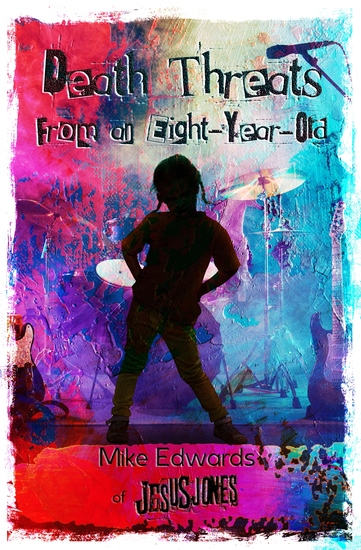
Death Threats From an Eight-Year-Old - The Story of Jesus Jones - cover

Death Threats From an Eight-Year-Old - The Story of Jesus Jones

Mike Edwards

Publisher: Scout Media

  • 0
  • 0
  • 0

Summary

When a mix of ideas and influences with no common theme or spirit, apart from one of desperation, becomes one of the most well-known bands of the 90s … Mike Edwards is the singer, guitarist, and primary songwriter for the British alternative-rock band, Jesus Jones. Among having multiple chart-topping hits, releasing several albums throughout the last 3 decades, and being awarded Best New Band at the MTV Music Awards in 1991, Jesus Jones are widely known for their #1 international hit, "Right Here, Right Now." Jesus Jones continues to tour and record, now with a renewed vigor after being able to control their own destiny, freed from the grips of major labels. Mike’s debut novel, Death Threats from an Eight-Year-Old, chronicles how fast a band that is number one everywhere in the world can plummet from the good graces of the press, labels, radio, MTV, and even so-called diehard fans. A true introspective about the cutthroat music business told through the eyes and words of a man who experienced fronting one of the most well-known bands of their time, to finding his band label-less and shunned in a blink of an eye.
Available since: 01/20/2024.
Print length: 160 pages.


Other books that might interest you

  • Heian Period - The Golden Age of Art Literature and Aristocratic Rule - cover

    Heian Period - The Golden Age of...

    Rolf Hedger

    • 0
    • 0
    • 0
    The Heian Period, spanning from 794 to 1185 CE, marks one of the most culturally rich and politically significant eras in Japanese history. This chapter lays the groundwork for understanding the historical context, political dynamics, and societal structure that defined the early stages of the Heian era. The period officially began when Emperor Kanmu moved the imperial capital from Nara to Heian-kyō, present-day Kyoto. This relocation was intended to establish a new seat of power free from the influence of powerful Buddhist monasteries that had grown too entwined with politics in Nara. 
    The move to Heian-kyō signified more than a change in geography—it was the beginning of a new political and cultural identity. The city was meticulously planned, modeled after the Chinese capital of Chang’an, with a grid-like structure that reflected a vision of order and centralized authority. However, over time, the influence of the emperor waned as powerful aristocratic families, particularly the Fujiwara clan, rose to prominence. By marrying their daughters into the imperial family and acting as regents, the Fujiwara effectively controlled the court, shaping policy and governance from behind the scenes. 
    The political landscape of early Heian Japan was one of ceremonial grandeur and subtle manipulation. Real power resided in the hands of a few elite families, and the imperial court became increasingly detached from the provinces. This created a division between the cultured, refined life of the capital and the often turbulent realities of rural Japan, where local warrior clans began to assert their own authority.
    Show book
  • Supes Ain't Always Heroes - Inside the Complex Characters and Twisted Psychology of The Boys - cover

    Supes Ain't Always Heroes -...

    Lynn S. Zubernis, Matthew Snyder

    • 0
    • 0
    • 0
    Go deeper inside the hit TV show The Boys and its characters with psychologists, media experts, filmmakers, and more—including the original comic series' cocreator and the actors behind Soldier Boy and Stormfront. 


    Supes Ain't Always Heroes offers a fresh look at The Boys, delving into the show's unflinching depiction of celebrity, politics, social media, corporate greed, racism, sexism, and more: 


    ● The true difference between Homelander and Billy Butcher—and who the show's biggest villain really is 


    ● What Soldier Boy's characterization says about how we define masculinity 


    ● How today's media landscape has contributed to The Boys' success 


    ● What the evolutions of Hughie, Starlight, A-Train, Mother's Milk, and other show standouts reflect about addiction, family, identity, and self-acceptance 


    PLUS: Exclusive interviews with The Boys comics cocreator Darick Robertson and actors Jensen Ackles, Jim Beaver, Aya Cash, and Nathan Mitchell provide a unique glimpse behind the scenes. Comments from editor interviews with more of the show's stars give further insight into their experiences in bringing these complex characters to life.
    Show book
  • Dark Legacy The: Unveiling the Top 10 Serial Killers of the United States - A Criminologist’s In-depth Behavioral Analysis - cover

    Dark Legacy The: Unveiling the...

    Dr. Phillip Clingan

    • 0
    • 0
    • 0
    In the annals of crime, the sinister figures known as serial killers cast a long, chilling shadow. From the infamous to the lesser-known "The Dark Legacy: Unveiling the Top 10 Serial Killers of the United States," delves into the author's behavioral analysis of the killer's twisted minds and macabre deeds of history's most notorious serial rapists and serial murderers. Within these pages, you'll encounter Ted Bundy's meticulous planning, John Wayne Gacy's enigmatic charisma, and Samuel Little's haunting legacy. But beyond the headlines, this book uncovers the stories of lesser-known killers whose crimes are no less shocking. With meticulous research and gripping storytelling, "The Dark Legacy: Unveiling the Top 10 Serial Killers of the United States" comprehensively explores the darkest corners of the human psyche illustrated through a first-ever behavioral analysis. From their childhood traumas to their gruesome methods, each killer's tale is dissected with chilling detail, shedding light on the factors that drove them to commit their heinous acts. Prepare to delve into the minds of monsters as you journey through the pages of "The Dark Legacy: Unveiling the Top 10 Serial Killers of the United States." But beware, for in these stories of horror and madness, the line between fascination and fear becomes disturbingly thin.
    Show book
  • Urban Design - Principles Practices and Innovations - cover

    Urban Design - Principles...

    Lyric Vale

    • 0
    • 0
    • 0
    Urban design is the process of shaping the physical features of cities, towns, and villages. It is a discipline that integrates various elements such as architecture, planning, landscaping, and sociology to create functional, aesthetically pleasing, and sustainable urban spaces. As cities continue to grow and evolve, urban design becomes increasingly important in ensuring that urban areas meet the needs of both current and future generations. This chapter introduces the concept of urban design, its historical development, and its significant role in modern cities. 
    The history of urban design can be traced back to ancient civilizations where urban planning was guided by principles of geometry, religion, and governance. The layout of cities such as Ancient Rome and Greek cities was often designed with grand structures, forums, and public spaces to reflect social hierarchies and civic values. Over time, as cities grew larger and more complex, the role of urban design evolved. In the modern era, the Industrial Revolution brought about rapid urbanization, with a focus on accommodating large populations and facilitating economic growth. However, this period also led to overcrowded, unsanitary conditions that highlighted the need for better planning and design to improve quality of life. 
    Urban design today is centered around creating environments that are not only functional but also enhance the well-being of their inhabitants. It involves a multidisciplinary approach that considers various factors such as traffic flow, pedestrian access, environmental sustainability, and social equity. The goals of urban design are to create places that are safe, accessible, inclusive, and beautiful. This requires careful consideration of the built environment, including buildings, streets, public spaces, and infrastructure, as well as the natural environment, such as green spaces, waterways, and ecosystems.
    Show book
  • The Place Where You Go to Listen - In Search of an Ecology of Music - cover

    The Place Where You Go to Listen...

    John Luther Adams

    • 0
    • 0
    • 0
    Did Alaska create the music of John Luther Adams, or did the music create his Alaska? For the past thirty years, the vastness of Alaska has swept through the distant reaches of the composer's imagination and every corner of his compositions. In this new book Adams proposes an ideal of musical ecology, the philosophical foundation on which his largest, most complex musical work is based. This installation, also called The Place Where You Go to Listen, is a sound and light environment that gives voice to the cycles of sunlight and darkness, the phases of the moon, the seismic rhythms of the earth, and the dance of the aurora borealis. Adams describes this work as "a place for hearing the unheard music of the world around us." The book includes two seminal essays, the composer's journal telling the story of the day-to-day emergence of The Place, as well as musical notations, graphs and illustrations of geophysical phenomena.
    Show book
  • How to Write a Song that Matters - cover

    How to Write a Song that Matters

    Dar Williams

    • 0
    • 0
    • 0
    An effective and inspiring guide to songwriting by prolific, iconic singer-songwriter Dar Williams.How to Write a Song That Matters is an invaluable guide to writing music by a woman who knows how to do it and do it well: iconic singer-songwriter, Dar Williams. For years now, Williams has led songwriting retreats for musicians, from beginners to professionals, in which she elevates the process of songwriting over the assessment of the product. This book makes those intimate experiences accessible for songwriters across the globe, gifting them with the insight Williams has gleaned from her decades of experience. First, it encourages songwriters to find something that inspires them and then to follow that inspiration, letting the clues of those first few notes or lines lead their narrative. Soon, the initial rhythms, the unique sounds of the melody, and/or specific vocabulary emerge, giving birth to a "voice" or a "world" that the song can exist in. As the writer proceeds, Williams encourages them to ask themselves: "Where did I go? Where did I REALLY go? What happened? What REALLY happened? What am I bringing back?" There are many other songwriting guides that hint to the reader that writing a "hit song" may be on the horizon if only the reader correctly follows the guide or program. In this book, however, Williams shows readers how to tap into their OWN creative process, using their psyches, their unique life experiences, and their muses to write the songs that they are meant to write. By focusing on the process of creating a song that matters, as opposed to producing a well-constructed "widget from a song factory," songwriters will be able to establish their own voice and use it to make meaningful music. Perfect for music lovers of all sorts who want to write songs, How to Write a Song That Matters is a one-of-a-kind-book that readers will turn to for guidance time and time again.
    Show book