Join us on a literary world trip!
Add this book to bookshelf
Grey
Write a new comment Default profile 50px
Grey
Subscribe to read the full book or read the first pages for free!
All characters reduced
Numantia - cover

Numantia

Miguel de Cervantes Saavedra

Translator James Young Gibson

Publisher: DigiCat

  • 0
  • 0
  • 0

Summary

In 'Numantia,' Miguel de Cervantes Saavedra crafts a poignant exploration of themes such as valor, sacrifice, and the indomitable spirit of a besieged town. Written during the early 17th century, the play serves as a dramatic portrayal of the ancient Celtiberian city of Numantia, showcasing Cervantes' mastery of classical tragedy infused with a uniquely Spanish sensibility. Through rich, evocative dialogue and poignant characterizations, the narrative unfolds the struggles of a people confronting impending doom with steadfast courage, reflecting the socio-political turbulence of Cervantes' own time. The play stands as an emblem of national pride and resilience against adversity, echoing the Spanish desire for identity during the decline of the Habsburg Empire. Cervantes, best known for his seminal novel 'Don Quixote,' was also deeply influenced by the historical and cultural intricacies of Spain. His life experiences — including captivity and poverty — inform the thematic depth of 'Numantia.' These experiences allowed him to empathize profoundly with human suffering, enabling him to depict the valor and tragedy of his characters with emotional authenticity. In this play, Cervantes taps into historical narratives to explore universal themes of honor and despair. 'Numantia' is a must-read for those interested in the interplay of history and literature, offering insights into the human condition through the lens of Spanish culture. Cervantes' raw and emotive language makes the struggles of his characters resonate even today, making this work not only a historical document but also a timeless reflection on resilience. Scholars and casual readers alike will find value in its exploration of honor, duty, and the complexities of warfare, inviting reflections on the nature of heroism in the face of inevitable fate.
Available since: 06/02/2022.
Print length: 65 pages.

Other books that might interest you

  • Romeo And Juliet - Full Cast Drama - cover

    Romeo And Juliet - Full Cast Drama

    William Shakespeare

    • 0
    • 0
    • 0
    The characters of Romeo and Juliet have been depicted in literature, music, dance, and theatre. The appeal of the young hero and heroine—whose families, the Montagues and the Capulets, respectively, are implacable enemies—is such that they have become, in the popular imagination, the representative type of star-crossed lovers. Shakespeare sets the scene in Verona, Italy. Juliet and Romeo meet and fall instantly in love at a masked ball of the Capulets, and they profess their love when Romeo, unwilling to leave, climbs the wall into the orchard garden of her family’s house and finds her alone at her window. Because their well-to-do families are enemies, the two are married secretly by Friar Laurence. When Tybalt, a Capulet, seeks out Romeo in revenge for the insult of Romeo’s having dared to shower his attention on Juliet, an ensuing scuffle ends in the death of Romeo’s dearest friend, Mercutio. Impelled by a code of honor among men, Romeo kills Tybalt and is banished to Mantua by the Prince of Verona, who has been insistent that the family feuding cease. When Juliet’s father, unaware that Juliet is already secretly married, arranges a marriage with the eminently eligible Count Paris, the young bride seeks out Friar Laurence for assistance in her desperate situation. He gives her a potion that will make her appear to be dead and proposes that she take it and that Romeo rescue her. She complies. Romeo, however, unaware of the friar’s scheme because a letter has failed to reach him, returns to Verona on hearing of Juliet’s apparent death. He encounters a grieving Paris at Juliet’s tomb, reluctantly kills him when Paris attempts to prevent Romeo from entering the tomb, and finds Juliet in the burial vault. There he gives her a last kiss and kills himself with poison. Juliet awakens, sees the dead Romeo, and kills herself. The families learn what has happened and end their feud. 
     
    Show book
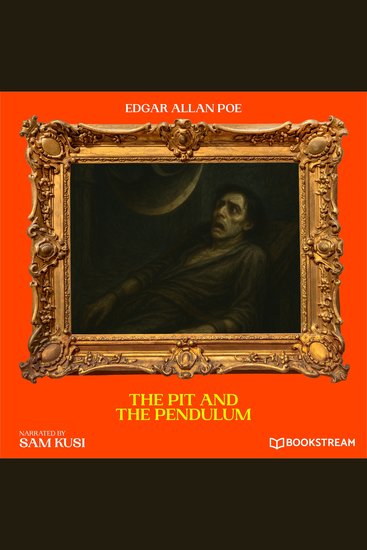
  • The Pit and the Pendulum - cover

    The Pit and the Pendulum

    Edgar Allan Poe

    • 0
    • 0
    • 0
    "The Pit and the Pendulum" is a short story by American writer Edgar Allan Poe and a work of horror fiction. It was first published in 1842 in the literary annual The Gift: A Christmas and New Year's Present for 1843. The story is about the torments endured by a prisoner of the Spanish Inquisition, and is set very loosely during the Peninsular War between Spain and Napoleonic France (1808–1814), although it invokes the feared Inquisition of earlier centuries. The narrator of the story describes his experience of being tortured. The story inspires fear in the reader via its heavy focus on the senses, such as sound, emphasizing the inescapable reality of the coming doom. In this it is unlike Poe's stories which invoke the supernatural. The tale has been adapted to film several times.
    The unnamed narrator is brought to trial before sinister judges of the Spanish Inquisition, charged with offenses that are never stated. As seven tall white candles on a table slowly burn down, the narrator feels his hopes of survival diminishing as well. He is condemned to death, whereupon he faints and later awakens to find himself in a totally dark room. At first the prisoner thinks that he is locked in a tomb, but then he discovers that he is in a cell. He decides to explore the cell by placing a scrap of his robe against the wall so that he can count the paces around the room, but he faints before he can measure the whole perimeter.
    Show book
  • A Journey into the Interior of the Earth - Unlock a cryptic map and plunge into the abyss in this foundational Science Fiction Adventure masterpiece Survive prehistoric perils and unravel the globe's ultimate subterranean secret! - cover

    A Journey into the Interior of...

    Jules Verne

    • 0
    • 0
    • 0
    Decipher the past. Descend into the abyss. Survive the impossible. 
    When the brilliant but eccentric Professor Liedenbrock discovers a hidden Runic cryptogram inside an ancient Icelandic manuscript, he inadvertently unlocks the most daring and terrifying expedition in human history. Accompanied by his reluctant nephew Axel and their stoic guide Hans, the professor plunges into the dark, sweltering crater of the extinct volcano Snæfell. As they leave the safety of the sunlit surface behind, the trio must navigate a subterranean labyrinth fraught with mortal peril. From blistering heat and treacherous abysses to boundless underground oceans and terrifying primordial beasts, their survival hinges on their wits and unwavering courage. The deeper they go, the more the boundaries of reality blur in this relentless struggle against the crushing weight of the earth itself. 
    Why you will love this: Fans of classic Science Fiction / Adventure will be mesmerized by the meticulous scientific world-building and the heart-pounding survival stakes. If you crave subterranean exploration, extinct volcano descent tales, ancient mysteries, and pioneering speculative fiction, this epic journey delivers unmatched suspense and atmospheric dread right up to the final explosive climax. 
    About the Author: Jules Verne (1828–1905) was a trailblazing French novelist whose visionary works laid the bedrock for modern science fiction. His extraordinary voyages combined rigorous scientific research with boundless imagination, inspiring generations of explorers, scientists, and dreamers.
    Show book
  • Super-Neutron - cover

    Super-Neutron

    Isaac Asimov

    • 0
    • 0
    • 0
    "Super-Neutron" is a science fiction short story by American writer Isaac Asimov, originally published in the September 1941 issue of Astonishing Stories, and included in the 1972 collection The Early Asimov.
    Show book
  • AWAKENING THE - Classic Literature Feminist Fiction Psychological Drama and a Timeless Story of Identity and Freedom - cover

    AWAKENING THE - Classic...

    Kate Chopin

    • 0
    • 0
    • 0
    Step into the quiet storm of the human soul with The Awakening by Kate Chopin — a timeless classic of emotional depth, courage, and self-discovery. 
    Set against the warm, shimmering backdrop of the Louisiana coast, this powerful novel follows Edna Pontellier, a woman who begins to question the life she has always been expected to live. Wife, mother, lady of society — roles carefully shaped by tradition. But beneath the surface, something restless begins to stir. 
    As the sound of the sea grows louder in her heart, Edna finds herself drawn toward freedom, passion, and the terrifying beauty of becoming her true self. 
    First published in 1899, The Awakening was far ahead of its time. Today, it stands as one of the most important works in American literature, exploring identity, independence, and the price of awakening to one’s own desires. 
    Narrated by Tracy Peace, this audiobook brings new life to Chopin’s haunting prose, guiding listeners through a story that feels as intimate, fragile, and powerful as a whispered confession. 
    Perfect for listeners who enjoy: 
    Classic literature 
    Psychological drama 
    Feminist fiction 
    Slow, emotional storytelling 
    Deep character exploration 
    Close your eyes, listen to the waves… 
    and discover the moment a soul begins to awaken.
    Show book
  • Cavalleria Rusticana - From their pens to your ears genius in every story - cover

    Cavalleria Rusticana - From...

    Giovanni Verga

    • 0
    • 0
    • 0
    The bookshelves of European literature are incredible collections that have gathered together centuries of very talented authors.  From this continent their fame spread and whilst among their number many are now forgotten or neglected their talents endure.  Among them is Giovanni Verga.
    Show book