Join us on a literary world trip!
Add this book to bookshelf
Grey
Write a new comment Default profile 50px
Grey
Subscribe to read the full book or read the first pages for free!
All characters reduced
You Bleeding Childhood - cover

You Bleeding Childhood

Michele Mari

Translator Brian Robert Moore

Publisher: And Other Stories

  • 0
  • 1
  • 0

Summary

Long before the latest vogue for autofiction, Michele Mari, one of Italy's most beloved authors, cast his mind back to the days of his own childhood, and found it crawling with monsters.
Raised on comic books and science fiction, the young Mari constructed an alternate universe for himself untouched by uncomprehending grownups or sadistic peers. Compared to the horrors of real life, Long John Silver and Cthulhu made for positively cuddly company; but little boys raised by beasts may well grow up beastly – or never grow up at all. Waking or sleeping, the obsessions of Mari's youth seem to colour his every adult thought. You, Bleeding Childhood stands as his first attempt to catalogue this cabinet of wonders.

Cult classics since their first publication, these loosely connected stories stand as the ideal introduction to an encyclopedic fantasist on a par with Kafka, Poe, and Borges.
Available since: 07/11/2023.
Print length: 208 pages.

Other books that might interest you

  • Two Tales From Anton Chekhov - cover

    Two Tales From Anton Chekhov

    Anton Chekhov

    • 0
    • 0
    • 0
    Anton Pavlovich Chekhov (January 29, 1860 - July 15, 1904) was a Russian playwright and short-story writer who, though a doctor by profession, is considered to be one of the greatest writers of all time. His career as a playwright produced four classics, and his best short stories are held in high-esteem by writers and critics. The following recording includes the short stories, "The Trousseau" and "Champagne (A Wayfarer's Story)."
    Show book
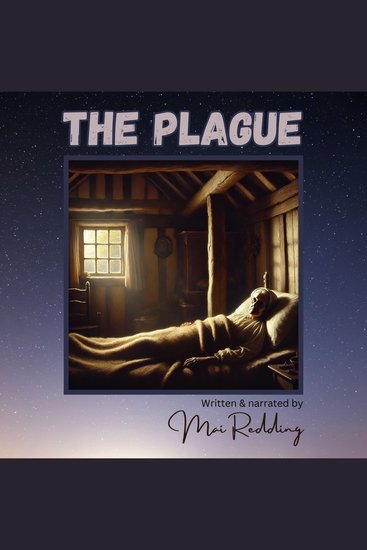
  • The Plague - cover

    The Plague

    Mai Redding

    • 0
    • 0
    • 0
    As the Plague looms over England, healer Eleanor becomes her village’s last hope after the physician flees. Called to aid an ailing widow, she discovers a chilling scene and realises the plague is a curse. 
    Mai Redding, both author and narrator of this chilling tale, weaves a haunting story. With a sharp eye for gothic suspense and psychological horror, she brings stories to life, immersing readers in a world where eerie tales make your spine tingle and the fight for survival is relentless.
    Show book
  • Rudyard Kipling - Six of the Best - Their legacy in 6 classic stories - cover

    Rudyard Kipling - Six of the...

    Rudyard Kipling

    • 0
    • 0
    • 0
    Six has always been a number we group things around – Six of the best, six of one half a dozen of another, six feet under, six pack, six degrees of separation and a sixth sense are but a few of the ways we use this number. 
     
    Such is its popularity that we thought it is also a very good way of challenging and investigating an author’s work to give width, brevity, humour and depth across six of their very best. 
     
    In this series we gather together authors whose short stories both rivet the attention and inspire the imagination to visit their gems in a series of six, to roam across an author’s legacy in a few short hours and gain a greater understanding of their writing and, of course, to be lavishly entertained by their ideas, their narrative and their way with words. 
     
    These stories can be surprising and sometimes at a tangent to what we expected, but each is fully formed and a marvellous adventure into the world and words of a literary master. 
     
    1 - Six of the Best - Rudyard Kipling - An Introduction 
    2 - Rudyard Kipling - An Introduction 
    3 - The Phantom Rickshaw By Rudyard Kipling 
    4 - They by Rudyard Kipling 
    5 - Mary Postgate by Rudyard Kipling 
    6 - Mark Of The Beast By Rudyard Kipling 
    7 - The Maltese Cat by Rudyard Kipling 
    8 - The Man Who Would Be King - Part 1 by Rudyard Kipling 
    9 - The Man Who Would Be King - Part 2 by Rudyard Kipling
    Show book
  • The Decameron Volume I - cover

    The Decameron Volume I

    Giovanni Boccaccio

    • 0
    • 0
    • 0
    "The Decameron" is a collection of novellas by Italian author Giovanni Boccaccio, written between 1348 and 1353. It is a masterpiece of Italian literature and a significant work of early Renaissance literature. The frame narrative of "The Decameron" revolves around ten individuals who flee plague-ridden Florence and take refuge in a villa in the countryside. To pass the time, they tell one another stories—100 in total—over the course of ten days. These stories encompass a wide range of themes, from love and morality to wit and humor, and they offer a vivid portrayal of Italian society in the 14th century.
    Show book
  • Bonneville Stories - cover

    Bonneville Stories

    Mark Doyon

    • 0
    • 0
    • 0
    In the town of Bonneville, good people lose limbs, fight lightning, and slip into sinkholes. They pitch over bicycles, tumble off ladders, and expire without warning. They spin the wheel and take their chances. It’s all in a day’s work. 
    Some blame God, others blame kismet, and still others rail against random happenstance. All told, maybe there are no accidents.
    Show book
  • A Slav Soul - From their pens to your ears genius in every story - cover

    A Slav Soul - From their pens to...

    Alexander Kuprin

    • 0
    • 0
    • 0
    Alexander Kuprin was born in Narovchat, Penza in Russia on 7th September 1870. 
    At 3 his Father died and he and mother moved to Moscow. By 10 he was enrolled at the Second Moscow Military High School and there his interest in literature began. The Alexander Military Academy followed and two years later he was a sub-lieutenant and posted to an Infantry Regiment for a further four years. 
    Despite his duties he was a now a keen writer and published his first short story at this time. His military duties also garnered him experiences for his breakthrough work ‘The Duel’.  Leaving the military he left for Kiev to work for local newspapers.  He continued to publish both stories and novels and by 1901 he was in St Petersburg becoming part of a group that included Chekhov, Ivan Bunin, Maxim Gorky and Leonid Andreyev.  
    In the years that followed further controversial works and acclaim followed.  His comments on the regime meant he was also put under secret police surveillance.   
    As World War I erupted, Kuprin opened a military hospital but was then given command of an infantry company in Finland. He was soon discharged on grounds of ill health.  
    The October Revolution saw him praise Lenin, but he warned that the Bolsheviks threatened Russian culture and might cause further widespread suffering to the peasants.  As Civil War raged he took his family to Helsinki and then on to Paris. 
    Exile saw his talents decline further and his succumbing to alcoholism. He became lonely and withdrawn. The family's poverty increased his malaise.   
    In May 1937, the Kuprin’s returned to Moscow.  He now saw his work published but wrote almost nothing new.  In 1938 his health rapidly deteriorated.  Already suffering from a kidney problems and sclerosis, he had now developed cancer of the oesophagus.  
    Alexander Kuprin died on 25th August 1938.
    Show book