Join us on a literary world trip!
Add this book to bookshelf
Grey
Write a new comment Default profile 50px
Grey
Subscribe to read the full book or read the first pages for free!
All characters reduced
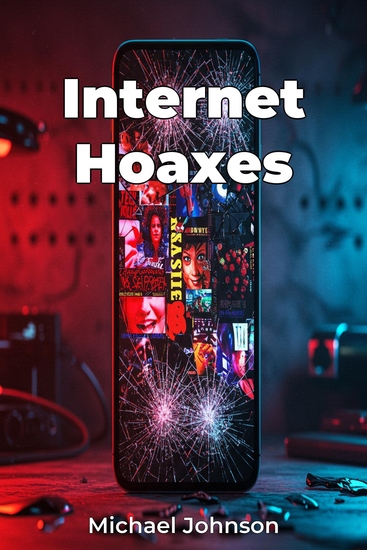
Internet Hoaxes - cover

Internet Hoaxes

Michael Johnson

Translator A AI

Publisher: Publifye

  • 0
  • 1
  • 0

Summary

Internet Hoaxes examines how fake news and online misinformation spread rapidly in the digital age, exploring the technology and psychology behind these deceptive practices. The book highlights how social media algorithms can amplify falsehoods and how echo chambers reinforce existing beliefs, making people more susceptible to online scams. By understanding how hoaxes exploit vulnerabilities, readers can develop critical thinking skills and media literacy to combat online deception.

 
The book begins by defining internet hoaxes and tracing their evolution from traditional media to the digital realm. It then analyzes the psychology behind why people believe hoaxes, exploring cognitive biases like confirmation bias. Finally, Internet Hoaxes presents real-world case studies of viral misinformation, including its impact on elections and financial markets, demonstrating the tangible consequences of these online deceptions.

 
Through a holistic approach, the book combines technical analysis with psychological insights and real-world examples, offering a comprehensive understanding of internet hoaxes. Drawing on academic research, fact-checking reports, and social media analysis, the book empowers readers to navigate the digital landscape more discerningly. This fact-based analysis helps readers understand the anatomy of online deception and its impact on current events.
Available since: 03/29/2025.
Print length: 77 pages.

Other books that might interest you

  • A Love Letter to Suburbia - How to Restore the American Village - cover

    A Love Letter to Suburbia - How...

    Diane Alisa

    • 0
    • 0
    • 0
    What happened to the American Dream? In A Love Letter to Suburbia, Diane Alisa takes readers on a compelling journey through the rise of suburbia and its consequences on American life. With heartfelt reflections and practical insights, Diane confronts the disillusionment many feel living in suburban sprawl. She explores how car dependency, corporate control, and disintegrating community values have eroded the sense of connection and purpose that once defined American neighborhoods. 
    But this is not a story of defeat. Diane offers a bold vision for restoring the “American Village”—a revitalized, walkable, community-focused way of living. Drawing on historical examples and modern urbanism, she presents actionable steps for turning car-centric infrastructure into vibrant, self-sustaining communities where families can thrive. A Love Letter to Suburbia is more than a critique; it is a hopeful roadmap for reclaiming the essence of the American Dream. 
    Will America restore its villages and rekindle a shared cultural identity—or will the suburbs continue to spread isolation?
    Show book
  • Strange Religion - How the First Christians Were Weird Dangerous and Compelling - cover

    Strange Religion - How the First...

    Nijay K. Gupta

    • 0
    • 0
    • 0
    The first Christians were weird. Just how weird is often lost on today's believers. 


    Within Roman society, the earliest Christians stood out for the oddness of their beliefs and practices. They believed unusual things, worshiped God in strange ways, and lived a unique lifestyle. They practiced a whole new way of thinking about and doing religion that would have been seen as bizarre and dangerous when compared to Roman religion and most other religions of the ancient world. 


    Award-winning author, blogger, speaker, and New Testament teacher Nijay Gupta traces the emerging Christian faith in its Roman context in this accessible and engaging book. Christianity would have been seen as radical in the Roman world, but some found this new religion attractive and compelling. The first Christians dared to be different, pushed the boundaries of what was acceptable, transformed how people thought about religion, and started a movement that grew like wildfire. This book shows how the example of the earliest Christians can offer today's believers encouragement and hope.
    Show book
  • Being Bad - Breaking the Rules and Becoming Everything You're Not Supposed to Be - cover

    Being Bad - Breaking the Rules...

    Arielle Egozi

    • 0
    • 0
    • 0
    Salon's inaugural sex and love advice columnist and author of the viral LinkedIn sex work post, Arielle Egozi, shares their journey as a queer, neurodivergent child of immigrants who never quite fit into the social roles she was supposed to, instead choosing to embrace their multiple dimensions, and eventually discovering freedom—and true power—by being "bad" in a world that kept trying to force her to be "good." 


    With Arielle's personal and relatable guidance, listeners will learn how to: escape the male gaze for good; release the shame they've internalized; make their friends the loves of their lives; embrace their inner domme and reclaim their power; ditch relationship hierarchy to build the relationship(s) of their dreams; discover that sex positivity isn't about having sex at all. 


    Using frameworks and philosophies cultivated from years of living, writing, speaking, and educating on sex, relationships, and identity through a queer and decolonizing lens, Arielle offers questions, practices, and tools to help you find your own power and step into it—creating space for you to dream far beyond what your family, society, or capitalist culture expects. Being Bad offers you the permission to become who you are, however you choose to be.
    Show book
  • The Trump Code - cover

    The Trump Code

    Troy Anderson

    • 0
    • 0
    • 0
    Could the Trump family's connections to time travel, esoteric knowledge, and secret societies hold clues to unlocking the mysteries of our past and future?
    
    By the end of this book, you will be able to connect the uncanny parallels between the novels Lockwood penned over a century ago and the Trump family legacy. Additionally, you will be able to solve the mystery to the upcoming 2024 election season.
    
    In the annals of American presidential history, there is no more peculiar tale than the eerie similarities between former President Donald Trump and a series of novels called, The Baron Trump Collection, penned by the obscure yet seemingly prophetic hand of American lawyer and novelist Ingersoll Lockwood in the late 1800s.
    
    The Trump Code delves into the connections between the Baron Trump novels and the enigmatic Trump family legacy, asking whether this nineteenth-century novelist foresaw the future of not only Trump but America and the world. It also uncovers a web of historical events and divine providence.
    
    Drawing from biblical passages about Enoch, Elijah, the Apostle John, the Mount of Transfiguration, and a mysterious verse in Ephesians on how Christ's followers are seated in "heavenly places," along with theories of time travel by Albert Einstein, Nikola Tesla, and others, The Trump Code connects the pieces of this riveting puzzle, posing the question of whether "truth is stranger than fiction," as Mark Twain famously said.
    
    As we peel back the layers of history, The Trump Code confronts questions that defy easy answers:
    Could this fictional novel hold clues to the upcoming 2024 presidential election, with all its division and chaos?
    
    Is there a divine hand guiding the course of human events, as suggested by the parallels in these novels between fiction and reality?
    
    Or are we witnessing the machinations of darker forces, hinted at by the curious numerology surrounding Lockwood's name?
    Show book
  • Mansa Musa and the Empire of Mali - A True Story of Gold and Greatness from Africa - cover

    Mansa Musa and the Empire of...

    P. James Oliver

    • 0
    • 0
    • 0
    Oliver's well-researched biography of Mansa Musa reads like an exotic tale of gold, glory, and adventure. During his long reign as Mali's emperor, Mansa Musa led his empire into its Golden Age; presided over a spectacular, 60,000 person, 9,000 mile pilgrimage; founded a university in Timbuktu; and helped revolutionize architecture across the Sudan. Oliver does not allow Musa's story to get bogged down in detail by seamlessly weaving a lot of history into his narrative and by supplying curious readers with an extensive description. 
    Many of the African ancestors of today's African-Americans came from West Africa. From 700 -- 1600 A. D., one after the other, three great, black, commercial empires dominated West Africa. They were powerful, prosperous, complex, stable -- and large. At its height, the Empire of Mali was the size of all of Western Europe.
    Show book
  • The Policing Machine - Enforcement Endorsements and the Illusion of Public Input - cover

    The Policing Machine -...

    Tony Cheng

    • 0
    • 0
    • 0
    A revelatory look at how the NYPD has resisted change through strategic and selective community engagement. 
      
    The past few years have seen Americans express passionate demands for police transformation. But even as discussion of no-knock warrants, chokeholds, and body cameras has exploded, any changes to police procedures have only led to the same outcomes. Despite calls for increased accountability, police departments have successfully stonewalled change.  
      
    In The Policing Machine, Tony Cheng reveals the stages of that resistance, offering a close look at the deep engagement strategies that NYPD precincts have developed with only subsets of the community in order to counter any truly meaningful, democratic oversight. Cheng spent nearly two years in an unprecedented effort to understand the who and how of police-community relationship building in New York City, documenting the many ways the police strategically distributed power and privilege within the community to increase their own public legitimacy without sacrificing their organizational independence. By setting up community councils that are conveniently run by police allies, handing out favors to local churches that will promote the police to their parishioners, and offering additional support to institutions friendly to the police, the NYPD, like police departments all over the country, cultivates political capital through a strategic politics that involves distributing public resources, offering regulatory leniency, and deploying coercive force. The fundamental challenge with police-community relationships, Cheng shows, is not to build them. It is that they already exist and are motivated by a machinery designed to stymie reform.
    Show book