¡Acompáñanos a viajar por el mundo de los libros!
Añadir este libro a la estantería
Grey
Escribe un nuevo comentario Default profile 50px
Grey
Suscríbete para leer el libro completo o lee las primeras páginas gratis.
All characters reduced
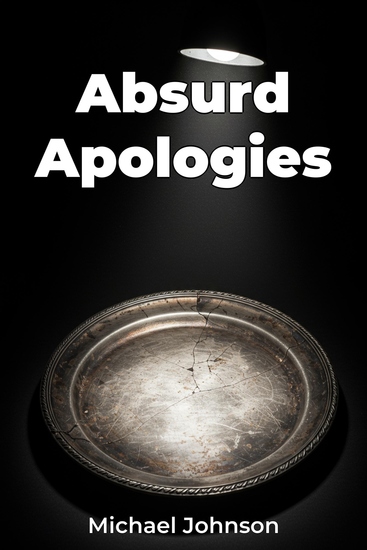
Absurd Apologies - cover

Absurd Apologies

Michael A Johnson

Traductor A AI

Editorial: Publifye

  • 0
  • 0
  • 0

Sinopsis

Absurd Apologies examines why some public apologies, intended for crisis management and effective communication, backfire spectacularly, turning transgression into full-blown outrage. From political apologies to business management blunders, the book dissects what makes an apology fail, revealing that insincerity or deflection can be worse than silence. It highlights how societal norms and social media have reshaped accountability, underscoring that a mismanaged apology inflicts lasting damage on reputation and trust.

 
The book offers a framework for understanding the psychology of apologies and public perception, emphasizing that aligning words with tangible actions is vital. It explores how the language of denial and the timing of delivery impact an apology's reception. Through case studies and analysis of public statements, Absurd Apologies demonstrates that poorly executed apologies intensify negative perceptions and erode ethical leadership.

 
Starting with the core elements of an effective apology, such as acknowledging responsibility and expressing remorse, the book progresses through high-profile failures, identifying specific missteps. It provides practical guidelines for crafting authentic apologies, emphasizing proactive communication strategies. This approach allows readers to understand the nuances of sincere apologies versus absurd apologies, making it a valuable resource for leaders and communicators.
Disponible desde: 29/03/2025.
Longitud de impresión: 90 páginas.

Otros libros que te pueden interesar

  • The Science of Reading Body Language - Read Between the Lines: Understanding Physical Communication - cover

    The Science of Reading Body...

    Nathaniel Hart

    • 0
    • 0
    • 0
    We communicate constantly, not just through words but through a rich tapestry of unspoken cues. From the subtle flicker of an eyebrow to the unconscious shift in posture, our bodies are constantly broadcasting messages, often revealing more than consciously intended. 
    This book serves as a guide to understanding this complex and fascinating world of nonverbal communication. We will embark on a journey to unlock the secrets hidden within human interaction.  
    We will explore the evolutionary basis of nonverbal communication, tracing its origins back to our primal ancestors and examining how these innate cues continue to shape our interactions today. 
    We will delve into the significant role of culture in shaping body language, understanding how societal norms and individual experiences influence our expression and interpretation of nonverbal signals. We will examine the anatomy of nonverbal cues in detail, providing a comprehensive overview of facial expressions, posture, gestures, proxemics (the use of space), and paralanguage (vocal cues), each with their own nuanced meanings and power to reveal emotions, intentions, and social dynamics. We'll investigate the art of integrating verbal and nonverbal cues to achieve a deeper understanding of communication, and learn to detect those inconsistencies that might signal deception or underlying emotions. Through practical exercises and real-world examples, you will hone your observational skills, and ability to spot subtle clues others miss. 
    The book goes beyond simply identifying individual cues, guiding you to integrate these observations into a holistic understanding of behavior, fostering enhanced empathy and providing insights into the motivations and feelings behind nonverbal expressions. 
    Ultimately, the knowledge within this book equips you to navigate the intricacies of human interaction with newfound confidence and understanding, enriching your life by fostering stronger and more meaningful relationships.
    Ver libro
  • Mad Max and Philosophy - Thinking Through the Wasteland - cover

    Mad Max and Philosophy -...

    William Irwin

    • 0
    • 0
    • 0
    Beneath the stylized violence and thrilling car crashes, the Mad Max films consider universal questions about the nature of human life, order and anarchy, justice and moral responsibility, society and technology, and ultimately, human redemption. In Mad Max and Philosophy, a diverse team of political scientists, historians, and philosophers investigates the underlying themes of the blockbuster movie franchise, following Max as he attempts to rebuild himself and the world. 


    This book guides you through the barren wastelands of a post-apocalyptic future as you explore ethics and politics in The Wasteland, the importance of costumes and music, humankind's relationship with nature, commerce, gender, religion, madness, and more. 


    ● Covers all of George Miller's Mad Max films 


    ● Discusses connections between Mad Max and major philosophers 


    ● Follows Max's journey from policeman and family man to lost soul in search of redemption 


    ● Examines the future of technology and possible impacts on society, the environment, and access to natural resources 


    ● Delves into feminist themes and relationships between power and procreation
    Ver libro
  • Lost Cities of the Ancient World - cover

    Lost Cities of the Ancient World

    Philip Matyszak

    • 0
    • 0
    • 0
    The ruins of ancient Athens, Luxor, and Rome are familiar cornerstones of world history, visited by travelers from across the globe. But what about the cities that have dropped off the map? Where are they, and what can they tell us about our past? 


    In this compendium of forgotten cities, Philip Matyszak explores the trials, tribulations, and triumphs these cities faced. Lost Cities of the Ancient World brings to life the sites and settlements across Europe, the Middle East, and beyond that time forgot, from the sunken city of Pavlopetri in the Mediterranean to the deep cave dwellings of Derinkuyu in Turkey. Four thousand years of human history are covered in this volume, offering unique insights into forgotten cities and ways of life. 


    Matyszak reveals a dynamic network of peoples and cultures who fought and traded between themselves, exchanging inventions, ideas, and philosophies, with the result that people as far apart as Catalhöyükin Turkey and Skara Brae in Scotland's Orkney Islands shared a common heritage. By examining the motivations that first drew populations to gather and settle together, as well as the challenges that led to their cities' abandonment, this striking and often surprising book offers us a fresh perspective on our urban origins.
    Ver libro
  • Try Not to Be Strange - The Curious History of the Kingdom of Redonda - cover

    Try Not to Be Strange - The...

    Michael Hingston

    • 0
    • 0
    • 0
    On his fifteenth birthday, in the summer of 1880, future science-fiction writer M.P. Shiel sailed with his father and the local bishop from their home in the Caribbean out to the nearby island of Redonda—where, with pomp and circumstance, he was declared the island’s king. A few years later, when Shiel set sail for a new life in London, his father gave him some advice: Try not to be strange. It was almost as if the elder Shiel knew what was coming. 
    Try Not to Be Strange: The Curious History of the Kingdom of Redonda tells, for the first time, the complete history of Redonda’s transformation from an uninhabited, guano-encrusted island into a fantastical and international kingdom of writers. With a cast of characters including forgotten sci-fi novelists, alcoholic poets, vegetarian publishers, Nobel Prize frontrunners, and the bartenders who kept them all lubricated while angling for the throne themselves, Michael Hingston details the friendships, feuds, and fantasies that fueled the creation of one of the oddest and most enduring micronations ever dreamt into being. Part literary history, part travelogue, part quest narrative, this cautionary tale about what happens when bibliomania escapes the shelves and stacks is as charming as it is peculiar—and blurs the line between reality and fantasy so thoroughly that it may never be entirely restored.
    Ver libro
  • The Mind Body Way - The Embodied Leader's Path to Resilience Connection and Purpose - cover

    The Mind Body Way - The Embodied...

    Courtney Amo, Dr. Julie Beaulac,...

    • 0
    • 0
    • 0
    Are you spending your energy wisely, or are you teetering on the brink of exhaustion? Whether you're an executive, an entrepreneur, or a community organizer, embodiment can help you find meaningful success in life and leadership. In The Mind-Body Way, wellness and leadership experts Courtney Amo, Dr. Julie Beaulac, and Casey Berglund use their decades of experience to reveal how tapping into the intuitive wisdom of your body makes you a better, happier leader—no matter the unique challenges of your everyday. 
    With a step-by-step approach founded on six pillars of embodiment, The Mind-Body Way teaches you how to be a more resilient, connected, and purpose-driven leader by deepening your relationship with your body and heeding its wisdom. Through meaningful stories and accessible exercises, this practical guide will teach you how to interpret your body’s signals and use that knowledge to curb self-doubt and become a stronger, more agile leader in this increasingly complex world. 
    Discover a new way of leading that is powerful, connected, and aligned with purpose, a way that heals you and invigorates you to move through massive change—all while inspiring and empowering others.
    Ver libro
  • The Sociology of Crime - Understanding the Roots and Impacts of Criminal Behavior - cover

    The Sociology of Crime -...

    Fred Grandsen

    • 0
    • 0
    • 0
    Crime is not merely a legal category but a social construct shaped by historical, cultural, and political forces. What is considered criminal behavior varies across societies and time periods, reflecting changing moral values, power structures, and social interests. Understanding crime as a social construct allows us to analyze how laws are created, enforced, and challenged within different social contexts. 
    One of the key aspects of the social construction of crime is that laws are not neutral or universal. Instead, they are established by those in positions of power who determine what behaviors should be criminalized. For example, certain acts such as drug use, gambling, or even political protests have been criminalized in some societies while being tolerated or even encouraged in others. The legal system often reflects the interests of dominant groups, leading to selective enforcement of laws. Historically, vagrancy laws targeted the poor, while modern drug laws have disproportionately affected marginalized communities. 
    Crime is also shaped by cultural perceptions and media representations. The way crime is reported in the news and depicted in television shows or films influences public perceptions of who is considered criminal. For instance, street crime is often sensationalized, while corporate or white-collar crimes receive comparatively little attention, despite their significant social and economic impact. This selective framing reinforces stereotypes and can lead to policies that prioritize punishment for certain groups while overlooking more systemic forms of harm.
    Ver libro