Join us on a literary world trip!
Add this book to bookshelf
Grey
Write a new comment Default profile 50px
Grey
Subscribe to read the full book or read the first pages for free!
All characters reduced
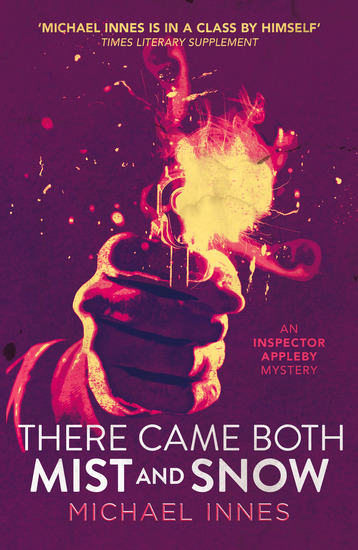
There Came Both Mist and Snow - cover

There Came Both Mist and Snow

Michael Innes

Publisher: Open Road Media Mystery & Thriller

  • 0
  • 0
  • 0

Summary

A Scotland Yard detective investigates when gunfire disrupts an aristocratic family’s Christmas celebrations in this classic British mystery. The relatives of Sir Basil Roper are gathering to celebrate Christmas at the family’s ancestral home in Yorkshire. While the ancient estate has remained unchanged for centuries, the surrounding area now features neon signs, a textile mill, and a brewery. Even so, Arthur Ferryman is happy to be there and looking forward to a peaceful holiday. Unfortunately, many of his cousins have taken up pistol shooting for a new hobby. Making matters worse, the family learns that Basil plans to sell the place. With the mood of the party soured, quarreling begins, and tension mounts. Before you can say, “Bah humbug,” a gun is fired, and one of the revelers is shot. Soon, Arthur finds himself assisting Insp. John Appleby with his investigation. Together they must navigate family secrets and grudges to find a shooter before someone else gets a bullet for Christmas . . .Originally published s asunder the title A Comedy of Terrors Praise for Michael Innes and There Came Both Mist and Snow “Highbrow appeal.” —Kirkus Reviews “Mr. Innes is in a class by himself among detective story writers.” —The Times Literary Supplement “Wickedly witty.” —Daily Mail “As farfetched and literary as Sayers.” —The Cambridge Companion to Crime Fiction
Available since: 05/30/2023.
Print length: 218 pages.

Other books that might interest you

  • Colonel Benyon's Entanglement - A prime example of weird fiction from one of Victorian Englands most prominent female authors - cover

    Colonel Benyon's Entanglement -...

    Mary Elizabeth Braddon

    • 0
    • 0
    • 0
    Mary Elizabeth Braddon was born in London on the 4th October 1835. 
     
    At age 5 her parents separated but her ambition to succeed was not daunted.  After being privately educated she took to acting, and the minor roles she obtained where enough to support both her and her mother.  This potential career waned as soon as she began writing and secured an income from it. 
     
    In 1860, she met John Maxwell, a publisher of periodicals, and moved in with him the following year.  At the time Maxwell was already married with five children but his wife was confined to an Irish mental asylum.  On her death they married and she had six children by him. 
     
    Braddon was prolific and wrote over 80 novels, perhaps the most famous is ‘Lady Audley's Secret’ (1862), which won her both sales and a fortune as a bestseller.  She also wrote a number of historical fiction novels which again increased her reputation. 
     
    She was equally prolific as a short story writer, primarily supernatural and ghost stories, all of which continue to be anthologized to this day, such is the high regard they are kept in. 
     
    Braddon founded Belgravia magazine in 1866, its fare being serialised sensation novels, poems, travel narratives and biographies, along with essays on fashion, history and science, all lavishly illustrated.  She also edited Temple Bar magazine. 
     
    Mary Elizabeth Braddon died on 4th February 1915 and is buried in Richmond Cemetery. 
     
    In this story Colonel Benyon returns from service abroad on sick leave to find that England is very much changed.  He accepts a friend’s invitation to take a short recuperation at his home in Cornwall, which has lain empty for some time.  The Colonel takes up the offer, but things do not go quite as planned.
    Show book
  • Thérèse Raquin - Audiobook - cover

    Thérèse Raquin - Audiobook

    Émile Zola, Classic Audiobooks,...

    • 0
    • 0
    • 0
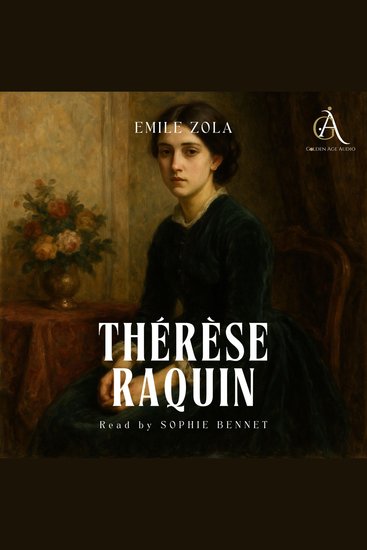
    Thérèse Raquin is Émile Zola's chilling psychological novel about passion, guilt, and the destructive power of suppressed desire. Trapped in a loveless marriage, Thérèse begins a dangerous affair with her husband's friend, leading to a crime that will haunt them both. As their shared guilt festers, Zola examines the dark corners of human conscience with cold precision.Written in stark, naturalistic style, this early masterpiece shocked readers of the 19th century and still unsettles today. Thérèse Raquin is a gripping and tragic exploration of moral decay, suffocating domesticity, and the consequences of forbidden love.
    Show book
  • The Moon-Bog - cover

    The Moon-Bog

    H.P. Lovecraft

    • 0
    • 0
    • 0
    More classic horror narrations on Jonathan's YouTube channel: https://www.youtube.com/@JonathanDunneHorrorAudiobooks 
    Title:The Moon-Bog 
    Author:H. P. Lovecraft 
    Narrator:Jonathan Dunne 
    Original Publication:1926 
    Public Domain:Yes 
    Series:Timeless Terrors 
    Number:96 
    Description: 
    The Moon-Bog is an eerie and atmospheric tale of ancient land, ancestral pride, and the terrible cost of disturbing what time has claimed. The story follows an American visitor to Ireland who becomes entangled in his friend’s obsessive plan to drain a vast, desolate bog surrounding his inherited estate. Though warned by local villagers that the marsh holds old and sacred memories, the landowner presses forward—determined to reclaim the soil from what he views as useless decay. 
    Lovecraft’s horror rises slowly from landscape and legend. The bog itself becomes a living presence—shrouded in mist, steeped in folklore, and watched over by something older than memory. The still waters, the whispering reeds, and the pallid glow of the moon create an atmosphere thick with inevitability. As the work of progress begins, so too does an ancient resistance, culminating in a night of unearthly music and mounting dread. 
    Unlike tales of overt monsters, the terror here is rooted in atmosphere, ancestry, and the arrogance of dismissing the past. The story reflects Lovecraft’s recurring themes of ancient forces lying dormant beneath the surface of modern ambition. The horror is quiet, folkloric, and inexorable—an awakening summoned by human intrusion. 
    Narrated by Amazon-bestselling horror author Jonathan Dunne, this performance captures the haunting stillness and mounting cosmic unease of Lovecraft’s vision, bringing to life the melancholy beauty and creeping terror of the Irish marshlands. The Moon-Bog endures as a lyrical and unsettling work of early weird fiction, where the land itself remembers—and answers.
    Show book
  • Mysterious Island - cover

    Mysterious Island

    Jules Verne

    • 0
    • 0
    • 0
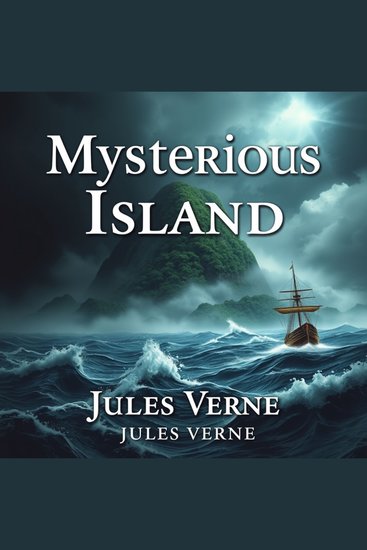
    "Mysterious Island" by Jules Verne is an adventure novel that follows a group of five castaways who are stranded on a remote and uncharted island in the Pacific Ocean. After escaping from a Confederate prison during the American Civil War in a hot air balloon, they find themselves on this mysterious island with limited resources. Using their ingenuity, they work together to survive, build a new life, and explore the island, which is filled with strange phenomena and hidden dangers. Throughout their journey, they encounter various challenges, including hostile environments, wild animals, and mysterious occurrences, ultimately leading them to uncover the island's secrets and a surprising connection to Captain Nemo and his submarine, the Nautilus. The novel combines elements of science, exploration, and suspense, showcasing Verne's imagination and his interest in the wonders of science and technology.
    Show book
  • Notes From The Underground - cover

    Notes From The Underground

    Fyodor Dostoyevsky

    • 0
    • 0
    • 0
    "Notes from the Underground" by Fyodor Dostoyevsky delves deep into the mind of an unnamed narrator, presenting a profound exploration of human psychology and existentialism. Set in 19th-century St. Petersburg, the novel offers a compelling glimpse into the inner workings of a disillusioned and isolated protagonist. The story begins with the narrator, a retired civil servant, reflecting on his life and experiences. He introduces himself as a self-proclaimed "underground man," detached from society and harboring a deep resentment towards others. Through a series of fragmented and introspective monologues, the narrator takes readers on a tumultuous journey through his thoughts, emotions, and philosophical musings. "Notes from the Underground" is a profound and introspective work that invites readers to question their own existence and the complexities of the human condition. Dostoyevsky's exploration of the underground man's psyche offers a thought-provoking examination of alienation, morality, and the struggle for individuality in a rapidly changing society. Through its vivid portrayal of the narrator's internal turmoil, the novel remains a timeless and influential masterpiece in the realm of psychological literature. Read in English, unabridged.
    Show book
  • The Tempest - cover

    The Tempest

    William Shakespeare

    • 0
    • 0
    • 0
    The Tempest is a play by English playwright William Shakespeare, probably written in 1610-1611, and thought to be one of the last plays that Shakespeare wrote alone. After the first scene, which takes place on a ship at sea during a tempest, the rest of the story is set on a remote island, where the sorcerer Prospero, a complex and contradictory character, lives with his daughter Miranda, and his two servants: Caliban, a savage monster figure, and Ariel, an airy spirit. The play contains music and songs that evoke the spirit of enchantment on the island. It explores many themes, including magic, betrayal, revenge, and family. In Act IV, a wedding masque serves as a play-within-a-play, and contributes spectacle, allegory, and elevated language.
    Although The Tempest is listed in the First Folio as the first of Shakespeare's comedies, it deals with both tragic and comic themes, and modern criticism has created a category of romance for this and others of Shakespeare's late plays. The Tempest has been put to varied interpretations, from those that see it as a fable of art and creation, with Prospero representing Shakespeare, and Prospero's renunciation of magic signaling Shakespeare's farewell to the stage, to interpretations that consider it an allegory of Europeans colonizing foreign lands.
    Show book