Love in War
Michael Farthing
Publisher: Universe
Summary
A five-year story of love between ordinary people who survived World War II on just 49 days spent together. How did they do it? This true story based on real lives explores the conundrum.
Publisher: Universe
A five-year story of love between ordinary people who survived World War II on just 49 days spent together. How did they do it? This true story based on real lives explores the conundrum.
The Detective has been a mainstay of fiction writing ever since we can remember. Their deductive powers, their intuition and fleet-footed grasp of every detail can often turn the unlikeliest situation, or bunch of red herrings, into a breakthrough to capture even the most ingenious and dastardly of criminals. In this series our classic authors explore not only various themes, such as Occult Detectives, Female Detectives, Curious Crimes and a whole host more, but also bring a range and depth to the whole culture of criminality as we send in the Long Arm of the Law to bring justice on behalf of the society it serves. In this volume our sleuths are all Female Detectives who solve crimes in ways that are familiar and yet refreshingly new. 1 - The Detective - The Female Detective - An Introduction 2 - Mr Bovey's Unexpected Will by L T Meade and Robert Eustace 3 - A Broken Trust by Elizabeth Corbett 4 - The Adventures of Lady Pearl-Broker by Beatrice Heron-Maxwell 5 - A Twin Identity by Edith Stewart Drewery 6 - The Stir Outside the Cafe Royal by Clarence Rook 7 - A Princess's Vengeance by Catherine Louisa Pirkis 8 - The Haverstock Hill Murder by George R Sims 9 - Conscience by Richard Marsh 10 - How He Cut His Stick by M McDonell Bodkin Q C 11 - The Frewin Miniatures by Baroness OrczyShow book
It is 1960. Her mother dead and her father missing, she is indebted and fiercely loyal to her grandmother and intensely passionate about art, her talent is second to none. She faces tremendous inner turmoil and conflict. Ignoring her true love, heir to an earldom, she flaunts the advances of a British Secret Service, rogue spy. Can Sarah make the right choices, both in love and life? Critical choices that will affect not only her life but the lives of those she holds dear.Show book
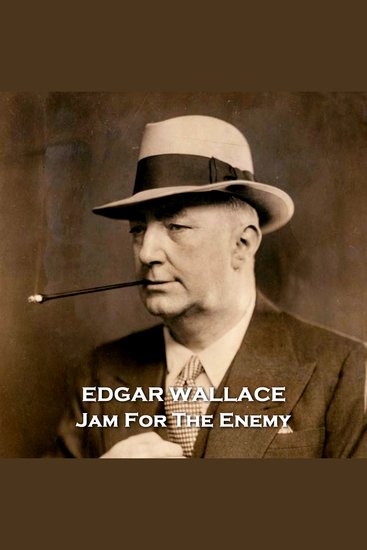
Richard Horatio Edgar Wallace was born on the 1st April 1875 in Greenwich, London. Leaving school at 12 because of truancy, by the age of fifteen he had experience; selling newspapers, as a worker in a rubber factory, as a shoe shop assistant, as a milk delivery boy and as a ship’s cook. By 1894 he was engaged but broke it off to join the Infantry being posted to South Africa. He also changed his name to Edgar Wallace which he took from Lew Wallace, the author of Ben-Hur. In Cape Town in 1898 he met Rudyard Kipling and was inspired to begin writing. His first collection of ballads, The Mission that Failed! was enough of a success that in 1899 he paid his way out of the armed forces in order to turn to writing full time. By 1904 he had completed his first thriller, The Four Just Men. Since nobody would publish it he resorted to setting up his own publishing company which he called Tallis Press. In 1911 his Congolese stories were published in a collection called Sanders of the River, which became a bestseller. He also started his own racing papers, Bibury’s and R. E. Walton’s Weekly, eventually buying his own racehorses and losing thousands gambling. A life of exceptionally high income was also mirrored with exceptionally large spending and debts. Wallace now began to take his career as a fiction writer more seriously, signing with Hodder and Stoughton in 1921. He was marketed as the ‘King of Thrillers’ and they gave him the trademark image of a trilby, a cigarette holder and a yellow Rolls Royce. He was truly prolific, capable not only of producing a 70,000 word novel in three days but of doing three novels in a row in such a manner. It was estimated that by 1928 one in four books being read was written by Wallace, for alongside his famous thrillers he wrote variously in other genres, including science fiction, non-fiction accounts of WWI which amounted to ten volumes and screen plays. Eventually he would reach the remarkable total of 170 novels, 18 stage plays and 957 short stories. Wallace became chairman of the Press Club which to this day holds an annual Edgar Wallace Award, rewarding ‘excellence in writing’. Diagnosed with diabetes his health deteriorated and he soon entered a coma and died of his condition and double pneumonia on the 7th of February 1932 in North Maple Drive, Beverly Hills. He was buried near his home in England at Chalklands, Bourne End, in Buckinghamshire.Show book
Mr. Bennet discovers his days are numbered, so he immediately begins to set his affairs — and his five unmarried daughters — in order. Knowing they will fare best should at least one of them find a suitable husband, he cannot refuse any respectable suitors. The high-spirited Elizabeth suspects something isn’t right in the halls of Longbourn, but nothing prepares her for a certain haughty gentleman from Derbyshire. While Mr. Darcy is exceedingly wealthy and handsome, in Elizabeth’s eyes, he is also proud, high-handed, and insulting. Unfortunately, he is also desperately in love with her. Suddenly, Elizabeth is forced to rethink her previous opinions. And accept a choice she never had the chance to make.Show book
Edgar Poe was born in Boston Massachusetts on 19th January 1809. His father abandoned his family the following year and within a year his mother had died leaving him an orphan. He was taken in by the Allan family but never formally adopted although he now referred to himself as Edgar Allan Poe. His father alternatively spoiled or chastised him and tension was frequent over gambling debts and monies for his education. His university years to study ancient and modern languages was cut short by lack of money and he enlisted as a private in the army claiming he was 22, it is more probable he was 18. After 2 years he obtained a discharge in order to take up an appointment at the military academy, West Point, where he failed to become an officer. Poe had released his 1st poetry volume in 1827 and after his 3rd turned to prose and placing short stories in several magazines and journals. At age 26 he obtained a licence to marry his cousin. She was a mere 13 but they stayed together until her death from tuberculosis 11 years after. In January 1845 ‘The Raven’ was published and became an instant classic. Thereafter followed the prose works for which he is now so rightly famed as a master of the mysterious and the macabre. Edgar Allan Poe died at the tragically early age of 40 on 7th October 1849 in Baltimore, Maryland. Newspapers at the time reported Poe's death as ‘congestion of the brain’ or ‘cerebral inflammation’, common euphemisms for death from disreputable causes such as alcoholism but the actual cause of death remains a mystery.Show book
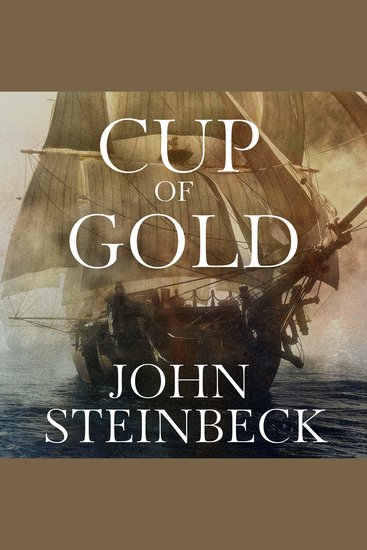
The first novel from American literary great John Steinbeck (Grapes of Wrath) tells the fictionalized story of the illustrious 17th century pirate Captain Henry Morgan Henry Morgan is a young boy growing up in a small town in Wales. One day, a sailor returns to regale Henry with tales of the West Indies, and the glory that awaits those adventuresome enough to go. Henry, dazzled, quickly finds a place aboard a ship heading to the islands, thus setting himself on the path to becoming the brutal and fearsome pirate Captain Morgan. The portrait Steinbeck paints of Morgan (with some artistic license taken) is of a complex, lustful, and largely unhappy man, set in evocative locales that are laced with traces of magical realism. Though Morgan’s life was filled with blood and violence, Steinbeck portrays him as a thoughtful and intelligent commander of men, whose tragic flaw is an unquenchable lust for great accomplishments combined with a misunderstanding of what great accomplishments actually are. Through his cunning he repeatedly attains the ever-grander victories he seeks—but he quickly discovers what so many before and after him have discovered: that achievement is not always as satisfying as the quest to achieve. Publisher's Note: Originally published in 1929, Cup of Gold is a literary work that reflects the time in which it was published—both its good and its ill. The original text contains wording and terminology that represent outdated cultural beliefs regarding race and ethnicity. In the interest of preserving and documenting both the faults and highlights of literary history—an instrumental, crucial function of works entering the public domain—this text is unedited and uncensored in this audiobook recording. Please proceed with discretion.Show book