Join us on a literary world trip!
Add this book to bookshelf
Grey
Write a new comment Default profile 50px
Grey
Subscribe to read the full book or read the first pages for free!
All characters reduced
Arctic Bases - cover

Arctic Bases

Michael Davies

Translator A Ai

Publisher: Publifye

  • 0
  • 0
  • 0

Summary

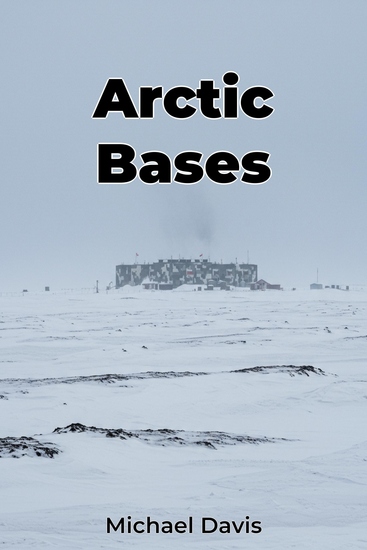
"Arctic Bases" explores Russia's growing presence in the Arctic, examining its military buildup, scientific pursuits, and the resulting geopolitical tensions. Russia's strategic ambitions in the region involve the reconstruction of old Soviet-era bases and the deployment of advanced weaponry. This push is further fueled by scientific research aimed at substantiating territorial claims and enabling resource exploitation. The book investigates how these actions are reshaping the Arctic landscape and impacting international relations among Arctic nations.

 
The book dives into the historical context and current state of Russia's Arctic strategy, focusing on military history, political science, and environmental studies. It details Russia's military expansion, analyzes its scientific activities, and assesses the geopolitical dynamics, providing a holistic understanding of Russia's Arctic policy.

 
The analysis incorporates Russian government documents, open-source intelligence, and satellite imagery to document infrastructure development. Organized into three parts, "Arctic Bases" first examines Russia's military expansion, then explores its scientific activities, and finally analyzes the geopolitical impacts.

 
The book offers a nuanced perspective on the Arctic region's complex motivations, offering insights for policymakers, military strategists, and anyone interested in Arctic affairs.
Available since: 03/21/2025.
Print length: 68 pages.

Other books that might interest you

  • The Constitution of the United States of America - cover

    The Constitution of the United...

    James Madison, Alexander...

    • 0
    • 0
    • 0
    Experience the foundation of American democracy in The Constitution of the United States, brought to life through the powerful narration of Gary Middleton. Written in 1787 by the James Madison, Alexander Hamilton, and John Jay, this defining document established the framework for the world’s first enduring republic — outlining the balance of powers, the rights of the people, and the principles of liberty that continue to guide the nation today. 
    More than a historical artifact, The Constitution is a living testament to the American experiment — a blueprint for self-governance, justice, and unity. This audiobook invites listeners to reflect on the words that have shaped over two centuries of freedom and debate. 
    Perfect for students, historians, educators, and anyone who wishes to better understand the foundation upon which the United States was built.
    Show book
  • The Body Keeps the Score - cover

    The Body Keeps the Score

    Briefly Summaries

    • 0
    • 0
    • 0
    A groundbreaking exploration of trauma and healing, The Body Keeps the Score explains how overwhelming experiences can reshape both mind and body, affecting trust, self-control, and emotional well-being. Drawing on neuroscience, clinical experience, and therapeutic approaches such as mindfulness, yoga, and neurofeedback, the book offers a powerful framework for understanding recovery and reclaiming a sense of safety and connection.
    Show book
  • Start of World War I The: The History of the Events at the Beginning of the Great War - cover

    Start of World War I The: The...

    Editors Charles River

    • 0
    • 0
    • 0
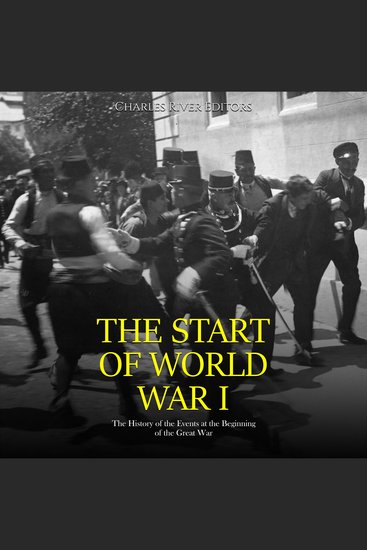
    By the 20th century, warfare was nothing new to the European powers, especially when it came to fighting each other. Conflicts had been a mainstay on the European continent for over two millennia. Even after the Napoleonic wars had enveloped Europe in large scale war for nearly 20 years in the 19th century, the Europeans’ imperialism continued unabated. It would take the devastation of World War I to shock Europe and jolt the world’s superpowers out of their imperialistic tendencies.  
    	 The final straw came June 28, 1914, when a Serbian assassinated Archduke Franz Ferdinand, the heir to the throne of Austria-Hungary, in Sarajevo, Bosnia. Austria-Hungary immediately issued ultimatums to Serbia. When they declared war on Serbia July 28, 1914, Russia mobilized for war as well. The Germans mobilized in response to Russia on July 30, and the French, still smarting from the Franco-Prussian War, mobilized for war against Germany. The British also declared war on Germany on August 4. Thus, in the span of one week, six nations had declared war, half of which had no interest in the Balkans.  
    	Needless to say, the First World War came at an unfortunate time for those who would fight in it. After an initial period of relatively rapid maneuver during which the German forces pushing through Belgium and the French and British forces attempting to stymie them made an endless series of abortive flanking movements that extended the lines to the sea, a stalemate naturally tended to develop. The infamous trench lines soon snaked across the French and Belgian countryside, creating an essentially futile static slaughterhouse whose sinister memory remains to this day, but if trench warfare was an inevitability during the war, it is only because the events leading up to the initial battles were quite different.
    Show book
  • Your Child's English Journey: A Parent's Guide - cover

    Your Child's English Journey: A...

    David Tobin

    • 0
    • 0
    • 0
    Unlock your child's full potential with "Your Child's English Journey: A Parent's Guide." This comprehensive and engaging book is designed to help parents navigate the rewarding path of teaching English to their children at home. With this guide, you'll feel empowered to guide your child's language development journey, from learning the alphabet to mastering advanced vocabulary and grammar. The tools, strategies, and resources provided will not only give you the confidence to be an effective parent-teacher but also a sense of preparedness for the journey ahead.
    Show book
  • Who Has Buried the Dead? - From Stalin to Putin … The last great secret of World War Two - cover

    Who Has Buried the Dead? - From...

    KGE Konkel

    • 0
    • 0
    • 0
    The Second World War was fought not only on the front lines but also in secrets, some of which have never been revealed. One such secret was buried in the deep, dark forest of Katyn, Poland. The other in the pages of a notebook hidden in an otherwise unremarkable café in an ancient Polish city.
    		 
    That notebook, known as the Scottish Book, was an obscure work of intellectual gamesmanship between a specialized group of mathematicians who met at a local pub near the town’s medieval university, where they shared and solved complex mathematical problems in the pages of the book. In 1939, as the Nazis overran the country, the book mysteriously vanished from its hiding place in the café. Some of its contributors avoided certain death by fleeing Poland  for America, where the government recruited them. Ultimately, some of these intellectuals became participants in a deadly undertaking: the Manhattan Project.
    		 
    Who Has Buried the Dead? may be fiction, but it draws on years of research to plausibly answer the real questions surrounding one of the last great secrets of the Second World War. What did the Scottish Book contain that led the NKVD, the Gestapo, and the Allies on a desperate search, using any means to find it? Why has its existence not factored into the telling of Second World War history? What is ultimately revealed within the Scottish Book that brought mortal enemies and their top spy operatives into a deadly contest for its discovery and seizure?
    Show book
  • The Tiger and the Cage - A Memoir of a Body in Crisis - cover

    The Tiger and the Cage - A...

    Emma Bolden

    • 0
    • 0
    • 0
    With The Tiger and the Cage, Bolden uses her own experience as the starting point for a journey through the institutional misogyny of Western medicine—from a history of labeling women “hysterical” and parading them as curiosities to a lack of information on causes or cures for endometriosis, despite more than a century of documented cases. Recounting botched surgeries and dire side effects from pharmaceuticals affecting her and countless others, Bolden speaks to the ways people are often failed by the official narratives of institutions meant to protect them. 
    Bolden also interrogates a narrative commonly imposed on menstruating bodies: the expected story arc of marriage and children. She interrogates her body as a painful site she must mentally escape and a countdown she hopes to beat by having a child before a hysterectomy. Only later does she find language and acceptance for her asexality and the life she needs to lead. Through all its gripping, devastating, and beautiful threads, The Tiger and the Cage says what Bolden and so many like her have needed to hear: I see you, and I believe you.
    Show book