Join us on a literary world trip!
Add this book to bookshelf
Grey
Write a new comment Default profile 50px
Grey
Subscribe to read the full book or read the first pages for free!
All characters reduced
Symbols: Old New - cover

Symbols: Old New

Michael Davies

Translator A Ai

Publisher: Publifye

  • 0
  • 0
  • 0

Summary

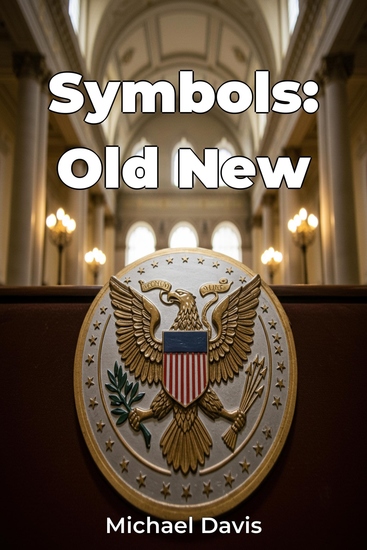
Symbols: Old New explores how societies intentionally craft national symbols after revolutions to represent new identities and political ideals. It delves into the creation of flags, monuments, and national seals, revealing how visual culture shapes political transformation. The book highlights that this process is not merely superficial; it signifies a fundamental shift in collective memory and values, reflecting a conscious effort to establish a new national identity.

 
The book examines the deliberate destruction of old symbols and the subsequent design of new ones, showing how revolutionary leaders used these tools to consolidate power. For example, creating national flags to inspire allegiance. The concept of iconoclasm is key, illustrating how removing old symbols delegitimized the previous regime.

 
The book underscores the power dynamics and ideological conflicts inherent in these transformations, which often involve negotiation and compromise. The book progresses from theoretical frameworks to case studies of flag design, national holidays, monuments, and seals. It analyzes the success of these symbols in fostering national unity and addresses the ongoing debates surrounding them. By focusing on the agency of revolutionary actors, Symbols: Old New provides a fresh perspective on how national identities are constructed and contested through visual representation.
Available since: 02/25/2025.
Print length: 55 pages.

Other books that might interest you

  • To Sir With Love - cover

    To Sir With Love

    E. R. Braithwaite

    • 0
    • 1
    • 0
    With opportunities for black men limited in post-World War II London, Rick Braithwaite, a former Royal Air Force pilot and Cambridge-educated engineer, accepts a teaching position that puts him in charge of a class of angry, unmotivated, bigoted white teenagers whom the system has mostly abandoned. When his efforts to reach these troubled students are met with threats, suspicion, and derision, Braithwaite takes a radical new approach. He will treat his students as people poised to enter the adult world. He will teach them to respect themselves and to call him Sir. He will open up vistas before them that they never knew existed. And over the course of a remarkable year, he will touch the lives of his students in extraordinary ways-even as they, in turn, unexpectedly and profoundly touch his. Based on actual events in the author's life, To Sir, With Love is a powerfully moving story that celebrates courage, commitment, and vision and that inspired the classic film starring Sidney Poitier.
    Show book
  • Voices of Evangelical Preachers - Volume 2 - cover

    Voices of Evangelical Preachers...

    Gypsy Smith, J. Wilbur Chapman,...

    • 0
    • 0
    • 0
    Gipsy Smith (1860-1947) was an English evangelist who made over forty evangelistic trips abroad to such countries as the United States, Australia and South Africa. J. Wilber Chapman (1859-1918), a Presbyterian, had great success in four pastorates, but is best remembered as a powerful evangelist. William Booth (1829 –1912) was a British Methodist preacher who founded The Salvation Army. The Christian movement with a quasi-military structure and government founded in 1865 has spread from London, England to many parts of the world and is known for being one of the largest distributors of aid.
    Show book
  • Kafka on the Shore by Haruki Murakami (Book Analysis) - Detailed Summary Analysis and Reading Guide - cover

    Kafka on the Shore by Haruki...

    Bright Summaries

    • 0
    • 0
    • 0
    Unlock the more straightforward side of Kafka on the Shore with this concise and insightful summary and analysis!This engaging summary presents an analysis of Kafka on the Shore by Haruki Murakami, which tells the story of 15-year-old Kafka as he runs away from home to escape from his famous sculptor father and search for his mother and sister. In parallel, Nakata, who was involved in a mysterious accident as a child that left him unable to read and write, but with the newfound ability to talk to cats, embarks on a similar voyage across the country. Unbeknownst to them, the two men are linked by a bloody murder, and they both become embroiled in a series of bizarre events that change the way they see the world. The novel showcases Murakami's signature blend of surrealist, dreamlike storytelling and close attention to real-world detail, and it remains among his best-known works.Find out everything you need to know about Kafka on the Shore in a fraction of the time!This in-depth and informative reading guide brings you:• A complete plot summary• Character studies• Key themes and symbols• Questions for further reflectionWhy choose BrightSummaries.com?Available in print and digital format, our publications are designed to accompany you on your reading journey. The clear and concise style makes for easy understanding, providing the perfect opportunity to improve your literary knowledge in no time.See the very best of literature in a whole new light with BrightSummaries.com!
    Show book
  • Rise and Fall of the Stuart Dynasty in Britain The: The History of the Stuarts from the Tudor Era to the Glorious Revolution and the Jacobites - cover

    Rise and Fall of the Stuart...

    Editors Charles River

    • 0
    • 0
    • 0
    England has more often been faced with the claims of competing kings and queens than with a period of no monarch at all. The major exception to that rule came in the 11 years between 1649 and 1660, when England was a republic. Following the disastrous reign of Charles I and the civil wars that led to his execution, Parliament and the army ruled England. England’s republican experiment started out as a work of collaboration and compromise; lords, army officers and members of Parliament (MPs) worked together to find a political settlement that did not include the despised royal House of Stuart. Nonetheless, religious and political division made collective rule unworkable, and ultimately, one man emerged from the chaos to rule the country. He had risen from a humble background to become the leading general of the Civil Wars, and as a man of staunch beliefs and ruthless pragmatism, he controlled England from 1653-1658 under the title of Lord Protector. In essence, he was a king in all but name. That man was Oliver Cromwell, and in the popular imagination, Cromwell has overshadowed the rest of the leaders of the parliamentary cause and the New Model Army.  
    Cromwell’s death would lead to a restoration of the royal line, but an uprising of a completely different nature would soon unfold on English soil – the Glorious Revolution, an intriguing story of a power war exacerbated by ruthless ambition, under-the-table plotting, and the treachery of familial betrayal. That said, it’s important to remember that the deposed James II did try to return to England, and there would be generations of war waged for the Stuart cause by the Jacobites, who were not only supporters of the exiled Stuart monarchy, but also against the political and religious settlements agreed to across the British Isles. It’s no surprise the Jacobites continue to interest so many people, as do the plot twists, near misses, and “what-ifs” involved. 
    Show book
  • Dissonant Landscapes - Music Nature and the Performance of Iceland - cover

    Dissonant Landscapes - Music...

    Tore Størvold

    • 0
    • 0
    • 0
    During the past three decades, Iceland has attained a strong presence in the world through its musical culture, with images of the nation being packaged and shipped out in melodies, harmonies, and rhythms. What 'Iceland' means for people, both at home and abroad, is conditioned by music and its ability to animate notions of nature and nationality. In six chapters that range from discussions of indie rock ballads to 'Nordic noir' television music, Dissonant Landscapes describes the capacity of musical expression to transform ideas about nature and nationality on the northern edges of Europe.
    Show book
  • The Children of Athena - Greek writers and thinkers in the Age of Rome 150 BC–AD 400 - cover

    The Children of Athena - Greek...

    Charles Freeman

    • 0
    • 0
    • 0
    A compelling and fascinating portrait of the continuing intellectual tradition of Greek writers and thinkers in the Age of Rome. 
     
    In 146 BC, Greece yielded to the military might of the Roman Republic; sixty years later, when Athens and other Greek city-states rebelled against Rome, the general Lucius Cornelius Sulla destroyed the city of Socrates and Plato, laying waste to the famous Academy where Aristotle had studied. However, the traditions of Greek cultural life would continue to flourish during the centuries of Roman rule that followed, in the lives and work of a distinguished array of philosophers, doctors, scientists, geographers, travellers and theologians. 
     
    Charles Freeman's accounts of such luminaries as the physician Galen, the geographer Ptolemy and the philosopher Plotinus are interwoven with contextual 'interludes' that showcase a sequence of unjustly neglected and richly influential lives. Like the author's The Awakening, The Children of Athena is a cultural history on an epic scale: the story of a rich and vibrant tradition of Greek intellectual inquiry across a period of more than five hundred years, from the second century BC to the start of the fifth century AD.
    Show book