Join us on a literary world trip!
Add this book to bookshelf
Grey
Write a new comment Default profile 50px
Grey
Subscribe to read the full book or read the first pages for free!
All characters reduced
Public Transport Issues - cover

Public Transport Issues

Michael Davies

Translator A AI

Publisher: Publifye

  • 0
  • 0
  • 0

Summary

Public Transport Issues explores the complex world of urban mobility, focusing on challenges within global public transportation systems. It examines the intersection of urban planning, social equity, and transportation policy, revealing how decisions impact accessibility, especially for vulnerable populations. Interestingly, seemingly well-intentioned urban development policies can inadvertently worsen transportation disparities, leading to negative social, economic, and environmental outcomes. The book analyzes public transportation usage, ridership data, and demographic trends to highlight inequalities in access across different socioeconomic groups. It reveals how factors like service frequency and fare structures affect ridership and passenger satisfaction. Presenting information through a mixed-methods approach, the investigation incorporates quantitative and qualitative data to understand the complexities of transportation planning. Divided into three parts, the book begins with an overview of urban planning principles and their historical evolution, then analyzes public transportation usage statistics, and concludes with evidence-based solutions for improving transport systems. Through data-driven insights, the authors advocate for informed transportation policies that enhance accessibility, reduce congestion, and promote sustainability. This approach distinguishes the book as a valuable resource for policymakers, urban planners, and anyone invested in creating more equitable and sustainable cities.
Available since: 02/22/2025.
Print length: 83 pages.

Other books that might interest you

  • Common Sense - cover

    Common Sense

    Thomas Paine

    • 0
    • 0
    • 0
    Explore the revolutionary ideas that ignited the American Revolution with "Common Sense" by Thomas Paine, now available as an engaging audiobook. In this timeless political pamphlet, Paine presents a compelling argument for independence from British rule, inspiring a nation to rise up and fight for its freedom. 
    As the narrative unfolds, listeners will be transported to the tumultuous days of the 18th century, where Paine's impassioned prose galvanized the American colonies to break free from the shackles of tyranny. Through logical reasoning and stirring rhetoric, "Common Sense" lays bare the injustices of monarchy and advocates for the principles of democracy and self-governance. 
    Perfect for listeners interested in history and political philosophy, this audiobook delivers a powerful performance that will resonate with audiences of all ages. Whether you're a student of American history or simply seeking insight into the founding ideals of the nation, "Common Sense" offers a thought-provoking exploration of the principles that shaped the United States. 
    So, if you're ready to immerse yourself in a pivotal moment in history and rediscover the revolutionary spirit that forged a nation, start listening to "Common Sense" today and experience the power of Paine's words to inspire change and ignite hope. Start Listening to "Common Sense" today!
    Show book
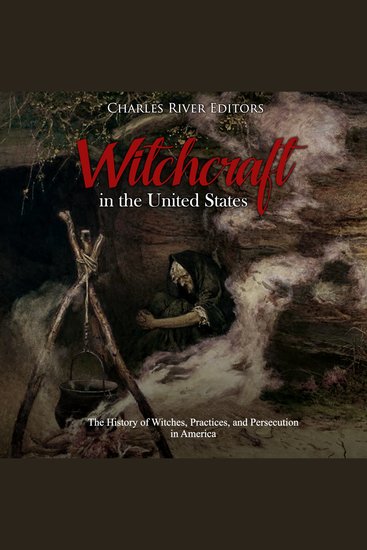
  • Witchcraft in the United States: The History of Witches Practices and Persecution in America - cover

    Witchcraft in the United States:...

    Charles River Editors

    • 0
    • 0
    • 0
    “Since man cannot live without miracles, he will provide himself with miracles of his own making. He will believe in witchcraft and sorcery, even though he may otherwise be a heretic, an atheist, and a rebel.” - – Fyodor Dostoyevsky, The Brothers Karamazov 
    	When people hear the word “witchcraft,” certain images come to mind. American history buffs will immediately think of Salem, where hysteria in the 17th century led to notorious trials that continue to be the source of several historical studies, with scholars analyzing things from every direction. Was it a religious fervor? Was it a land grab? Was there fungus in the grain? Over 400 years later, there are still fundamental questions regarding the complete breakdown of moral order that pinned friend against friend and neighbor against neighbor.  
    	As Salem proved, there has long been a natural curiosity about witchcraft. Some of the best-selling children’s books and adult novels have been about witchcraft, such as The Witch of Blackbird Pond. One of Roald Dahl’s most famous works was The Witches, and Harry Potter became a global phenomenon. As adults, fans of Anne Rice, Neil Gaiman, and Alice Hoffman will find books about witches among their reading list, and there are countless movies and television shows devoted to the topic.[i]  
    	All cultures and belief systems have ideas and definitions of what makes a witch,[ii] and this ultimately comes down to the human mind’s natural need to break things into opposites. For all good, there must be evil, and for those who started to settle North America in the 17th century and beyond, witchcraft became the perfect explanation for what they couldn’t understand or control. Settling a new land – whether by choice or not – came with its own set of complications and ills. Life was hard in an unsettled area, especially when Europeans and Native Americans clashed in the New World, and when the European settlers started importing African slaves, that introduced new ideas about what constituted good and evil. As a result, while most studies of witchcraft in the United States tend to focus on Salem, that hardly does the subject matter justice, because understanding Native American and African concepts about witchcraft are just as important to American history as European ideas.[iii]  
    	Witchcraft in the United States: The History of Witches, Practices, and Persecution in America examines how various cultures perceived witchcraft and the impact it had in the United States and the colonial period. Along with pictures and a bibliography, you will learn about the history of witchcraft in America like never before.
    Show book
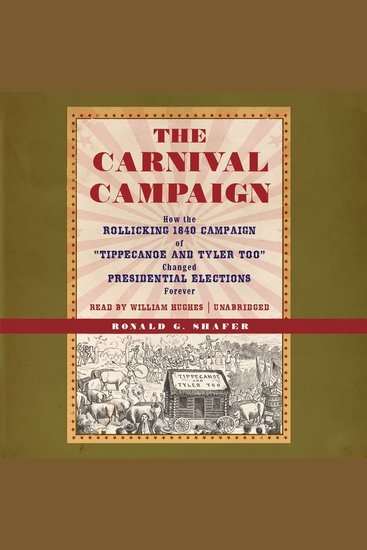
  • The Carnival Campaign - How the Rollicking 1840 Campaign of “Tippecanoe and Tyler Too” Changed Presidential Elections Forever - cover

    The Carnival Campaign - How the...

    Ronald G. Shafer

    • 0
    • 0
    • 0
    Americans have come to expect that the nation’s presidential campaigns will be characterized by a carnival atmosphere emphasizing style over substance. But this fascinating account of the pivotal 1840 election reveals how the now-unavoidable traditions of big money, big rallies, shameless self-promotion, and carefully manufactured candidate images first took root in presidential politics. 
    Pulitzer Prize–nominated former Wall Street Journal reporter Ronald G. Shafer tells the colorful story of the election battle between sitting president Martin Van Buren, a professional Democratic politician from New York, and Whig Party upstart William Henry Harrison, a military hero who was nicknamed “Old Tippecanoe” after a battlefield where he fought and won in 1811. Shafer shows how the pivotal campaign of “Tippecanoe and Tyler Too” marked a series of firsts that changed presidential politicking forever: the first presidential campaign as mass entertainment, directed at middle-income and lower-income voters; the first “image campaign,” in which strategists painted Harrison as an everyman living in a log cabin sipping hard cider (in fact, he was born into wealth, lived in a twenty-two-room mansion, and drank only sweet cider); the first campaign in which a candidate, Harrison, traveled and delivered speeches directly to voters; the first one influenced by major campaign donations; the first in which women openly participated; and the first involving massive grassroots rallies, attended by tens of thousands and marked by elaborate fanfare, including bands, floats, a log cabin on wheels, and the world’s tallest man. 
    Some of history’s most fascinating figures—including Susan B. Anthony, Charles Dickens, Abraham Lincoln, Edgar Allan Poe, Thaddeus Stevens, and Walt Whitman—pass through this colorful story, which is essential reading for anyone interested in learning when image first came to trump ideas in presidential politics.
    Show book
  • Stolen Family - Captive in Saudi Arabia - cover

    Stolen Family - Captive in Saudi...

    Johanne Durocher

    • 0
    • 0
    • 0
    Canadian Nathalie Morin's four children cannot leave Saudi Arabia without exit visas signed by Nathalie's abusive husband. Her mother chronicles her decades-long struggle to bring her daughter and four grandchildren home to safety in Montreal.
    Show book
  • Adult Children of Borderline Parents - A Trauma-Informed Guide to Recover from a Toxic Childhood and Discover a Healthy Sense of Self - cover

    Adult Children of Borderline...

    PhD Daniel S. Lobel

    • 0
    • 0
    • 0
    Did you grow up with a parent who has borderline personality disorder (BPD), or you suspect they did? Was your parent's behavior unpredictable or scary? Did it seem like they were angry one minute and happy the next? Were your basic needs ignored? If so, it wasn't your fault. Children raised by a parent with BPD are subjected to a number of unhealthy and damaging behaviors—from uncontrolled anger and abuse, to gaslighting, blame-shifting, lying, and more. As a result of these experiences, you may have developed feelings of guilt, insecurity, and depression that have lingered throughout your adult life. 


    This compassionate guide offers a trauma-informed approach to help you recover from your toxic childhood and discover the person you were truly meant to be. You'll learn how to identify emotional and developmental wounds, and discover why interactions with your parents were so harmful to your sense of self. Then, you'll learn to create strong interpersonal boundaries and overcome feelings of guilt, anger, and low self-worth. Finally, through the act of emotional reprocessing, you'll reclaim those aspects of yourself that were lost or distorted by your trauma, so you can restart healthy growth processes and become the person you were meant to be. If you're carrying the hidden wounds of a toxic childhood, you're not alone—and you can heal.
    Show book
  • Enquiry Concerning the Principles of Morals - cover

    Enquiry Concerning the...

    David Hume

    • 0
    • 0
    • 0
    David Hume, an eminent Scottish philosopher, historian, and essayist, explores the nature and foundation of Morals in this book, which was written as a popular summary of Book III in A Treatise of Human Nature. Hume states: “There has been a controversy started of late, much better worth examination, concerning the general foundation of Morals; whether they be derived from Reason, or from Sentiment; whether we attain the knowledge of them by a chain of argument and induction, or by an immediate feeling and finer internal sense; whether, like all sound judgement of truth and falsehood, they should be the same to every rational intelligent being; or whether, like the perception of beauty and deformity, they be founded entirely on the particular fabric and constitution of the human species.” (Excerpted from Section I – Of the General Principles of Morals) (Summary from the text and adapted from Wikipedia by lubee930)
    Show book