Join us on a literary world trip!
Add this book to bookshelf
Grey
Write a new comment Default profile 50px
Grey
Subscribe to read the full book or read the first pages for free!
All characters reduced
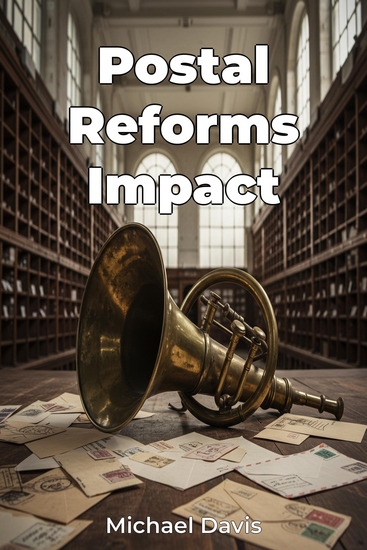
Postal Reforms Impact - cover

Postal Reforms Impact

Michael Davies

Translator A AI

Publisher: Publifye

  • 0
  • 0
  • 0

Summary

Postal Reforms Impact explores the political and historical transformations of postal systems into global communication and e-commerce facilitators. Diving into policy changes and international mail treaties, the book reveals how domestic policies balanced service obligations with efficiency demands. Intriguingly, postal services, initially symbols of national identity, evolved through international cooperation, sometimes encountering friction negotiating terminal dues and transit rights. 

 
The book uniquely emphasizes the political and historical context shaping postal reforms. It analyzes policy shifts across nations, dissects the Universal Postal Union's impact on mail flow and service quality, and addresses e-commerce challenges. Using official documents, industry reports, and case studies, it avoids technical jargon for broad accessibility. 

 
The book begins with fundamental principles, progresses to specific policy changes, and concludes with challenges in the digital age, making it valuable for policymakers and those interested in the evolution of global communication.
Available since: 02/20/2025.
Print length: 69 pages.
Other books that might interest you

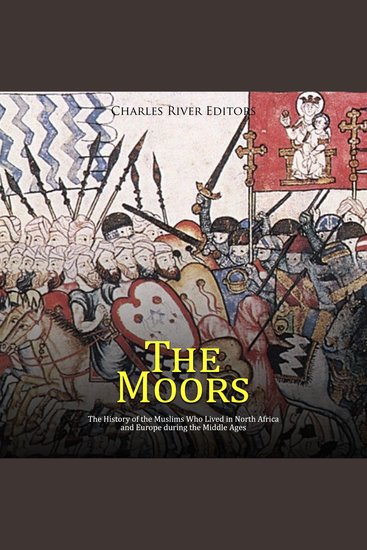
  • Moors The: The History of the Muslims Who Lived in North Africa and Europe during the Middle Ages - cover

    Moors The: The History of the...

    Editors Charles River

    • 0
    • 0
    • 0
    The term Moor is a historical rather than an ethnic name. It is an invention of European Christians for the Islamic inhabitants of Maghreb (North Africa), Andalusia (Spain), Sicily and Malta, and was sometimes use to designate all Muslims. It is derived from Mauri, the Latin name for the Berbers who lived in the Roman province of Mauretania, which ranged across modern Algeria and Morocco. Saracen was another European term used to designate Muslims, though it usually referred to the Arabic peoples of the Middle East and derives from an ancient name for the Arabs, Sarakenoi. The Muslims of those regions no more refer to themselves by that term than those of North Africa call themselves Moors. Maghreb, or al-Maghreb, is a historical term used by Arabic Muslims for the territory of coastal North Africa from Alexandria to the Atlantic Coast. It means “The West” and is used in opposition to Mashrek, “The East,” used to refer to the lands of Islam in the Middle East and north-eastern Africa. The Berbers refer to the region in their own language as Tamazgha. In a limited, precise sense it can also refer to the Kingdom of Morocco, the proper name of which is al-Mamlakah al-Maghribiyyah, “Kingdom of the West.” 
    The history of the Spanish Peninsula is closely bound to that of the Moors. The term “Spain” was not in wide use until the region was united by the monarchs of Aragon and Castile, and the Moors called the lands they ruled in the Iberian Peninsula Al-Andalus, traditionally thought to be an Arabic transliteration of Vandal, the Germanic tribe which briefly ruled the region in the early fifth century. The English name Andalusia derives from the Spanish Andalucia, which is still used by Spain to name its southern region. Not surprisingly, three religions attempting to coexist during medieval times resulted in nearly incessant conflicts.
    Show book
  • Seeking Social Democracy - Seven Decades in the Fight for Equality - cover

    Seeking Social Democracy - Seven...

    Edward Broadbent, Frances Abele,...

    • 0
    • 0
    • 0
    The first full-length treatment of Ed Broadbent’s ideas and remarkable seven-decade engagement in public life
    		 
    Part memoir, part history, part political manifesto, Seeking Social Democracy offers the first full-length treatment of Ed Broadbent’s ideas and remarkable seven-decade engagement in public life. In dialogue with three collaborators from different generations, Broadbent leads readers through a life spent fighting for equality in Parliament and beyond: exploring the formation of his social democratic ideals, his engagement on the international stage, and his relationships with historical figures from Pierre Trudeau and Fidel Castro to Tommy Douglas, René Lévesque, and Willy Brandt. From the formative minority Parliament of 1972–1974 to the contentious national debate over Canada’s constitution to the free trade election of 1988, the book chronicles the life and thought of one of Canada’s most respected political leaders and public intellectuals from his childhood in 1930s Oshawa to the present day. Broadbent’s analysis also points toward the future, offering lessons to a new generation on how principles can inform action and social democracy can look beyond neoliberalism. The result is an engaging, timely, and sweeping analysis of Canadian politics, philosophy, and the nature of democratic leadership.
    Show book
  • Medieval History of Montenegro The: The History of the Region’s Rulers and Culture Before the Modern Era - cover

    Medieval History of Montenegro...

    Editors Charles River

    • 0
    • 0
    • 0
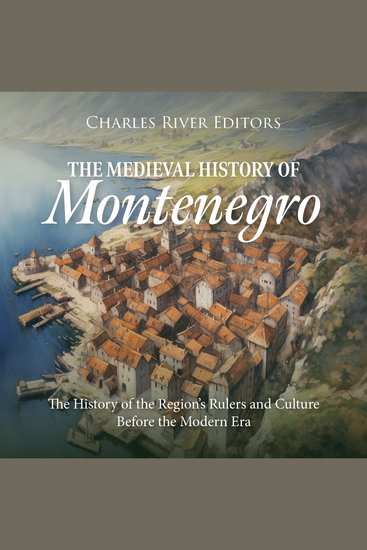
    Much has been written about Western intervention during the breakup of Yugoslavia, and whether it made matters worse, prevented worse atrocities, or was simply ineffective. In early 1992, however, what was clear was that Europe was hopelessly divided over the best course of action to take towards Yugoslavia, and after several years of fighting, the Bosnian War was one of the most violent conflagrations in Europe since the end of World War II.  
    	That war had been the byproduct of centuries of tensions in the Balkans, and an attempt in the wake of World War I to redraw the political boundaries of Europe and the Middle East. That included forming the Kingdom of Yugoslavia, initially known as the Kingdom of Serbs, Croats and Slovenes, a particularly fragile enterprise, and there was almost constant tension between the majority Serbs and the other Yugoslav nationalities, especially the Croats. As a result, the Kingdom was a land of political assassinations, underground terrorist organizations, and ethnic animosities. In 1929, King Alexander I suspended democracy and ruled as a dictator until he himself was assassinated in 1934.  
    	Depending on the source, many authors have focused on different catalysts for Yugoslavia’s demise, but Vesna Drapac may have succinctly summed the situation up when he wrote that by the end, the state “lacked a reason to exist.” There is certainly something in this sentiment, but the disintegration came at an enormous cost. 
    	Given what happened in Yugoslavia, it should be little surprise the area that eventually became the modern nation of Montenegro has had a turbulent history for millennia, with shifting borders, different degrees of autonomy, and various conflicts occurring within it.  
    	  
      
    Show book
  • Geopolitics - cover

    Geopolitics

    Introbooks Team

    • 0
    • 0
    • 0
    It is the conceit of almost every generation to think that it is living in extraordinary times. For my parents' generation, it was the trauma of the Second World War and the miracle of post-war reconstruction. For my older siblings, it was the protest movements of the late 1960s and the triumph of civil rights and women's equality. 
    In the autumn of 1989, it was difficult not to believe that something monumental was occurring on the global landscape. The stirrings in Eastern Europe were not isolated accidents, but seemed part of a larger process - whose trajectory was still uncertain. As graduate students at the University of Oxford plenty had stood witnesses to these historic events, and when the images of East Germans chipping away at the Berlin Wall flashed across the television screen on November 9, everyone jumped aboard a flight to Berlin with some a few of their classmates to witness, first hand, the deconstruction of an empire.
    Show book
  • The Apprentice of Buchenwald - The True Story of the Teenage Boy Who Sabotaged Hitler’s War Machine - cover

    The Apprentice of Buchenwald -...

    Oren Schneider

    • 0
    • 0
    • 0
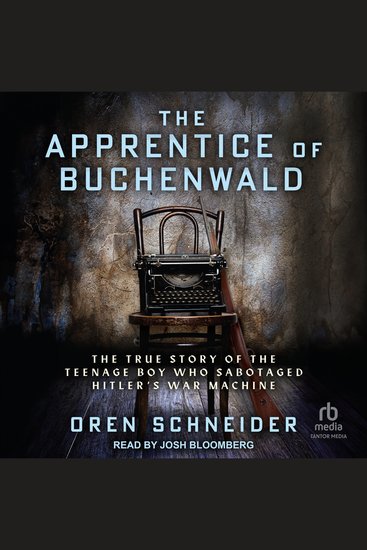
    Alexander Rosenberg was a smart and curious teenager who spoke many languages, collected stamps, played the violin, and lived a pampered life with his affluent parents in a tranquil Czechoslovakian town. The rise of fascism and Nazi Germany causes his protected existence to collapse, alongside the illusion of secular Jewish assimilation in 1930s Europe. 


    Using their last reserves of wealth and influence to escape extermination, the Rosenbergs go underground to avoid the Gestapo. Eventually exposed, captured, and taken to Buchenwald, the largest concentration camp in Germany, Alexander and his father collaborate to survive one day at a time. A chaotic chain of events puts young Alexander at the heart of a massive armament sabotage scheme. When his father is gravely injured and disappears after an air bombing, it is up to industrious Alexander to create leverage and use wartime machinations and raw talent to save his father's life. 


    This universal, true story of inner strength, resourcefulness and optimism was documented and written by Alexander's grandson, Oren Schneider. It is dedicated to brave people everywhere who choose not to give up.
    Show book
  • As a Man Thinketh - The Original 1902 Classic - The Power of Thought in Shaping Destiny - cover

    As a Man Thinketh - The Original...

    James Allen, Tim Zengerink

    • 0
    • 0
    • 0
    What if your thoughts determined your destiny? 
    James Allen’s masterpiece teaches that our thoughts create our circumstances, and by mastering our thinking, we can control our destiny. 
    More than just a self-help book, this work provides a practical philosophy for success, discipline, and personal transformation. In this modern adaptation, Allen’s insights are presented in a way that makes them easy to understand and apply, ensuring that his wisdom continues to inspire new generations. 
    What You’ll Discover in This Modern Translation: 
    - How your mindset directly influences your success, happiness, and overall well-being. 
    - The discipline and clarity to align your thoughts with your goals and aspirations. 
    - How to Free yourself from destructive thought patterns and replace them with empowering beliefs. 
    - How to cultivate a positive, resilient mindset that leads to greater achievements and inner peace. 
    For over a century, As a Man Thinketh has inspired millions to take control of their lives through the power of thought. Now, it’s your turn. 
    Change your thoughts. Transform your life. Get your copy today.
    Show book