Join us on a literary world trip!
Add this book to bookshelf
Grey
Write a new comment Default profile 50px
Grey
Subscribe to read the full book or read the first pages for free!
All characters reduced
Political Museums - cover

Political Museums

Michael Davies

Translator A AI

Publisher: Publifye

  • 0
  • 0
  • 0

Summary

Political Museums explores how museums become tools for shaping public opinion and reinforcing political power through curated history. These institutions, often perceived as neutral, can selectively present historical narratives to promote specific ideologies, influencing how we collectively remember the past. The book investigates the creation and manipulation of historical narratives within museum settings, highlighting how historical events are reinterpreted or omitted to serve political goals. By examining museum display designs, the book reveals how these spaces actively construct and reinforce narratives that legitimize political power. The book analyzes case studies from various countries, showcasing the diverse strategies used to promote specific political ideologies. It delves into the ethical implications of politically motivated historical representation, such as censorship and the suppression of dissenting voices. Readers will gain insights into how museums function as agents of propaganda, shaping historical narratives to align with state power. Understanding historical revisionism becomes crucial as the book progresses, empowering visitors to critically assess museum information and consider alternative perspectives. Ultimately, Political Museums aims to inform and provoke critical thinking about the role of these institutions in shaping our understanding of the past. It challenges the assumption of objectivity in museum displays, urging visitors to become more critical consumers of historical information. The book progresses by introducing the concept of curated history, analyzing case studies, and discussing ethical implications, providing a comprehensive understanding of political museums and their impact on collective memory.
Available since: 02/24/2025.
Print length: 70 pages.

Other books that might interest you

  • The Boy that walked from Virginia to Texas - cover

    The Boy that walked from...

    Travis Lee Darden

    • 0
    • 0
    • 0
    It chronicles the adventures of an African American Boy who walks from Virginia to Texas in 1948. 
    Show book
  • Roman Empire: An Enthralling Overview of Imperial Rome - cover

    Roman Empire: An Enthralling...

    Enthralling History

    • 0
    • 0
    • 0
    Did you know that not all Romans could wear togas? 
    Movies and shows might depict Romans wearing togas and sandals everywhere they went, but that was actually not the case. In fact, togas were considered formal wear and a status symbol, as those in the higher social classes typically wore them. 
    There are many surviving writings authored by ancient Roman historians that describe the interesting traditions and customs of ancient Rome. These records provide detailed insights and scenes of the empire’s past. Some throw in a few myths, while some are infused with bias. Because of this, it can be difficult for curious listeners to distinguish between facts and opinions. 
    However, with this Enthralling History audiobook, you can easily discover the fascinating journey of the ancient Roman Empire, from the emergence of its first emperor until the fall of the Western Roman Empire. 
    Here’s just a tiny fraction of what you’ll discover:How Augustus ended the decades-long civil war and rose as the empire’s “first citizen”;How the emperor’s private military forces, the Praetorian Guard, became powerful enough to slay Rome’s mad emperor;The vicious scenes of Rome’s biggest entertainment shows: the gladiatorial games and chariot races;The unique and luxurious structures of Rome that have survived to this day;Harsh punishments and training of the legionnaires;Comparison between the lush life of the wealthy and the mundane lives of commoners, slaves, and freemen;Early Christians as Emperor Nero’s scapegoats and their terrible persecution;The rise of Christianity and the sacking of Rome;And much, much more! 
    Scroll up and click the “add to cart” button to learn more about the Roman Empire!
    Show book
  • State of the Union 1986 - cover

    State of the Union 1986

    Ronald Reagan

    • 0
    • 0
    • 0
    The 1986 State of the Union Address delivered February 4, 1986, was delayed following the Space Shuttle Challenger disaster which killed its seven crew members. Reagan reports the U.S. is the economic miracle to which the world once again turns, with record economic growth and inflation cut from over 12 to under 4 percent.  
    But the federal budget system is broken. “We do not face large deficits because American families are undertaxed; we face those deficits because the Federal Government overspends.” “We must proceed with Grace commission reforms against waste.” Tax cuts have done more to “help America's economy break free than any program since John Kennedy's tax cut almost a quarter century ago.” 
    We “must redouble our efforts for freer and fairer trade.” We oppose legislation touted as providing protection that raises prices for us all.  
    We see a renaissance in education and support “vouchers that give parents freedom of choice”. Hundreds of billions of dollars in poverty programs have led to a breakdown of the family and deteriorating schools. As Franklin Roosevelt said, “Welfare is a narcotic, a subtle destroyer of the human spirit.” Welfare “should be judged by how many of its recipients become independent of welfare.” 
    Reagan sees technology as the solution to “the greatest problem of the 20th century. A security shield can one day render nuclear weapons obsolete and free mankind from the prison of nuclear terror.”  
    “The American dream is a song of hope… to discover a new universe inside a tiny silicon chip or a single human cell.” “So, let us go forward to create our world of tomorrow in faith, in unity, and in love. God bless you, and God bless America.” 
    Audio recording courtesy of the Ronald Reagan Presidential Library. 
    AspenLeafMedia.com
    Show book
  • Coming to You Wherever You Are - MuchMusic MTV and Youth Identities - cover

    Coming to You Wherever You Are -...

    Kip Pegley

    • 0
    • 0
    • 0
    MTV Networks is the undisputed international music video gatekeeper, with stations from Australia to India, Russia to Brazil. Canada is one of the few countries to resist its global reach. Although the network has launched "MTV Canada" with an affiliate, that station limits its offerings primarily to talk shows and lifestyle programming. Many Canadians regard the Toronto-based MuchMusic as the nation's important domestic source of music videos—substantially different from, and superior to, American-based MTV. In her new study of the two music channels and their different cultures, Kip Pegley compares the musical and extra-musical content of MuchMusic and MTV, and examines how the stations construct their two distinct identities. Moving beyond analysis of individual videos, Pegley looks at the overall programming of each station, uncovers the well-hidden matrixes of power that dictate both which performers appear and what genres get the most airtime, and delves into how ideas of gender and race serve to "naturalize" distinct and complex nationalist ideologies. In so doing, she discovers why Canadians feel so protective of their music video station, and why they successfully have withstood the MTV invasion.
    Show book
  • Portugal's Bush War in Mozambique - cover

    Portugal's Bush War in Mozambique

    Al J. Venter

    • 0
    • 0
    • 0
    A new account of how Portugal fought a bush war in Mozambique for over a decade.Portugal fought a bush war in Mozambique — one of the most beautiful countries in the world — for over a decade. The small European nation was ranged against formidable odds and in the end was unable to muster the resources required to effectively take on the might of the Soviet Union and its collaborators—every single communist country on the planet and almost all of Black Africa. Yet, Al Venter argues, Portugal did not actually lose the war, and indeed fought in difficult terrain with a good degree of success over an extended period. It was radical domestic politics that heralded the end.  Mozambique is once again embroiled in a guerrilla war, this time against a large force of Islamic militants, many from Somalia and some Arab countries, and unequivocally backed by Islamic State and the lessons of Mozambique’s bush war are still relevant today.
    Show book
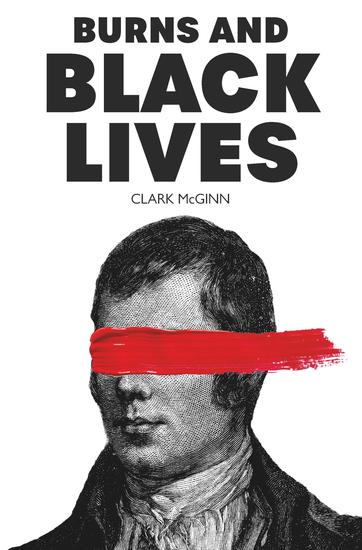
  • Burns and Black Lives - cover

    Burns and Black Lives

    Clark McGinn

    • 0
    • 0
    • 0
    Would Burns 'Take the Knee' today?
    How could our Burns, the people's poet, look to become an instrument in what many now call 'The Black Holocaust'?
    Did Burns intend to travel knowing he would become a slavedriver, and broadly what that meant in terms of imposing suffering on others?
    Did this knowledge change his mind on emigrating to Jamaica?
    What would Burns have done had he actually gone?
    In the last decade of his life, as the debate for Abolition grew louder in Scotland, to what extent did this campaigning tide of information change his mindset?
    How was Burns used after his death in the fights for Abolition and Emancipation, particularly in the USA – in its Civil War and its Civil Rights movement?
    Through meticulous research and a compelling narrative, Clark McGinn examines Burns' connections to the transatlantic slave trade, highlighting the paradoxes and moral conflicts during the poet's time. He does not shy away from uncomfortable truths, presenting a nuanced portrait that challenges readers to reconcile Burns' literary genius with the ethical ambiguities of his time.
    Burns and Black Lives is an essential read for those interested in the intersections of literature, history and social justice, offering a profoundre-examination of one of Scotland's most iconic figures.
    Show book