¡Acompáñanos a viajar por el mundo de los libros!
Añadir este libro a la estantería
Grey
Escribe un nuevo comentario Default profile 50px
Grey
Suscríbete para leer el libro completo o lee las primeras páginas gratis.
All characters reduced
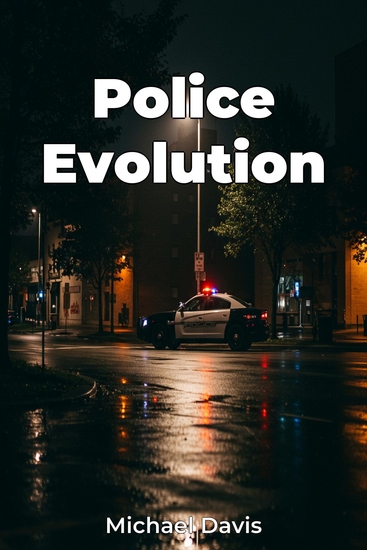
Police Evolution - cover

Police Evolution

Michael Davies

Traductor A AI

Editorial: Publifye

  • 0
  • 0
  • 0

Sinopsis

Police Evolution offers a comprehensive exploration of how American policing has transformed from its rudimentary origins to its current complex state. It delves into the historical, social, and political forces that have shaped law enforcement, revealing how policing practices reflect shifting societal values and technological advancements. For instance, the rise of municipal police departments in the 19th century was often marred by political corruption, while the professionalization movement of the early 20th century brought about significant changes through figures like August Vollmer.

 
This book uniquely connects the evolution of policing to broader fields like sociology, political science, and African American studies, shedding light on power dynamics and institutional racism. The book begins with early forms of law enforcement, including the English watch system and slave patrols, progresses through the civil rights era and its impact on policing, and culminates with contemporary issues like the militarization of police and debates surrounding racial profiling.

 
By examining the interplay between policing and society, Police Evolution provides valuable context for understanding current debates about criminal justice reform and pathways for creating a more equitable system of public safety.
Disponible desde: 21/03/2025.
Longitud de impresión: 76 páginas.
Otros libros que te pueden interesar

  • J Robert Oppenheimer: The Life and Legacy of the Father of the Atomic Bomb - cover

    J Robert Oppenheimer: The Life...

    Editors Charles River

    • 0
    • 0
    • 0
    Tens of millions died during World War II as the warring powers raced to create the best fighter planes, tanks, and guns, and eventually that race extended to bombs which carried enough power to destroy civilization itself. While the war raged in Europe and the Pacific, a dream team of Nobel Laureates was working on the Manhattan Project in America, a program kept so secret that Vice President Harry Truman didn’t know about it until he took the presidency after FDR’s death in April 1945.  
    The pursuit of nuclear weapons moved the scientist nearer to the role of combatant, placing special responsibilities on the scientific community to make critical moral decisions. However, as they developed atomic weapons, they could at the same time only warn military powers of their use. Advocates for nuclear power as a civilian energy resource but expressing misgivings about nuclear war put them at odds with uninformed branches of the military. The American government and the population at large, who possessed little understanding of the perilous science behind the technology, brought about charges of unpatriotic behavior for such misgivings. Scientists, meanwhile, were caught between the excitement of creating a new paradigm, and the dread of their eventual use.  
    The American war effort against the Japanese and Germans also included denying either one the use of a practical nuclear weapon. Physics was in its highest stage of advancement in Europe during this time, while J. Robert Oppenheimer emerged as an extraordinary scientific mind in the United States. Despite requiring the work of thousands of scientists and assistants in fashioning the weapon that eventually came to pass, Oppenheimer alone has been become renowned as the “father of the atomic bomb” due to his leadership of the Manhattan Project.
    Ver libro
  • Empowered Living - How to Take Full Control of Your Life - cover

    Empowered Living - How to Take...

    Caleb David

    • 0
    • 0
    • 0
    Here are the requested items:Book Description"Empowered Living: How to Take Full Control of Your Life" is a life-changing guide that empowers you to break free from limitations, overcome self-doubt, and unlock your full potential. This transformative book provides you with the tools, strategies, and mindset shifts necessary to take control of your life, make intentional decisions, and create a future that aligns with your values and goals.Through practical exercises, real-life examples, and inspiring stories, you'll learn how to cultivate self-awareness, develop a growth mindset, and build resilience. You'll discover how to set healthy boundaries, prioritize your well-being, and create a supportive network of relationships.Whether you're feeling stuck, struggling with anxiety or self-doubt, or simply seeking a more fulfilling life, "Empowered Living" will provide you with the roadmap you need to achieve success and happiness on your own terms. Take the first step towards an empowered life today and discover the freedom, confidence, and joy that comes with living life on purpose.
    Ver libro
  • How Media Ownership Matters - cover

    How Media Ownership Matters

    Rodney Benson, Julie Sedel,...

    • 0
    • 0
    • 0
    Does it matter who owns and funds the media? As journalists and management consultants set off in search of new business models, there's a pressing need to understand anew the economic underpinnings of journalism and its role in democratic societies. 


    How Media Ownership Matters provides a fresh approach to understanding news media power, moving beyond the typical emphasis on market concentration or media moguls. Through a comparative analysis of the US, Sweden, and France, as well as interviews of news executives and editors and an original collection of industry data, this book maps and analyzes four ownership models: market, private, civil society, and public. Highlighting the effects of organizational logics, funding, and target audiences on the content of news, the authors identify both the strengths and weaknesses various forms of ownership have in facilitating journalism that meets the democratic ideals of reasoned, critical, and inclusive public debate. Ultimately, How Media Ownership Matters provides a roadmap to understanding how variable forms of ownership are shaping the future of journalism and democracy.
    Ver libro
  • Give Me a Break - How I Exposed Hucksters Cheats and Scam Artists and Became the Scourge of the Liberal Media - cover

    Give Me a Break - How I Exposed...

    Anónimo

    • 0
    • 0
    • 0
    Ballooning government? Millionaire welfare queens? Tort lawyers run amok? A $330,000 outhouse, paid for with your tax dollars? John Stossel says, ""Give me a break."" 
    When he hit the airwaves thirty years ago, Stossel chased snake-oil peddlers, rip-off artists, and corporate thieves, winning the applause of his peers.  
    But along the way, he noticed that there was something far more troublesome going on: While the networks screamed about the dangers of coffee pots, worse risks were ignored.   
    In Give Me a Break, Stossel explains how ambitious bureaucrats, intellectually lazy reporters, and greedy lawyers make your life worse even as they claim to protect your interests. Taking on such sacred cows as the FDA, the War on Drugs, and scare-mongering environmental activists -- and backing up his trademark irreverence with careful reasoning and research -- he shows how the problems that government tries and fails to fix can be solved better by the extraordinary power of the free market. 
    He traces his journey from cub reporter to 20/20 co-anchor, revealing his battles to get his ideas to the public, his struggle to overcome stuttering, and his eventual realization that, for years, much of his reporting missed the point. 
    Stossel concludes the book with a modest proposal for change. It's a simple plan in the spirit of the Founding Fathers to ensure that America remains a place ""where free minds -- and free markets -- make good things happen.""
    Ver libro
  • Catherine the Great - cover

    Catherine the Great

    Kelly Mass

    • 0
    • 0
    • 0
    Catherine II (born Sophie of Anhalt-Zerbst; May the 2nd 1729-- November the 17th 1796, typically called Catherine the Great, ruled as Empress of Russia from 1762 to 1796, making her the nation's longest-serving female ruler. Following the assassination of her spouse and 2nd cousin, Peter III, she rose to power. Russia grew bigger, its civilization was rejuvenated, and it was acknowledged as one of Europe's great powers during her reign.Catherine used her honorable favorites, most significantly Count Grigory Orlov and Grigory Potemkin, to help her gain power and manage the empire. She ruled at the time of a period when the Russian Empire was rapidly broadening through intrusion and diplomacy, with the help of very effective generals like Alexander Suvorov and Pyotr Rumyantsev, and also admirals like Samuel Greig and Fyodor Ushakov. In the south, the Crimean Khanate was beat in the Russo-Turkish War (1768-- 1774), and Russia colonized Novorossiya along the Black and Azov Seas, thanks to triumphs over the Bar confederation and the Ottoman Empire.Catherine the Great has been mentioned so many times in Russian history, it’s definitely a good chapter to study to understand the background of the country more.
    Ver libro
  • Republic The: Book Summary & Analysis - cover

    Republic The: Book Summary &...

    Briefly Summaries

    • 0
    • 0
    • 0
    This is a concise summary and analysis of The Republic, by Plato
     
    It is not the original book and is not affiliated with or endorsed by Plato .
     
    Ideal those seeking a quick and insightful overview.
     
    The Republic is a timeless philosophical masterpiece that explores justice, politics, and the nature of the ideal society. Through a series of thought-provoking dialogues, the book delves into questions about morality, the role of government, and the pursuit of truth. With its visionary concepts like the philosopher-king, the allegory of the cave, and the theory of forms, this work remains a cornerstone of Western philosophy and an enduring guide to understanding human nature and governance.
    Ver libro