Join us on a literary world trip!
Add this book to bookshelf
Grey
Write a new comment Default profile 50px
Grey
Subscribe to read the full book or read the first pages for free!
All characters reduced
Oil Conflicts - cover

Oil Conflicts

Michael Davies

Translator A AI

Publisher: Publifye

  • 0
  • 0
  • 0

Summary

Oil Conflicts examines how the pursuit and control of oil resources have fueled conflict and shaped political landscapes across the Americas. It reveals the deep connections between economic struggles, foreign intervention, and political instability tied to this crucial commodity. The book provides historical context, tracing the evolution from the rise of the oil industry through nationalization movements to neoliberal reforms, and analyzes the ongoing impact on resource-rich nations.

 
The book dives into the economic battles for resource control, highlighting the pervasive influence of external powers seeking to secure their energy interests. One intriguing aspect is how nationalization movements, intended to reclaim sovereignty over resources, often provoked strong reactions from international actors.

 
The book unfolds chronologically and thematically, analyzing early exploitation, the era of nationalizations, and the consequences of neoliberal reforms, offering a nuanced perspective on the history of oil-related conflicts in the Americas. Oil Conflicts offers a unique perspective by situating local conflicts within the context of global power struggles and by examining the intersection of economic, political, and environmental factors. Supported by diverse evidence, it challenges conventional narratives, revealing the complex interplay of social, cultural, and political forces.

 
Ultimately, the book provides valuable insights into the challenges facing oil-producing nations and the debates surrounding energy security and sustainable development.
Available since: 03/19/2025.
Print length: 68 pages.
Other books that might interest you

  • The Dark Ages - cover

    The Dark Ages

    Charles Oman

    • 0
    • 0
    • 0
    An empire collapses. Kingdoms rise and fall. Out of chaos, the foundations of modern Europe begin to form.
    In The Dark Ages, renowned historian Charles Oman unravels the dramatic centuries between Rome's decline and the dawn of the Middle Ages. Through vivid storytelling and meticulous scholarship, he brings to life the invasions, battles, rulers, cultures, and shifting powers that shaped the future of the Western world. From Goths and Franks to Byzantium and early Christian kingdoms, Oman reveals a time far richer and more dynamic than legend suggests.
    
    Celebrated as "a cornerstone of early medieval studies," this work continues to engage readers with its clarity, depth, and gripping historical narrative. It remains essential for anyone seeking to understand how Europe emerged from upheaval into a new civilization.
    
    If you love epic history, sweeping cultural transformation, and insight into the roots of the modern world, this timeless classic will captivate you.
    
    Begin the journey today—and discover the truth behind one of history's most misunderstood eras.
    Show book
  • The DBT Workbook for Narcissistic Abuse and Gaslighting - Dialectical Behavior Therapy Skills to Stay Emotionally Centered Overcome Self-Doubt and Reclaim Your Self-Worth - cover

    The DBT Workbook for...

    LCSW Katelyn Baxter-Musser, PsyD...

    • 0
    • 0
    • 0
    Are you caught in an emotionally abusive relationship with a narcissist, or attempting to recover from one? Are you being gaslit by an intimate partner, family member, or coworker? Narcissistic abuse and gaslighting can have devastating impacts on mental health and wellbeing. You may experience feelings of shame, guilt, humiliation, and a sense that something is wrong with you. Even if you've managed to escape the abusive dynamic, the emotional, physical, and psychological impact can carry on long after the relationship ends. So, how can you start healing? 


    Using this workbook, you'll learn practical skills grounded in proven-effective dialectical behavior therapy (DBT) to help you heal and move forward after narcissistic abuse. You'll find targeted exercises for specific trauma symptoms to help you rebuild your shattered self-esteem and confidence, learn how to trust again, and make certain you can recognize red flags in the future. You'll also discover essential and easy-to-apply mindfulness skills for developing self-compassion, setting healthy boundaries, and managing negative thoughts. 


    If you're ready to start healing your emotional wounds so you can finally move on, this gentle guide can help you replace the guilt, self-doubt, and shame of abuse with self-esteem, unshakable confidence, and trust.
    Show book
  • Roman Empire: An Enthralling Overview of Imperial Rome - cover

    Roman Empire: An Enthralling...

    Enthralling History

    • 0
    • 0
    • 0
    Did you know that not all Romans could wear togas? 
    Movies and shows might depict Romans wearing togas and sandals everywhere they went, but that was actually not the case. In fact, togas were considered formal wear and a status symbol, as those in the higher social classes typically wore them. 
    There are many surviving writings authored by ancient Roman historians that describe the interesting traditions and customs of ancient Rome. These records provide detailed insights and scenes of the empire’s past. Some throw in a few myths, while some are infused with bias. Because of this, it can be difficult for curious listeners to distinguish between facts and opinions. 
    However, with this Enthralling History audiobook, you can easily discover the fascinating journey of the ancient Roman Empire, from the emergence of its first emperor until the fall of the Western Roman Empire. 
    Here’s just a tiny fraction of what you’ll discover:How Augustus ended the decades-long civil war and rose as the empire’s “first citizen”;How the emperor’s private military forces, the Praetorian Guard, became powerful enough to slay Rome’s mad emperor;The vicious scenes of Rome’s biggest entertainment shows: the gladiatorial games and chariot races;The unique and luxurious structures of Rome that have survived to this day;Harsh punishments and training of the legionnaires;Comparison between the lush life of the wealthy and the mundane lives of commoners, slaves, and freemen;Early Christians as Emperor Nero’s scapegoats and their terrible persecution;The rise of Christianity and the sacking of Rome;And much, much more! 
    Scroll up and click the “add to cart” button to learn more about the Roman Empire!
    Show book
  • Story Behind Kaashi Wellness - cover

    Story Behind Kaashi Wellness

    Tenzim Norzom

    • 0
    • 0
    • 0
    This woman entrepreneur tapped into India's growing e-commerce market for her holistic wellness brand amid COVID-19
    Show book
  • Splitting the Confederacy: The History of the Union Campaigns to Take the Mississippi River - cover

    Splitting the Confederacy: The...

    Editors Charles River

    • 0
    • 0
    • 0
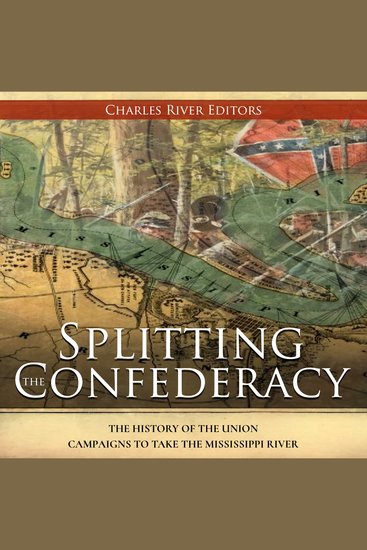
    Given its importance, it’s somewhat surprising in retrospect that the Union managed to capture New Orleans in an easier manner than places like Vicksburg and Atlanta. Admiral David Farragut’s naval forces battered their shaky Confederate counterparts and were able to get over a dozen ships upriver past a couple of crucial Confederate forts along the Mississippi. By May 1862, Union forces occupied the city and General Benjamin Butler became its military governor, leaving the last true bastion of Confederate defenses on the Mississippi at Vicksburg. 
    At the start of 1863, Robert E. Lee’s Army of Northern Virginia had been frustrating the Union in the Eastern theater for several months, but the situation in the West was completely different. The Confederates had lost control of several important states throughout 1862, and after New Orleans was taken by the Union, the North controlled almost all of the Mississippi River, which Confederate general James Longstreet called “the lungs of the Confederacy”. By taking control of that vital river, the North would virtually cut the Confederacy in two, putting the South in a dire situation. 
    The only domino left to fall was the stronghold of Vicksburg, and both sides knew it. The Union Army of the Tennessee, led by Ulysses S. Grant, would spend months trying to encircle the army and eventually force John Pemberton’s Confederate army to surrender. Grant eventually succeeded on July 4, 1863, but since it came a day after the climactic finish of the Battle of Gettysburg, Vicksburg was (and still is) frequently overlooked as one of the turning points of the Civil War. In fact, had the Confederate’s military leadership listened to Longstreet, who advocated detaching soldiers from Lee’s army to head west and help the Confederates deal with Grant or Rosecrans in that theater, the Battle of Gettysburg might never have happened.
    Show book
  • Simplicity in Living - The Uncluttered Life - Finding Joy in the Basics - cover

    Simplicity in Living - The...

    Esther Jameson

    • 0
    • 0
    • 0
    Simplicity is often misunderstood as a lack of sophistication or depth. In truth, simplicity is about intentionality, clarity, and focus. It's not about stripping life down to the barest essentials but about discerning what truly matters and eliminating distractions. The art of simplifying is a practice that allows us to shift our energy from the constant demands of modern life to what brings us true fulfillment. 
    The journey toward simplification begins with the recognition that not everything in our lives needs to be kept or held onto. We live in an age of excess—excess information, excess material possessions, and excess commitments—that often leaves us feeling overwhelmed and disconnected. When we declutter our lives, we free up space for what truly matters: deeper connections, meaningful work, and moments of peace. By embracing simplicity, we allow ourselves to be more present and engaged in each aspect of our daily lives. 
    In simplifying, we are also clearing the mental space necessary to make conscious choices. This process begins with letting go of the unnecessary, which can take many forms. This might involve removing items from your physical space, choosing to disconnect from digital distractions, or reevaluating relationships and commitments that no longer align with your values. The key to simplification is not to eliminate everything but to approach each area of life with discernment, asking whether it serves a purpose or brings joy.
    Show book