Join us on a literary world trip!
Add this book to bookshelf
Grey
Write a new comment Default profile 50px
Grey
Subscribe to read the full book or read the first pages for free!
All characters reduced
Nuclear Strategies - cover

Nuclear Strategies

Michael Davies

Translator A AI

Publisher: Publifye

  • 0
  • 0
  • 0

Summary

Nuclear Strategies explores the multifaceted world of nuclear strategy, examining how doctrines, technology, and political considerations have shaped military planning since the atomic age. The book delves into nuclear deterrence, strategic bomber roles, and the global deployment of missiles, illuminating their profound impact on international relations and global security. Readers gain insights into how the threat of nuclear conflict, though less prominent in public discourse, remains a crucial element in international power dynamics.

 
One intriguing fact is the concept of mutually assured destruction (MAD), a doctrine based on the idea that a nuclear attack by one state would inevitably result in retaliation and the destruction of both, thus deterring either side from initiating such an attack.

 
The book progresses through chapters that cover fundamental concepts like minimum and extended deterrence, the evolution of ICBMs and SLBMs, and the challenges of nuclear proliferation. It argues that effective nuclear deterrence hinges not only on possessing these weapons but also on the credibility of their threatened use and careful management of escalation risks.

 
What sets this book apart is its examination of nuclear strategy from military, technological, political, and diplomatic perspectives, challenging conventional wisdom by presenting it as a constantly evolving adaptation to changing circumstances. Supported by extensive research, Nuclear Strategies connects military history, political science, and international relations, offering a holistic understanding of this critical subject.
Available since: 03/29/2025.
Print length: 74 pages.
Other books that might interest you

  • Hypochondria - cover

    Hypochondria

    Will Rees

    • 0
    • 0
    • 0
    A personal and literary examination of hypochondria.​
    		 
    A free-wheeling philosophical essay, Hypochondria is expansive in its range of references, from the writings of Franz Kafka to original yet accessible readings of theorists like Lauren Berlant. Whether he is discussing Seinfeld, John Donne, or his own hypochondriac past, Rees reveals himself to be a wry and perceptive critic, exploring the causes — and the costs — of our desire for certainty. With wit and erudition, Hypochondria demonstrates both the rewards and the perils of reading (too) closely the common but typically overlooked aspects of our everyday lives.
    Show book
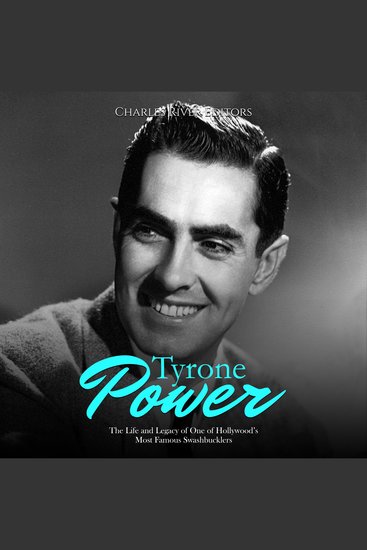
  • Tyrone Power: The Life and Legacy of One of Hollywood’s Most Famous Swashbucklers - cover

    Tyrone Power: The Life and...

    Editors Charles River

    • 0
    • 0
    • 0
    Hollywood has never lacked leading men who could captivate viewers with dramatic performances that depict them as suave romantics or dashing heroes, especially during the Golden Age of Hollywood, when stars like Humphrey Bogart, Clark Gable, and Cary Grant graced screens. But in the mid-20th century, one of the most popular stars was a man who’s been frequently overlooked.   
    Some actors were recruited based on their appearance alone, signing contracts before taking screen tests or ever having been on a stage or set. Others became overnight sensations, darlings of the public for decades. Only a few of these turned out to be excellent actors, but one of them was certainly Tyrone Power, one of Hollywood’s leading men from the 1930s into the 1950s. With a career spanning over 50 films, Power did not have to work through the system, rising to the top almost immediately at the age of 22.  
    Power was named “King of the Movies” for three straight years (1939 -1941) by fans, and while critics claimed that his success came from his good looks, today he is acknowledged as a good actor, among the most underestimated of this era. Power starred in a variety of film genres, and at least some contemporaries made note of his “remarkable acting range.” This included several musicals such as Alexander’s Ragtime Band, Second Fiddle, Rose of Washington Square, and The Eddy Duchin Story. He also made appearances in several dramas, including Johnny Apollo, Witness for the Prosecution, Crash Drive, and The Razor’s Edge. Power was even known for a good comedic sense in films like The Luck of the Irish, That Wonderful Urge, and Love is News.
    Show book
  • Teaching Primary Programming with Scratch Teacher Book - Research-Informed Approaches - cover

    Teaching Primary Programming...

    Phil Bagge

    • 0
    • 0
    • 0
    Who is this book written for? This book is aimed at KS2 (grade 2-5 in US) primary (elementary) teachers and secondary teachers who use Scratch to teach programming.
    Show book
  • The Shortest History of Democracy - cover

    The Shortest History of Democracy

    John Keane

    • 0
    • 0
    • 0
    'DEMOCRACY HAS A LONG, EVENTFUL PAST. DOES IT HAVE A FUTURE?The roots of democracy stretch back beyond Athens to Syria- Mesopotamia and the Indian subcontinent, where citizens' assemblies held privilege and power to account over 3,000 years before the French Revolution. In this timely and illuminating new global history, John Keane ('one of the world's leading political thinkers' ,The Times) gets to the heart of a complex, ever-evolving ideal.Today, American-style democracy may appear to be in decline, but Keane shows that this isn't the whole story. In many places, such as Taiwan and Senegal, India and South Africa, distinctly local varieties are coming into being. Yet it's impossible to ignore the proliferation of populist strongmen on every continent: the Putins and the Bolsonaros, the Trumps and Lukashenkos. Is democracy past its sell-by date, as they would have us believe? Or is it time to embrace the true, radical potential of an ancient idea?
    Show book
  • Armored Attack 1944 - US Army Tank Combat in the European Theater from D-Day to the Battle of the Bulge - cover

    Armored Attack 1944 - US Army...

    Steven J Zaloga

    • 0
    • 0
    • 0
    Almost 1,200 photos of American World War II armor from Shermans to Hellcats, accompanied by informative captions by a prominent military historian.   Covering D-Day, the Normandy campaign, southern France, the Siegfried Line, the push to the Rhine, and the Battle of the Bulge, this pictorial history—the first of a two-volume set—includes 1,199 photographs of all varieties of American armor. Filled with images of U.S. Army armored units in combat in the European theater of operations, it’s a rich resource for tank enthusiasts, modelers, and those interested in the military history of World War II.
    Show book
  • Byzantines and Ottomans The: The History of the Medieval Middle East’s Most Influential Empires - cover

    Byzantines and Ottomans The: The...

    Editors Charles River

    • 0
    • 0
    • 0
    In terms of geopolitics, perhaps the most seminal event of the Middle Ages was the successful Ottoman siege of Constantinople in 1453. The city had been an imperial capital as far back as the 4th century, when Constantine the Great shifted the power center of the Roman Empire there, effectively establishing two almost equally powerful halves of antiquity’s greatest empire. Constantinople would continue to serve as the capital of the Byzantine Empire even after the Western half of the Roman Empire collapsed in the late 5th century. Naturally, the Ottoman Empire would also use Constantinople as the capital of its empire after their conquest effectively ended the Byzantine Empire, and thanks to its strategic location, it has been a trading center for years and remains one today under the Turkish name of Istanbul. 
    The end of the Byzantine Empire had a profound effect not only on the Middle East but Europe as well. Constantinople had played a crucial part in the Crusades, and the fall of the Byzantines meant that the Ottomans now shared a border with Europe. The Islamic empire was viewed as a threat by the predominantly Christian continent to their west, and it took little time for different European nations to start clashing with the powerful Turks. In fact, the Ottomans would clash with Russians, Austrians, Venetians, Polish, and more before collapsing as a result of World War I, when they were part of the Central Powers. 
    The Ottoman conquest of Constantinople also played a decisive role in fostering the Renaissance in Western Europe. The Byzantine Empire’s influence had helped ensure that it was the custodian of various ancient texts, most notably from the ancient Greeks, and when Constantinople fell, Byzantine refugees flocked west to seek refuge in Europe. Those refugees brought books that helped spark an interest in antiquity that fueled the Italian Renaissance and essentially put an end to the Middle Ages altogether.
    Show book