Join us on a literary world trip!
Add this book to bookshelf
Grey
Write a new comment Default profile 50px
Grey
Subscribe to read the full book or read the first pages for free!
All characters reduced
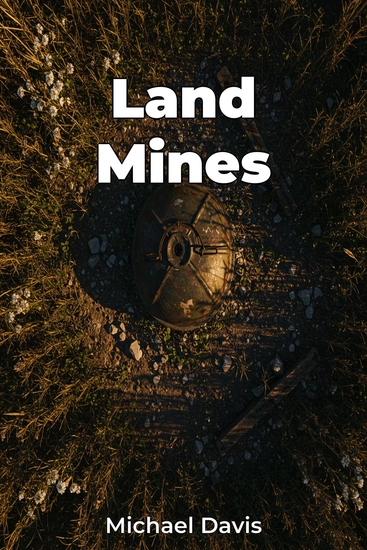
Land Mines - cover

Land Mines

Michael Davies

Translator A AI

Publisher: Publifye

  • 0
  • 0
  • 0

Summary

“Land Mines” explores the multifaceted history and impact of these weapons, examining their military utility alongside their devastating humanitarian consequences. Land mines, initially intended for territorial defense and hindering enemy advances, have become a global threat, disproportionately affecting civilian populations long after conflicts subside. The book highlights the ethical dilemmas inherent in their deployment and the ongoing international efforts, such as the Ottawa Treaty, aimed at their eradication.

 
The book meticulously traces the evolution of land mine technology and strategy, analyzing their use in major conflicts through detailed case studies. It addresses the immense challenges of post-conflict mine clearance and victim assistance, while also examining the debates around anti-personnel versus anti-tank mines. Readers gain a comprehensive understanding of how these weapons have shaped military history, politics, and humanitarian issues, underscored by the tragic statistics of casualties and socio-economic disruption.

 
Progressing chronologically, the book utilizes military archives, humanitarian reports, and legal documents to offer a nuanced perspective. It connects land mine usage to broader themes within international law, human rights, and development studies, enriching its analysis and appealing to a diverse audience.

 
The book culminates by assessing the future of landmine policy and the pursuit of a mine-free world, making it a valuable resource for policymakers and those interested in military strategy.
Available since: 03/29/2025.
Print length: 83 pages.

Other books that might interest you

  • Why Father? - cover

    Why Father?

    Toni Maguire, Gerri Mayo

    • 0
    • 0
    • 0
    A sexual abuse survivor tells her story in this memoir written with the help of the #1 bestselling author of Don’t Tell Mummy and When Daddy Comes Home. 
     
    Gerri Mayo was only a young girl when she was first abused by her father. Growing up in a small village in Northern Ireland, in the tumultuous time of the Troubles, she had no one to turn to. He father’s evil acts were followed by abuse from her local priest, arranged by her father. After her mother found out about the abuse, she committed suicide. 
     
    Gerri and her siblings were split up and placed in different foster homes. Told that her mother had committed a grave sin, Gerri’s foster parents were far from kind to her. She experienced years of loneliness, feeling completely abandoned. 
     
    The abuse Gerry experienced was so extensive it required an operation to repair the damage to her body. When asked who or what had been responsible, she responded “the priest”. But she was not believed in her small Northern Ireland town in the 1960s, where everyone believed a priest took his orders directly from God. After finally meeting her kind and caring husband, Gerry decided it was time for her story to be told. This is her true story of survival.
    Show book
  • Mexican Drug Cartels - Their Origins Their Background and Their Conflicts - cover

    Mexican Drug Cartels - Their...

    Kelly Mass

    • 0
    • 0
    • 0
    The Mexican drug war, also known as the Guerra contra el narcotráfico en México, is the Mexican theater of the global war on drugs, a campaign led by the United States federal government. This war has resulted in a protracted, asymmetric low-intensity conflict between the Mexican government and various drug trafficking organizations. The Mexican government’s main objective when it intervened militarily in 2006 was to curb drug-related violence, which had escalated in the preceding years. The government’s stated aim, in collaboration with U.S. officials, was to eliminate the cartels and reduce the demand for drugs trafficking. 
    Violence erupted after the 1989 arrest of Miguel Ángel Félix Gallardo, who was the leader and founder of Mexico’s first major drug cartel, the Guadalajara Cartel. His arrest led to the dissolution of the cartel as high-ranking members splintered off to create their own groups. This fragmentation gave rise to the Sinaloa, Juarez, Tijuana, and Sonora cartels, among others, which began to battle for control over lucrative trafficking routes and territories. This marked a new chapter in the drug war, with the cartels becoming increasingly violent in their efforts to secure dominance. 
    Mexican drug trafficking organizations have been a powerful force for decades, but their power surged significantly in the 1990s after the collapse of the Colombian Cali and Medellín cartels. By 2007, Mexican criminal groups controlled an overwhelming 90% of the cocaine entering the United States. Efforts to arrest cartel leaders, including those in the Tijuana and Gulf cartels, often resulted in even more violence, as smaller gangs competed for control over key drug trade routes into the U.S.
    Show book
  • Native American History Trivia: Test Your Knowledge with 200+ Questions and Answers about Indigenous Cultures Influential Leaders and Historical Events - cover

    Native American History Trivia:...

    Ahoy Publications

    • 0
    • 0
    • 0
    Get over 200 fun, informative, and unique trivia questions about Native Americans! 
    Are you a trivia buff? Do you love to learn new things? Have you always wanted to know more about Native American culture? 
    If so, then this is the audiobook for you! 
    You can match your skills against challenging trivia questions about topics like Native American leaders, major battles, artwork, religions, and languages. See how you measure up to the experts across 10 chapters packed to the brim with amazing lore, incredible facts, and fantastic puzzles. 
    Here’s a taste of what you can find inside:Endless Exciting Trivia: Access to hundreds of exciting trivia questions about Native American History.Challenge Your Memory with Match-Up Questions: Look at the options and see if you can match the right facts with each other.Fill in the Blanks: See if you can complete sentences and jog your memory!Visual Trivia Fun: Go through fun visual hints to help give the trivia that added dimension.And so much more! 
    Trivia is more fun when it’s tough – but fair. All the questions you’ll find here are accurate and definitive. No matter how much you know about Native Americans, there will be something in this book that you’ve never learned before. 
    So click the “Add to Cart” button now to show off your Native American trivia skills and impress your friends and family today!
    Show book
  • Drained by the Pool Boy (Gay Alpha Male Erotica) - cover

    Drained by the Pool Boy (Gay...

    Archer Vale

    • 0
    • 0
    • 0
    “I'll help you sink deeper. I’ll help you understand what you need.” 
    His tight, powerful physique calls out to me. He says this is called “body worship”. 
    I hired him to be my pool boy, but he’s taking control of my life. I know this is a trap…he’s using me for my money. 
    But he makes me feel so weak… 
    He tells me I need to serve men. He makes me get on the ground and pretend to be a pony. He makes me wear his ex-girlfriend’s underwear. 
    It all feels so dirty…but I’m addicted now. 
    I need this. 
    --- 
    CONTAINS EXPLICIT GAY SEXUAL CONTENT. 
    For exclusive stories, visit www.ArcherVale.com.
    Show book
  • Mussolini As Revealed In His Political Speeches - cover

    Mussolini As Revealed In His...

    Benito Mussolini

    • 0
    • 0
    • 0
    “It’s better to live one day as a lion than 100 years as a sheep.” 
     
    "I am the most terrible animal that's ever existed." 
     
    "Democracy is beautiful in theory; in practice, it is a fallacy. You in America will see that someday." 
     
    "It's good to trust others but, not to do so is much better." 
     
    “I feel, when we have no friends upon whom to lean, or to look for moral guidance." (Mussolini) 
     
    This audiobook contains over 60 of Mussolini's earlier speeches, covering the years 1914-1923: from soon after his expulsion from the Socialist Party for supporting WWI, to his becoming Prime Minister yet still submitting outwardly to democratic rule. (He seized power, threw off the democratic yoke, and became dictator in 1925-1927. 
     
    Benito Amilcare Andrea Mussolini, born on July 29, 1883, who went by the nickname “Il Duce” (“the Leader”), was a deeply unbalanced tyrannical Italian dictator who created the dreaded Fascist Party in 1919. Eventually, he held all power in Italy as the country’s prime minister from 1922 to 1943. An ardent socialist as a youth, Mussolini followed in his father's political footsteps but was expelled by the party for his overt support of World War I. As an evil dictator during World War II (even murdering his own son by lethal injection) he greatly overextended his forces and was eventually killed by his own people in Mezzegra, Italy. Here, for the first time, are the words of the great dictator himself in his twisted manifesto on the political movement he started and is still so feared to this very day.
    Show book
  • Political Philosophy - Ideas and Foundations of Governance - cover

    Political Philosophy - Ideas and...

    Hector Davidson

    • 0
    • 0
    • 0
    Political philosophy plays a central role in the development of societies, offering profound insights into the principles and ideas that shape governance and human relations. At its core, political philosophy seeks to understand the fundamental questions of power, authority, justice, and the rights of individuals within a collective. By examining these issues, political philosophy provides a framework for interpreting and evaluating the structures that govern our lives, from the most intimate social arrangements to the global political order. It is through political philosophy that we come to grips with the nature of justice, equality, freedom, and the role of the state in promoting the common good. 
    In every society, political philosophy serves as a critical lens for understanding the legitimacy of authority and the relationship between the individual and the state. Whether through the ideas of ancient philosophers like Plato and Aristotle or the modern theorists such as Hobbes, Locke, and Rousseau, the study of political philosophy allows us to explore the moral and practical foundations of governance. These thinkers sought answers to questions that remain relevant today: What is the rightful role of the government? What are the limits of state power? How can societies balance the competing interests of freedom, equality, and social order? 
    Moreover, political philosophy is essential for the functioning of a healthy democracy. By engaging with political ideas and questioning the established norms, political philosophers encourage critical thinking and the evaluation of political systems. They provide the intellectual tools for assessing the values that underlie our laws, policies, and political institutions. Political philosophy also serves as a guide for navigating complex moral dilemmas in governance, offering insights into how we can create a just society where the rights of individuals are respected while promoting the collective well-being.
    Show book