Join us on a literary world trip!
Add this book to bookshelf
Grey
Write a new comment Default profile 50px
Grey
Subscribe to read the full book or read the first pages for free!
All characters reduced
Hostage Negotiations - cover

Hostage Negotiations

Michael Davies

Translator A AI

Publisher: Publifye

  • 0
  • 0
  • 0

Summary

Hostage Negotiations explores the intricate world of hostage crises, where diplomacy falters and lives hang precariously in the balance. It delves into negotiation strategies, the political ramifications, and the historical impact of these events on national security. The book analyzes how a purely military approach can be counterproductive, emphasizing the need to balance life preservation with potential long-term political consequences. The book draws upon historical precedents, like the Iranian hostage crisis, to provide context while examining the psychological elements influencing hostage takers and negotiators. It presents a comprehensive analysis, beginning with the fundamentals of hostage negotiation, including communication strategies and trust-building. Major themes, such as intelligence gathering and ethical dilemmas, are explored, culminating in an analysis of the long-term political and military implications. What sets this book apart is its balanced approach, considering the tactical aspects of negotiation and the broader political and historical context. It offers a fresh perspective on conflict resolution and crisis management, providing valuable insights for policymakers, military strategists, and students of political science interested in international relations. Chapters progress to analyze case studies, tactics used, and outcomes achieved, ultimately providing recommendations for future policy and training.
Available since: 03/21/2025.
Print length: 90 pages.

Other books that might interest you

  • The Social Genome - The New Science of Nature and Nurture - cover

    The Social Genome - The New...

    Dalton Conley

    • 0
    • 0
    • 0
    A pioneering scientist presents a mind-expanding account of the sociogenomics revolution, which promises to upend everything we know about human development. 


    Sociogenomics brings together advances in molecular genetics and traditional social and behavioral science. The key tool is the polygenic index, which allows us to analyze DNA to measure a child's genetic potential. Today, we can estimate a child's adult height, how far they will go in school, and their weight as an adult—all from a cheek swab, finger prick, or vial of saliva. Dalton Conley and other researchers are using this new science to shed light on the ways in which genes shape our world, influencing how each person both creates and responds to the environment around them. Conley reveals a world where children's DNA influences the nurture they extract from their parents; the genes of our schoolmates affect our likelihood of smoking as much as our own DNA does; and spouses' genes influence each other's moods and behaviors. 


    The Social Genome presents a nuanced, powerful perspective on individual potential and social dynamics and raises critical ethical questions about how we will navigate a future where we have access to far more genetic information than ever before.
    Show book
  • Up From Slavery - cover

    Up From Slavery

    Booker T. Washington

    • 0
    • 0
    • 0
    "Up from Slavery is the 1901 autobiography of Booker T. WashingtonBorn into slavery, Booker Washington suddenly gained his freedom, after the American Civil War. This is a first hand account from a slave around the events of the emancipation proclamation.The book covers the inspiring story of a young man as he works to rise up from being enslaved as a child, overcoming massive obstacles to obtain an education, to eventually become an advisor to the president.A truly inspiring and informative story."
    Show book
  • A Generation of American Historiography - cover

    A Generation of American...

    William A. Dunning

    • 0
    • 0
    • 0
    A Dusty Tomes Audio BookIn Cooperation with Spoken Realms 
    A GENERATION OF AMERICAN HISTORIOGRAPHY by William A. Dunning. Professor of History at Columbia University. Published in the Annual Report of the American Historical Association THE YEAR 1917. 
    A nice overview of book trends and the histories/historians in the decades (a generation) prior to 1900, when most historians were male and white, of course … but not all. 
    Note: This book is “read as written.” It was published in 1889. It is in the public domain. 
    William A. Dunning (1857–1922) received his Ph.D. from Columbia in 1885 and continued to teach there. His most enduring work was in the field of European intellectual history, particularly the three-volume History of Political Theories, Ancient and Medieval (1902). However, he is also noted for his writings and the students he directed in the history the Reconstruction in the United States. In works like Reconstruction, Political and Economic, 1865–1877 he helped to ratify the unification of North and South on principles of white supremacy. (historians.org American Historical Association) 
    Dusty Tomes Audio Books are public domain books retrieved from the ravages of time, available as never before, as audio books, for your edification, pleasure, and consideration. Please excuse the dust. 
    This Dusty Tomes audio book was Read Online at Internet Archive.
    Show book
  • World Peace Attempt - cover

    World Peace Attempt

    Ryan Norrish

    • 0
    • 0
    • 0
    World Peace Attempt is an attempt to establish stable and everlasting world peace, using totally nonviolent methods. We define establishing world peace as ending all large-scale military conflict, and we have a plan we believe can succeed.
    Show book
  • Celts for Kids: An Enthralling Overview of Celtic History Ancient Britons and Their Conflicts with the Romans - cover

    Celts for Kids: An Enthralling...

    Billy Wellman

    • 0
    • 0
    • 0
    Dive into the enchanting world of the Celts!  
    Do you know whose culture outlasted the mighty Romans? The Celts! Their culture still sparks wonder today. But who were these incredible people, and how did their legacy shape the world we know? 
    Journey Back to the Iron Age! Imagine a time over three thousand years ago in Western Europe, where the Celts lived vibrant lives long before the Romans and Anglo-Saxons stepped onto the scene. Discover a world where history is not just about dates but about astonishing tales of resilience and creativity. 
    Prepare for an Adventure! This isn’t just any history book. It’s a time machine designed for young explorers! With simple language, fun activities, and captivating illustrations, we’ll uncover the mysteries of the Celts. 
    Become a young historian! Through the lens of modern science, we’ll piece together puzzles from the past, correcting old tales and uncovering the true story of our ancestors. This journey will help you to understand our roots, our shared history, and the incredible legacy of the Celts. 
    Here are some of the things the children in your life will discover in these pages:The origins of the Celts and their widespread influence across Britain and IrelandHow DNA studies help to unravel their fascinating pastTheir innovative lifestyles, stunning art, and deep-rooted beliefsThe heroes of their tales: were they myth or reality? 
    Ready to embark on this magical journey through history? Perfect for curious minds and young dreamers, this book makes history come alive with stories that inspire and illustrations that dazzle. Scroll up and click the “add to cart” button to begin your journey into the past today!
    Show book
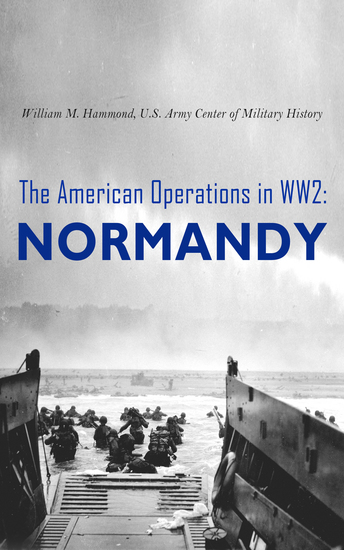
  • The American Operations in WW2: Normandy - 6 June–24 July 1944 - cover

    The American Operations in WW2:...

    U.S. Army Center of Military...

    • 0
    • 0
    • 0
    World War II was the largest and most violent armed conflict in the history of mankind. Highly relevant today, World War II has much to teach us, not only about the profession of arms, but also about military preparedness, global strategy, and combined operations in the coalition war against fascism. This book follows military operations of the US Army in Normandy from 6 June to 24 July 1944. 
    A great invasion force stood off the Normandy coast of France as dawn broke on 6 June 1944: 9 battleships, 23 cruisers, 104 destroyers, and 71 large landing craft of various descriptions as well as troop transports, minesweepers, and merchantmen—in all, nearly 5,000 ships of every type. The naval bombardment that began at 0550 that morning detonated large minefields along the shoreline and destroyed a number of the enemy's defensive positions. To one correspondent, reporting from the deck of the cruiser HMS Hillary, it sounded like "the rhythmic beating of a gigantic drum" all along the coast. In the hours following the bombardment, more than 100,000 fighting men swept ashore to begin one of the epic assaults of history, a "mighty endeavor," as President Franklin D. Roosevelt described it to the American people, "to preserve . . . our civilization and to set free a suffering humanity."
    The attack had been long in coming. From the moment British forces had been forced to withdraw from France in 1940 in the face of an overwhelming German onslaught, planners had plotted a return to the Continent. Only in that way would the Allies be able to confront the enemy's power on the ground, liberate northwestern Europe, and put an end to the Nazi regime...
    Show book