Join us on a literary world trip!
Add this book to bookshelf
Grey
Write a new comment Default profile 50px
Grey
Subscribe to read the full book or read the first pages for free!
All characters reduced
Diplomatic Tactics - cover

Diplomatic Tactics

Michael Davies

Translator A AI

Publisher: Publifye

  • 0
  • 0
  • 0

Summary

Diplomatic Tactics explores the crucial role of diplomacy in shaping international relations and resolving conflicts throughout history. It examines how diplomats navigate power dynamics, negotiate treaties, and strive for peace, offering insights into the art of international relations. The book highlights how effective diplomacy extends beyond mere power plays, emphasizing the importance of understanding human behavior, historical context, and cultural nuances.

 
The approach combines historical analysis with contemporary theoretical frameworks, drawing from primary documents and academic research. For instance, the book analyzes the Congress of Vienna to illustrate diplomatic tactics and their impact. It also delves into the psychological factors influencing negotiations, revealing how cognitive biases can affect international agreements.

 
The book progresses by first introducing essential concepts, then examining historical case studies, and concluding with ethical considerations in diplomacy.

 
This book offers a unique perspective by providing practical lessons for navigating modern international relations, appealing to students and professionals alike. Readers will gain a deeper understanding of how skillful negotiators bridge divides and shape global events, making Diplomatic Tactics a valuable resource for anyone interested in politics and history.
Available since: 03/29/2025.
Print length: 74 pages.

Other books that might interest you

  • Israel and the Cyber Threat - How the Startup Nation Became a Global Cyber Power - cover

    Israel and the Cyber Threat -...

    Matthew S. Cohen, Gabi Siboni,...

    • 0
    • 0
    • 0
    In Israel and the Cyber Threat, Charles D. ("Chuck") Freilich, Matthew S. Cohen, and Gabi Siboni provide a detailed and comprehensive study of Israel's cyber strategy, tracing it from its origins to the present. They analyze Israel's highly advanced civil and military cyber capabilities and organizational structures to offer insights into what other countries can learn from Israel's experience. To achieve this, they explore how and why Israel has been able to build a remarkable cyber ecosystem and turn itself, despite its small size, into a global cyber power. The book further examines the major cyber threats facing Israel, including the most in-depth look at Iranian cyber policies and attacks; Israel's defensive and offensive capabilities and the primary attacks it has conducted; capacity building; international cooperation; and the impact of Israel's strategic culture on its cyber prowess. By placing Israel's actions in the realm of international relations theory, the book sheds light on many of the major questions in the field regarding cyber policies. 


    The most authoritative work to date on Israeli cyber strategy, this book provides a comprehensive look at the major actions Israel has taken in cyberspace. It also places them in the broader context of global cyber developments to help listeners understand state behavior in cyberspace.
    Show book
  • The Mahabharata - cover

    The Mahabharata

    Veda Vyas

    • 0
    • 0
    • 0
    Krishna Dvaipayana, also known as and Veda Vyasa "the one who classified the Vedas"), is a rishi (sage). He is best known as the author of the Mahabharata, one of the two most important epics of Hinduism. He is also credited as the traditional compiler of the Vedas, as well as the writer of other important works including the Puranas. As per the Mahabharata, Vyasa is the son of rishi Parashara and a fisherwoman named Kali (Satyavati), who later marries king Shantanu of Kuru. Throughout the epic, Vyasa appears occasionally helping the Kuru kingdom. His spiritual career includes compiling many texts and spreading the knowledge through his disciples. The festival of Guru Purnima is dedicated to him. It is also known as Vyasa Purnima, the day believed to be both of his birth and when he divided the Vedas. Vyasa is considered one of the seven Chiranjivis (long-lived, or immortals), who are still in existence according to Hindu tradition.
    Show book
  • The Art of Productive Disagreement - Transforming Conflicts into Opportunities for Growth Innovation and Understanding - cover

    The Art of Productive...

    Joe Ilunjo

    • 0
    • 0
    • 0
    The Art of Productive Disagreement offers a revolutionary approach to handling conflicts in all areas of life. Through engaging stories and practical strategies, this book teaches you how to:Navigate workplace disputes with confidence and professionalismResolve family conflicts with empathy and understandingTurn community disagreements into opportunities for positive changeHarness the latest technologies for more effective conflict resolution 
    Featuring a cast of relatable characters facing real-world challenges, this guide provides actionable techniques for:Enhancing your emotional intelligenceMastering the art of active listeningFinding common ground in seemingly impossible situationsSeparating ideas from identities for more constructive dialogues 
    Whether you're a business leader, community activist, or simply someone looking to improve your relationships, this book equips you with the tools to transform disagreements into stepping stones for personal and collective growth. 
    Discover how to:Build stronger teams through constructive conflictFoster innovation by embracing diverse perspectivesCreate more harmonious family dynamicsPrepare for the future of disagreement in our rapidly changing world 
    Don't let conflicts hold you back—learn to leverage them for success! The Art of Productive Disagreement is your comprehensive guide to turning challenges into opportunities, one conversation at a time. 
    Start your journey toward more effective communication and conflict resolution today!
    Show book
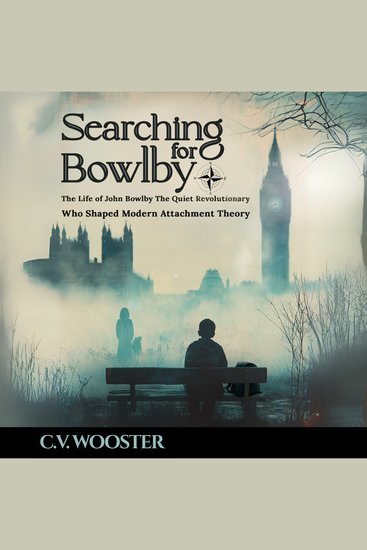
  • Searching for Bowlby - The Life of John Bowlby - The Quiet Revolutionary Who Redefined Human Connection - cover

    Searching for Bowlby - The Life...

    C. V. Wooster

    • 0
    • 0
    • 0
    John Bowlby transformed how we understand love, loss, and the bonds that shape us. As the father of attachment theory, he reshaped psychology, parenting, and modern therapy—yet the man behind the science carried mysteries of his own. 
    Searching for Bowlby traces his journey from an emotionally distant childhood to a pioneering career that challenged the foundations of mental health. Through setbacks, breakthroughs, and a relentless search for truth, Bowlby revealed what many resisted: human connection isn’t a luxury. It’s survival. 
    Blending biography, history, and psychology, this audiobook offers an intimate portrait of a complicated thinker and a clear look at the revolution he started. For anyone interested in relationships, healing, or the deeper roots of human behavior, it shows how one man’s determination forever changed the way we understand ourselves and each other.
    Show book
  • Bulgarian Made Easy - Beginner - Volume 2 of 3 - cover

    Bulgarian Made Easy - Beginner -...

    Lingo Wave

    • 0
    • 0
    • 0
    We broke our new series on learning Bulgarian down into different learning stages. Start with the "Lower Beginner" books followed by the "Beginner" and "Upper Beginner" books. Next, progress to the "Intermediate" series, then test and reinforce your knowledge with the "Conversations" series. 
    This audiobook is divided into units.While it provides different learning patterns and accommodates various needs, this audiobook focuses on helping you improve your ability to understand, speak, and memorise Bulgarian. 
    In Unit 1 you will hear Bulgarian decoded with each syllable spoken very slowly and clearly with repetition. Immediately before each sentence is spoken, you will hear the translation, so you will always understand what is being said. 
    Unit 2 focuses solely on increasing your listening ability, which will improve your abilities to engage in dialogue with a native Bulgarian speaker. This chapter requires you to listen very carefully to nuances in the language. 
    By Unit 3 you will already notice progress in your abilities to speak and understand Bulgarian. The spoken translation is followed by two repetitions in Bulgarian at a completely natural speed. While you are learning to process naturally spoken Bulgarian, Units 3 and 4 will help you memorise new vocabulary and full sentences. 
    In Unit 5 you can test yourself on how much you have learned. If you are having difficulties, we suggest you revisit the listening, speaking, or memorisation section of Units 1, 2 3 or 4, according to what you need more help with. 
    Topics covered in this book: 
    1. Asking about family 
    2. Asking about relationship status 
    3. Expressing frequency 
    4. Talking about spare time activities and hobbies 
    5. Using quantifiers/determiners 
    6. Talking about preference 
    7. Talking about abilities 
    8. Talking about location of places 
    9. Describing appearance 
    10. Talking about personality 
    ...
    Show book
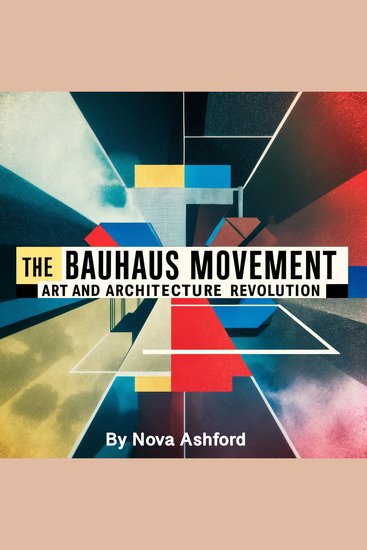
  • The Bauhaus Movement - Art and Architecture Revolution - cover

    The Bauhaus Movement - Art and...

    Nova Ashford

    • 0
    • 0
    • 0
    The Bauhaus Movement is one of the most influential art and design movements of the 20th century, shaping not only the world of architecture, but also industrial design, graphic design, and education. Founded in 1919 in Weimar, Germany, the Bauhaus school represented a radical shift in the way artists and designers approached their work, bridging the gap between art and industrial production. The term "Bauhaus," which translates to "building house," symbolized the school's fundamental belief in the fusion of craftsmanship and design with new technological advances. It advocated for an integrated, functional approach to design, emphasizing simplicity, clean lines, and the use of modern materials such as steel, glass, and concrete. 
    At the heart of the Bauhaus movement was the idea of total design, an approach that sought to unify art, craft, and industry into a single cohesive whole. The Bauhaus school emphasized collaboration between artists, architects, and designers, breaking down the traditional boundaries between fine arts and applied arts. This approach was revolutionary at a time when art was still often considered a separate entity from industrial production. The school encouraged students to experiment with new techniques and materials, while maintaining a commitment to functional design that was both aesthetically pleasing and usable in the modern world. 
    One of the defining features of the Bauhaus movement was its focus on the intersection of art and technology. The early 20th century saw rapid advancements in industrial production and materials science, which gave rise to new possibilities in design. Bauhaus educators believed that the application of these new technologies should be at the core of creative work. This philosophy led to the creation of iconic pieces of modern furniture, groundbreaking architectural designs, and revolutionary typography that defined the aesthetic of the era.
    Show book