Join us on a literary world trip!
Add this book to bookshelf
Grey
Write a new comment Default profile 50px
Grey
Subscribe to read the full book or read the first pages for free!
All characters reduced
Diplomatic Records - cover

Diplomatic Records

Michael Davies

Translator A AI

Publisher: Publifye

  • 0
  • 0
  • 0

Summary

Diplomatic Records explores the critical role of treaties, correspondences, and negotiations in shaping international relations and geopolitical landscapes throughout history. It argues that these records are not just historical documents but fundamental instruments that have defined national identities and governed state interactions. For instance, landmark treaties like the Peace of Westphalia and the Treaty of Versailles dramatically altered power dynamics and established international law, demonstrating the profound impact of diplomatic agreements. The book examines the evolution of diplomatic communication strategies and treaty implementation across different historical periods. Starting with a theoretical framework rooted in political science and international law, it progresses through the early modern era to the 21st century, dissecting key diplomatic exchanges and the roles of influential diplomats. This approach offers readers a comprehensive understanding of how diplomacy has influenced broader historical trends.

 
Organized into three parts, the book first details the emergence of modern diplomacy in Europe, then analyzes the expansion of the international system during the age of imperialism. Finally, it addresses the challenges of diplomacy in the 20th and 21st centuries, providing a balanced perspective on the achievements and failures of state interactions while acknowledging inherent power imbalances. This structured exploration provides valuable insights for anyone interested in diplomatic history, foreign policy, and international relations.
Available since: 03/29/2025.
Print length: 67 pages.

Other books that might interest you

  • On Truth in Politics - Why Democracy Demands It - cover

    On Truth in Politics - Why...

    Michael Patrick Lynch

    • 0
    • 0
    • 0
    Do any of us really care about truth when it comes to politics? Should we? In a world of big lies, denialism, and conspiracy theories, democracies are experiencing two interlocked crises: a loss of confidence in democracy itself and the growing sense among many that politics is only about power—not truth. In this book, Michael Patrick Lynch argues that truth not only can—but must—matter in politics. He shows why truth is an essential democratic value—a value we need to sustain our democratic way of life—and how it can be strengthened. 


    Despite evidence that people are rarely motivated by truth when it comes to politics, On Truth in Politics argues that this isn't inevitable. Accessibly written and rigorously argued, it draws on the American pragmatist tradition to develop an original theory of the nature and value of truth in the messy world of politics. Contrary to the belief of many, political beliefs can be true or false. But if democracy is to continue to be a space of reason and not just an arena of power, we must build a better infrastructure of knowledge, including stronger schools and media, and renew our commitment to science and history. 


    A vital and timely book, On Truth in Politics makes an original case for why democracy cannot survive without truth.
    Show book
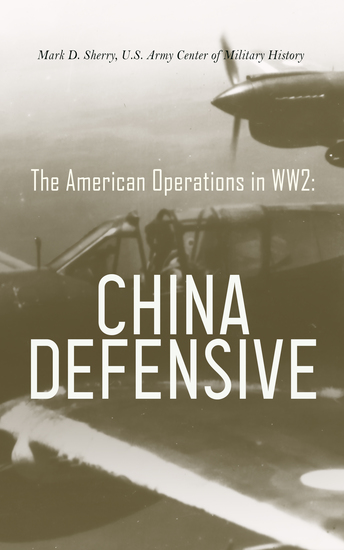
  • The American Operations in WW2: China Defensive - cover

    The American Operations in WW2:...

    History U.S. Army Center of...

    • 0
    • 0
    • 0
    World War II was the largest and most violent armed conflict in the history of mankind. Highly relevant today, World War II has much to teach us, not only about the profession of arms, but also about military preparedness, global strategy, and combined operations in the coalition war against fascism. This book follows military operations of the US Army in China from 4 July 1942 to 4 May 1945. 
    The China Theater of Operations more resembled the Soviet-German war on the Eastern Front than the war in the Pacific or the war in Western Europe. On the Asian continent, as on the Eastern Front, an Allied partner, China, carried the brunt of the fighting. China had been at war with Japan since 1937 and continued the fight until the Japanese surrender in 1945. The United States advised and supported China's ground war, while basing only a few of its own units in China for operations against Japanese forces in the region and Japan itself. The primary American goal was to keep the Chinese actively in the Allied war camp, thereby tying down Japanese forces that otherwise might be deployed against the Allies fighting in the Pacific. The United States and Nationalist China succeeded in forging a coalition that withstood the tests of time. Indeed, Chinese leader Generalissimo Chiang Kai-shek, the Allied Supreme Commander, China Theater, accepted, though reluctantly, U.S. Army generals as his chiefs of staff. This command relationship also endured differences in national war aims and cultures, as well as personalities, until the end of the war. The original policies of President Franklin D. Roosevelt and Army Chief of Staff George C. Marshall succeeded—China stayed in the war and prevented sizable numbers of Japanese troops from deploying to the Pacific.
    Show book
  • Maroons The: The History and Legacy of African Descendants Who Formed Free Settlements across the Americas - cover

    Maroons The: The History and...

    Editors Charles River

    • 0
    • 0
    • 0
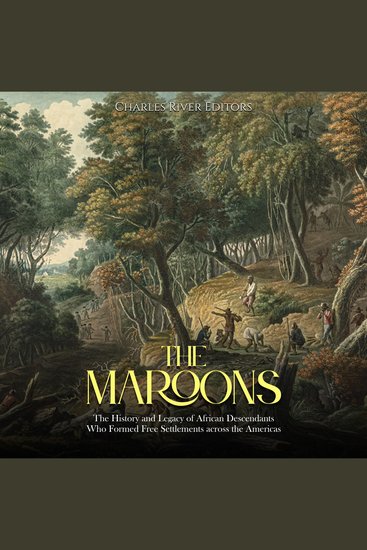
    The Underground Railroad is one of the most taught topics to young schoolchildren, and every American is familiar with the idea of fugitive slaves escaping to Canada and the North with the help of determined abolitionists and even former escaped slaves like Harriet Tubman. The secrecy involved in the Underground Railroad made it one of the most mysterious aspects of the mid-19th century in America, to the extent that claims spread that 100,000 slaves had escaped via the Underground Railroad. Of course, from a practical standpoint, the Underground Railroad had to remain covert not only for the sake of thousands of slaves, but for a small army of men and women of every race, religion and economic class who put themselves in peril on an ongoing basis throughout the first half of the 19th century, and in the years leading up to the war.  
    Of course, a fairly common form of resistance was running away and seeking hiding places in environments where slave catchers experienced difficulty. Slaves who ran and hid out, or who made their own settlements, were called maroons, from the Spanish word cimarron, which means “wild” or “untamed.” The term that historians commonly use to describe this is marronage, adapted from the French word maron, meaning the same as maroon. Marronage took two forms, grand and petty. Grand marronage was permanent, with escapees joining together to establish lasting settlements in inaccessible areas in mountains and swamps, sometimes preferring death rather than being caught and enslaved again.
    Show book
  • War on the Waves - The Naval Battles That Defined World War II's Maritime Struggle - cover

    War on the Waves - The Naval...

    Sage Winters

    • 0
    • 0
    • 0
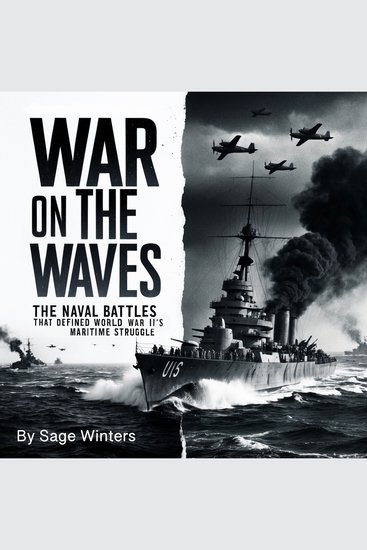
    The naval power wielded by the world’s great nations during World War II shaped not only the outcome of the conflict but also the geopolitical landscape for decades to come. Control of the seas became a decisive factor in determining the success or failure of military strategies and the fate of nations. This maritime struggle, fought on vast oceans and distant shores, was as much a war of technology, tactics, and intelligence as it was of sheer naval might. 
      
    The importance of naval dominance cannot be overstated. For the Allies, particularly the United States and Great Britain, securing control of the seas was vital for maintaining supply lines, especially in the Atlantic, where the threat of German U-boats could sever critical routes for war materials and reinforcements. In the Pacific, the Japanese Empire’s early victories left much of Southeast Asia and the Pacific Ocean under its control, presenting a formidable challenge. The battle for these waters would evolve into a series of iconic naval engagements that would shape the course of the war. 
      
    From the early days of the conflict, when the British Royal Navy faced off against the mighty Kriegsmarine of Nazi Germany, to the far-reaching campaigns of the Pacific theater, naval warfare introduced new technologies and strategies. The use of aircraft carriers, submarines, radar, and sonar reshaped traditional naval combat and rendered earlier tactics obsolete. The role of intelligence, particularly the breaking of the Enigma code, became a pivotal advantage, enabling the Allies to counter the Axis powers’ naval threats.
    Show book
  • The Race Ahead - Overcoming Racial Bias By Rewiring The American Mind - cover

    The Race Ahead - Overcoming...

    Dr. J. Bruce Stewart

    • 0
    • 0
    • 0
    In Dr. J. Bruce Stewart's transformative work, "The Race Ahead," readers are taken on a compelling journey into the depths of racial bias ingrained in American society and the mind itself. This groundbreaking book not only diagnoses the presence and origins of racial biases but also prescribes a sophisticated blueprint for eradicating them, aimed at rewiring how we perceive and interact across racial lines. 
    Dr. Stewart begins by exploring the psychological foundations of bias, focusing particularly on the amygdala's role in triggering automatic and subconscious responses associated with fear and othering. He explains how these psychological processes, though once essential to human survival, now perpetuate division and misunderstanding in a diverse society. Using relatable anecdotes and rigorous research, Stewart shows how deep-seated fears and stereotypes shape our interactions, often in ways we are not consciously aware of. 
    Central to the book is the "Last Mile" problem, a concept Stewart uses to describe the final and most challenging steps in the journey toward racial equity. These steps involve not only acknowledging and understanding biases but actively implementing strategies to dismantle them within ourselves and our institutions. Stewart argues that this last mile is fraught with complexities and challenges, as it requires changing longstanding societal structures and confronting uncomfortable truths. 
    Part historical review, part psychological exploration, and part sociological study, "The Race Ahead" delves into the origins and perpetuations of racial myths and stereotypes. From the misrepresentations in media and literature that shape public perception to the policies and practices in education and law enforcement that reinforce racial disparities, Stewart leaves no stone unturned. 
    "The Race Ahead" is an urgent call to action, demanding a radical shift in both mindset and behavior from all sectors of society. It challenges readers to confront their biases
    Show book
  • Arthashastra - The Ancient Indian Guide to Strategy Politics and Economics - A Modern Translation - Adapted for the Contemporary Reader - cover

    Arthashastra - The Ancient...

    Kautilya, Tim Zengerink

    • 0
    • 0
    • 0
    What if you could master the art of strategy, navigate complex politics, and unlock the secrets of effective leadership and economic success? 
    Arthashastra: The Ancient Indian Guide to Strategy, Politics, and Economics presents Kautilya’s groundbreaking treatise, thoughtfully adapted for today’s listeners. 
    Written over two thousand years ago, the Arthashastra is one of the oldest and most comprehensive guides to governance, diplomacy, economics, and military strategy. Kautilya, also known as Chanakya, provides a practical roadmap for achieving power, stability, and success. 
    This isn’t just an ancient political text—it’s a transformative guide to understanding power dynamics, building effective leadership, and managing resources wisely. Whether navigating modern business challenges, studying political science, or mastering strategy, Kautilya’s wisdom remains profoundly relevant today. 
    What You’ll Discover: 
    - Mastering Strategy and Leadership: Learn principles for leadership, diplomacy, and decision-making in any competitive environment. 
    - Economic and Political Wisdom: Explore the foundations of statecraft, economic policies, and resource management that apply to modern challenges. 
    - The Art of Diplomacy and Warfare: Gain insights into negotiation, alliances, conflict resolution, and military preparedness. 
    - Accessible for Today’s Listeners: Experience Kautilya’s teachings in a modernized format, making his profound insights easy to understand and apply. 
    Kautilya’s Arthashastra offers a timeless blueprint for strategy, governance, and success. Its principles have influenced leaders and strategists for centuries, providing tools for leadership, resource management, and long-term stability. 
    Imagine mastering the tools to lead effectively, think strategically, and make sound decisions in any situation. 
    Download your copy today and unlock the timeless wisdom of one of history’s greatest thinkers
    Show book