Join us on a literary world trip!
Add this book to bookshelf
Grey
Write a new comment Default profile 50px
Grey
Subscribe to read the full book or read the first pages for free!
All characters reduced
Cultural Property Laws - cover

Cultural Property Laws

Michael Davies

Translator A AI

Publisher: Publifye

  • 0
  • 0
  • 0

Summary

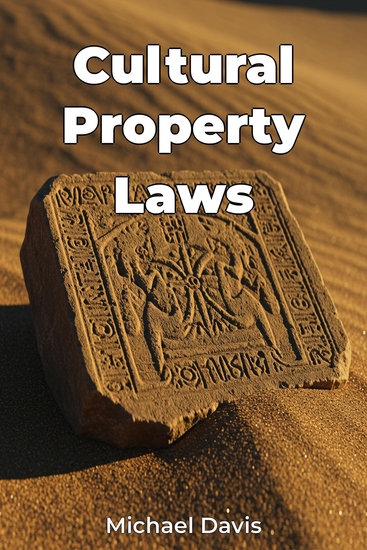
Cultural Property Laws explores the complex world of international law governing cultural heritage, examining the ownership, sale, and repatriation of artifacts. It tackles the question of who truly owns the past by dissecting major legal frameworks like the UNESCO Convention, which combats illicit trafficking of cultural objects, and the UNIDROIT Convention, aimed at harmonizing national laws for restitution. The book highlights how these laws evolved from protecting war booty to addressing ethical collecting, revealing how colonialism and globalization have shaped the movement of cultural objects.

 
The book argues that the current system, while striving for fairness, faces inconsistencies that spark disputes. It provides historical context and case studies, tracing the development of cultural property law and its impact on museums and the art market. Starting with fundamental concepts like defining "cultural property," the book progresses through key legal principles and culminates in a critical assessment of current laws and future directions. It references historical research, legal analysis, and case studies to support its arguments.
Available since: 02/22/2025.
Print length: 75 pages.

Other books that might interest you

  • The History and Legacy of Germany’s Most Controversial Events Between World War I and World War II - cover

    The History and Legacy of...

    Charles River Editors

    • 0
    • 0
    • 0
    The early 1930s were a tumultuous period for German politics, even in comparison to the ongoing transition to the modern era that caused various forms of chaos throughout the rest of the world. In the United States, reliance on the outdated gold standard and an absurdly parsimonious monetary policy helped bring about the Great Depression. Meanwhile, the Empire of Japan began its ultimately fatal adventurism with the invasion of Manchuria, alienating the rest of the world with the atrocities it committed. Around the same time, Gandhi began his drive for the peaceful independence of India through nonviolent protests against the British. 
    	It was in Germany, however, that the strongest seeds of future tragedy were sown. The struggling Weimar Republic had become a breeding ground for extremist politics, including two opposed and powerful authoritarian entities: the right-wing National Socialists and the left-wing KPD Communist Party. As the 1930s dawned, these two totalitarian groups held one another in a temporary stalemate, enabling the fragile ghost of democracy to continue a largely illusory survival for a few more years.  
    	That stalemate was broken in dramatic fashion on a bitterly cold night in late February 1933, and it was the Nazis who emerged decisively as the victors. A single act of arson against the famous Reichstag building proved to be the catalyst that propelled Adolf Hitler to victory in the elections of March 1933, which set the German nation irrevocably on the path towards World War II. That war would plunge much of the planet into an existential battle that ultimately cost an estimated 60 million lives. 
    Show book
  • Incidents in the Life of a Slave Girl - cover

    Incidents in the Life of a Slave...

    Harriet Ann Jacobs

    • 0
    • 0
    • 0
    Incidents in the Life of a Slave Girl, written by herself is an autobiography by Harriet Ann Jacobs, a young mother and fugitive slave, published in 1861 by L. Maria Child, who edited the book for its author. Jacobs used the pseudonym Linda Brent. The book documents Jacobs's life as a slave and how she gained freedom for herself and for her children. Jacobs contributed to the genre of slave narrative by using the techniques of sentimental novels "to address race and gender issues." She explores the struggles and sexual abuse that female slaves faced on plantations as well as their efforts to practice motherhood and protect their children when their children might be sold away.In the book, Jacobs addresses white Northern women who fail to comprehend the evils of slavery. She makes direct appeals to their humanity to expand their knowledge and influence their thoughts about slavery as an institution.Jacobs began composing Incidents in the Life of a Slave Girl after her escape to New York, while living and working at Idlewild, the Hudson River home of writer and publisher Nathaniel Parker Willis. Portions of her journals were published in serial form in the New-York Tribune, owned and edited by Horace Greeley. Jacobs's reports of sexual abuse were deemed too shocking for the average newspaper reader of the day, and publication ceased before the completion of the narrative.Notable works Harriet Ann Jacobs: Incidents in the Life of a Slave Girl (1861).
    Show book
  • Holy Roman Empire’s Conflicts with the Vatican The: The History of the Medieval Wars that Fractured Germany and Italy - cover

    Holy Roman Empire’s Conflicts...

    Charles River Editors

    • 0
    • 0
    • 0
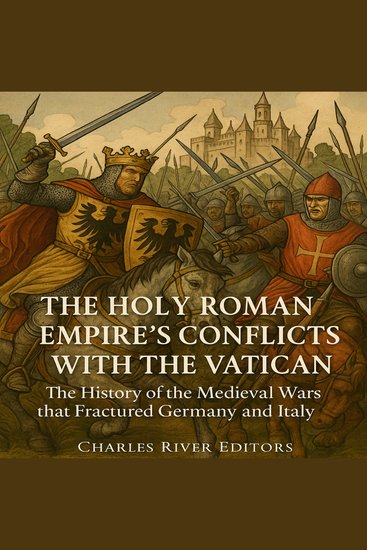
    It has been famously pointed out that the Holy Roman Empire was neither holy, nor Roman, but it was also not an empire in the sense people expect when hearing the term. In theory, the emperor was the highest prince in Christendom, and his dominion extended the length and breadth of Western Europe. The empire had been created by the papacy in 801 when Pope Leo the Third famously crowned the supposedly unwitting Charlemagne in Saint Peter’s Basilica, intending to recreate the Western Roman Empire. In truth, the imperial power did not extend beyond central Europe, which by the beginning of the 16th century included Germany, northern Italy, and the Netherlands. Even in these lands, however, the emperor struggled to command obedience. His dominion over northern Italy was theoretical only, the cities of the Netherlands were deeply conscious of their ancient rights and privileges, and Germany had long ceased to be compliant. The latter had become a collection of principalities, dukedoms and bishoprics which vied with each other and pursued their own agendas. They were, however, united in only one sense: denying the emperor power and resisting attempts to centralize the government.  
    	At the same time, the secular sovereigns frequently butted heads with religious authorities back in Rome, and arguably none of the conflicts were as crucial as the War of the Keys and the Investiture Controversy. The tensions between the Holy Roman Empire and Church over the power to invest bishops with authority led to decades of civil war in Germany on the way to establishing the relationship between Church and state, elevating the status of the papacy and weakening the Holy Roman Empire. What is crucial in understanding the conflicts is to not view them with the benefit of hindsight. Most importantly, no nation as people recognize it today yet existed, as England, France, Germany, and Italy were largely geographical expressions, not national identities.
    Show book
  • Condemnation of Paganini - cover

    Condemnation of Paganini

    Anatoly Vinogradov

    • 0
    • 0
    • 0
    One never knows where genius comes from. Follow one of the greatest musicians and composers in history from the slums of Genoa to the grandest concert halls and palaces of Europe, through poverty, war, revolution, love, parenthood, and loss. An incredible life set against the backdrop of tumultuous Europe in late 18th - early 19th centuries.
    Show book
  • Summary of Jamie Raskin’s Unthinkable - cover

    Summary of Jamie Raskin’s...

    Falcon Press

    • 0
    • 0
    • 0
    Buy now to get the main key ideas from Jamie Raskin’s Unthinkable 
      
    In Unthinkable (2022), Jamie Raskin details two intensely traumatic events that he never expected: the suicide of his son Tommy, followed within a week by the January 6 attack on the US Capitol. Although immensely different, these events became intertwined in the Democratic congressman’s psyche. Raskin was dead set on doing his best to impeach Donald Trump and preserve democracy. He felt like he owed it to Tommy, who had lived a life filled with compassion and egalitarian ideals despite having to battle his inner demons.
    Show book
  • The Magnificent Mischief of Tad Lincoln - cover

    The Magnificent Mischief of Tad...

    Raymond Arroyo

    • 0
    • 0
    • 0
    Read by the author with an audiobook-exclusive Q&A! 
    From New York Times bestselling author and news anchor Raymond Arroyo comes a fun picture book biography of Tad Lincoln, his relationship with his father President Abraham Lincoln, and a story about a parent’s love for his son and the wisdom of a child. Full of humor, this romp through history will teach children about the power of curiosity, imagination, friendship, empathy, determination…and even a little mischief!  
    Tad Lincoln was forever getting into trouble. He bounced around the White House making mischief and annoying almost everyone but the president. Yet Tad was his father’s joy and comfort amidst a brutal war, a family tragedy, and the toll of holding the nation’s highest office. When Tad befriends a turkey meant to be holiday dinner, his plea for the pet to be spared teaches Abe a lesson about mercy. It also starts the tradition of the presidential turkey pardon, a tradition that presidents carry on to this day. 
    In The Magnificent Mischief of Tad Lincoln readers 4-8 will:learn about the larger-than-life personality of Tad Lincoln and his father President Abe Lincoln, highlighting the importance of familysee the impact of empathy and understanding towards othersbe inspired by Tad’s resilience and determination, as he overcomes challenges learning to read and dealing with a speech impedimentenjoy Tad’s mischievous and adventurous spirit, encouraging children to embrace their curiosity, explore new ideas, and make a difference in the lives of others by being themselves
    Show book