Join us on a literary world trip!
Add this book to bookshelf
Grey
Write a new comment Default profile 50px
Grey
Subscribe to read the full book or read the first pages for free!
All characters reduced
Civil War Facts - cover

Civil War Facts

Michael Davies

Translator A AI

Publisher: Publifye

  • 0
  • 0
  • 0

Summary

Civil War Facts provides a comprehensive look into how civil wars drastically reshape nations, impacting their political, social, and cultural foundations. By examining major battles, influential leaders, and the far-reaching consequences of these conflicts, the book dissects the underlying causes, strategic decisions, and lasting impacts that echo through generations. It offers a comparative analysis across different eras and locations, highlighting the diverse factors that ignite and sustain internal conflicts, and emphasizes their role as catalysts for profound societal change.

 
This book reveals intriguing facts, such as how civil wars often lead to significant political restructuring and social upheaval and how they force societies to confront deep-seated issues. It also explores the long-term economic effects, providing a framework for understanding how these wars have shaped the modern world. Beginning with a conceptual framework, the book progresses chronologically through notable civil wars, like the English Civil War and the American Civil War, each analyzed for key players, military strategies, and sociopolitical context.

 
What sets Civil War Facts apart is its fact-based approach, avoiding sensationalism in favor of a balanced and meticulously researched analysis. By drawing upon primary source documents, military records, and scholarly analyses, the book provides a nuanced exploration of historical memory, national identity, and conflict resolution. This makes it particularly valuable for students, history enthusiasts, and policymakers seeking a deeper understanding of these transformative events.
Available since: 02/20/2025.
Print length: 69 pages.
Other books that might interest you

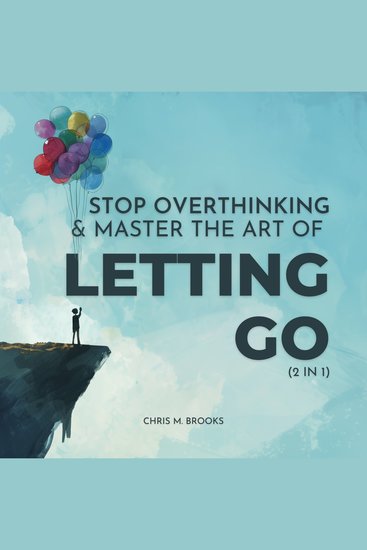
  • Stop Overthinking & Master The Art Of Letting Go (2 in 1): Break Free From The Past Stop Believing Your Negative Thoughts Build Healthy Habits & Live Your Happiest Life - cover

    Stop Overthinking & Master The...

    Chris M. Brooks

    • 0
    • 0
    • 0
    If you've always wanted to break free from the past, stop overthinking, and live your happiest life but struggle with negative thoughts and emotional baggage, then keep reading… 
    Are you sick and tired of feeling weighed down by your thoughts and unable to move forward? 
    Have you tried endless solutions like meditation, therapy, or self-help books, but nothing seems to work for more than a few weeks? 
    Do you finally want to say goodbye to sleepless nights, constant worry, and the burden of past mistakes and discover something that truly works for you? 
    If so, then you've come to the right place. 
    You see, letting go of negative thoughts and the past doesn't have to be difficult. 
    Even if you've tried everything and nothing seems to stick, Stop Overthinking & Master The Art Of Letting Go (2 Books in 1) can guide you to lasting change. 
    In fact, it's easier than you think. 
    Here's just a tiny fraction of what you'll discover in Stop Overthinking & Master The Art Of Letting Go:The 4 simple steps to stop overthinking in its tracks and regain control over your mindWhy trying to "just think positive" is actually counterproductive – and what to do instead5 harmful myths about emotional health that are preventing your progressA cool technique used by successful entrepreneurs to clear their minds and focus on the presentThe 3 best tools to help you shift your mindset and maintain emotional balance 
    …and much, much more! 
    Take a second to imagine how you'll feel once you've finally let go of the thoughts that hold you back, and how your loved ones will notice the calm and positive energy you bring into every situation. 
    So even if you're someone who has struggled with anxiety for years, you can achieve peace and positivity with the insights and strategies in this book.
    Show book
  • Standing Tall - Leadership Lessons in the Life of a Soldier - cover

    Standing Tall - Leadership...

    US Army (Ret) Lt. General Robert...

    • 0
    • 0
    • 0
    Robert Foley had only been in Vietnam for six months when he was promoted to captain and given command of a rifle company. In November 1966, Foley led his men on a mission to rescue another company that had been pinned down by Viet Cong forces. His leadership that day inspired his men and led to a successful operation—and the Medal of Honor. His actions in Vietnam were only a small portion of a long and varied career of service in the US Army, but Foley did not always seem marked for success. Coming from a blue-collar suburb of Boston, his years in West Point were marked by poor grades, injuries, and sickness. With a determination to lead by example and inspire trust among others, Foley served across the globe and rose through the ranks. He even returned to West Point as Commandant of Cadets, later retiring as a 3-star general and commander of Fifth Army.
    Show book
  • Freddy Mercury: A short biography - 5 Minutes: Short on time - long on info! - cover

    Freddy Mercury: A short...

    5 Minutes, 5 Minute Biographies,...

    • 0
    • 0
    • 0
    Freddie Mercury, frontman of Queen and global star: Life and work in a short biography! Everything you need to know, brief and concise. Infotainment, education and entertainment at its best!
    Show book
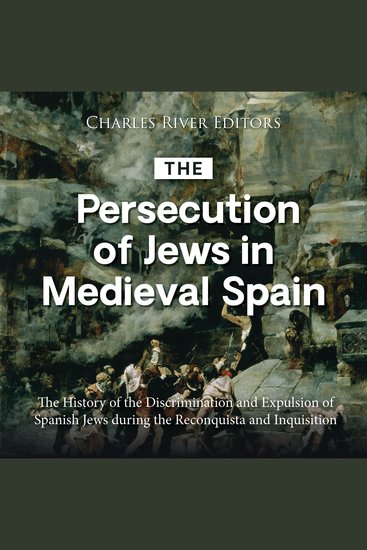
  • Persecution of Jews in Medieval Spain The: The History of the Discrimination and Expulsion of Spanish Jews during the Reconquista and Inquisition - cover

    Persecution of Jews in Medieval...

    Editors Charles River

    • 0
    • 0
    • 0
    The term “Reconquista” is a Spanish word transferred to the English language to represent the nearly 800 years in which the Moors and Christians struggled against one another for control of the Iberian Peninsula. Although the phrase typically refers to the time when the numerous Christian kingdoms mobilized to overthrow the Islamic Caliphates set up in the peninsula, the term can additionally be used to refer to the entire situation starting in the 8th century, when Islamic civilization slowly moved out of North Africa, across the Mediterranean Sea, and into southern Iberia.  
    	Not surprisingly, three religions attempting to coexist during medieval times resulted in nearly incessant conflicts, marked by high taxation, disparate societies, rigid cultural controls, and systemic violence. Despite the odds, these three religions managed to live in a state of quasi-acceptance and peace in most of the major cities like Cordoba and Toledo, with sporadic warfare occurring on the borders between Al-Andalus and the Christian kingdoms near the Pyrenees Mountains. Muslims, Christians, and Jews would attempt to reorganize their societies several times over the centuries through warfare, always with Jews on the lower rungs and Christians and Muslims fighting it out above them.   
    	By the end of the 14th century, the distrust and prejudice against Jewish communities quickly spread to Spain. In 1391, James II of Aragon boarded the bandwagon; backed into a corner by the Roman Catholic Church, he established a law that banned Jews from Spain altogether. Jews were shunned in droves, and the remaining were given an ultimatum to either convert/revert to Catholicism or face immediate death. Yet another wave of gory pogroms ensued across the country, especially in Barcelona.
    Show book
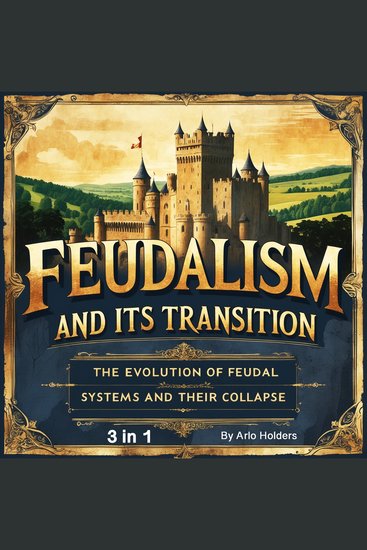
  • Feudalism and Its Transition - The Evolution of Feudal Systems and Their Collapse (3 in 1) - cover

    Feudalism and Its Transition -...

    Arlo Holders

    • 0
    • 0
    • 0
    This book contains the following titles: 
      - The Feudal System: Feudalism was a dominant social, economic, and political system in medieval Europe that shaped the lives of millions from the 9th to the 15th centuries. Rooted in the decline of the Roman Empire, it emerged as a response to the need for local defense, stability, and order. With the fall of centralized authority, particularly in the wake of the collapse of Roman imperial power, local leaders, and warriors filled the vacuum, giving rise to a new hierarchical structure that became the backbone of medieval society. 
      - The End of Feudalism: Feudalism was a social, political, and economic system that dominated medieval Europe, particularly from the 9th to the 15th century. Its structure was based on the exchange of land for loyalty, military service, and labor. At its core, feudalism established a hierarchical order in which the king, or monarch, granted land, known as fiefs, to vassals (nobles) in exchange for their service. In turn, these vassals would grant portions of their land to serfs or peasants, who worked the land in return for protection and sustenance. This land-based economy was highly localized, with power concentrated in the hands of a few, and much of daily life revolved around agricultural production.
    Show book
  • First Book of Timothy The - The World English Bible Book 54 (Unabridged) - cover

    First Book of Timothy The - The...

    Various Authors

    • 0
    • 0
    • 0
    The First Book of Timothy is one of three letters in the New Testament of the Bible often grouped together as the pastoral epistles, along with Second Timothy and Titus. The letter, traditionally attributed to the Apostle Paul, consists mainly of counsels to his younger colleague and delegate Timothy regarding his ministry in Ephesus . These counsels include instructions on the organization of the Church and the responsibilities resting on certain groups of leaders therein as well as exhortations to faithfulness in maintaining the truth amid surrounding errors. Most modern scholars consider the pastoral epistles to have been written after Paul's death.
    Show book