Join us on a literary world trip!
Add this book to bookshelf
Grey
Write a new comment Default profile 50px
Grey
Subscribe to read the full book or read the first pages for free!
All characters reduced
Time Perception Science - cover

Time Perception Science

Michael Brown

Translator A AI

Publisher: Publifye

  • 0
  • 0
  • 0

Summary

Time Perception Science explores the fascinating ways our brains construct our subjective experience of time. It examines how neural mechanisms and cognitive processes work together, influencing everything from planning to social interactions. One intriguing fact is that our perception of time isn't passive; it's actively shaped by factors like attention and emotion. This book uniquely emphasizes the dynamic interplay of various brain regions, rather than pinpointing a single "time center."

 
The book progresses systematically, first laying the groundwork with historical and philosophical perspectives. It then delves into the neuroscience of time perception, exploring brain regions and neural oscillations. Next, it examines cognitive and psychological influences, such as how conditions like Parkinson's disease can alter time perception. By integrating findings from neuroscience, psychology, and cognitive science, Time Perception Science offers a comprehensive understanding of how we experience time, including how our brains process temporal information.
Available since: 02/23/2025.
Print length: 109 pages.

Other books that might interest you

  • Today's Authors Series: Alfred C Martino Discusses Writing and His Novels - Today's Authors Series - cover

    Today's Authors Series: Alfred C...

    Alfred C. Martino

    • 0
    • 0
    • 0
    Hear a lecture given by young adult author Alfred C. Martino to high school students as he discusses the craft of writing and his novels, Pinned, Over the End Line, and Perfected By Girls.
    Show book
  • The Devotees of Buddhism - Diary of An Investigation - cover

    The Devotees of Buddhism - Diary...

    Marion Dapsance

    • 0
    • 0
    • 0
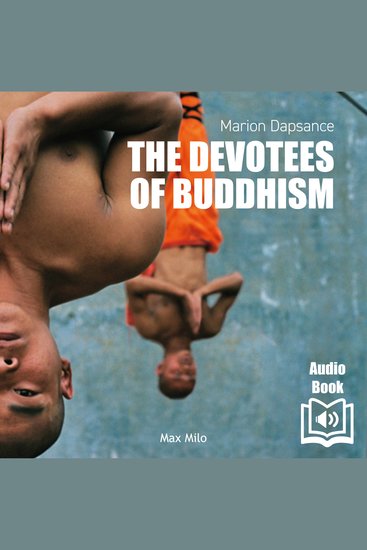
    The temple is packed. "It stinks in here," says the master in English. "You mustn't do any more prostrations, or else you'll have to open the windows." A tall, skinny steward discreetly points out that it's pouring rain, and that perhaps this isn't entirely appropriate. The master then grabs him by the hair and shakes him back and forth. "Who are you to judge? I'm your master, you're my slave. Ah, it may not be politically correct with you Westerners, but in Tibet it's like that. You have to submit totally. You must never challenge a great master.
    Anthropologist Marion Dapsance conducts the first field survey of Buddhism in the West, delving into the heart of a hijacked religion that leaves you speechless: sectarian organization, sexual aberrations, financial pyramids, hierarchical humiliations.
    Show book
  • Nicolaus Copernicus: A short biography - 5 Minutes: Short on time - long on info! - cover

    Nicolaus Copernicus: A short...

    5 Minutes, 5 Minute Biographies,...

    • 0
    • 0
    • 0
    Nicolaus Copernicus, universal scholar and astronomer: Life and work in a short biography! Everything you need to know, brief and concise. Infotainment, education and entertainment at its best!
    Show book
  • África y Roma: La historia y el legado del Imperio romano en el continente africano - cover

    África y Roma: La historia y el...

    Charles River Editors

    • 0
    • 0
    • 0
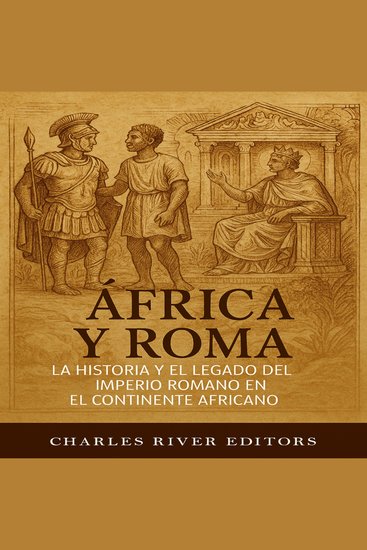
    En su apogeo, el Imperio Romano abarcaba grandes extensiones de Europa occidental, Oriente Medio, Egipto y el norte de África, y aunque mucha gente conoce la influencia y el legado de Roma en Europa y Oriente Medio, a menudo se sabe menos de los asentamientos romanos en la costa mediterránea del norte de áfrica. No obstante, esta fue una zona que produjo varios emperadores (incluidos los únicos emperadores negros), algunas de las ciudades más sofisticadas del imperio y ruinas romanas que ofrecen algunas de las mejores pruebas del modo de vida romano que se pueden encontrar en cualquier parte del mundo.  
    	Aparte de la naturaleza complicada de los sistemas administrativos en evolución en la zona, otro reto importante para los investigadores modernos del periodo romano en la historia del norte de África es que el entorno natural era muy diferente al actual. Se suele suponer que la región solo era fértil en la costa y que el interior no podía proporcionar los recursos necesarios para mantener poblaciones numerosas y ricas. Sin embargo, en la antigüedad, el norte de África era una región fértil, y los científicos creen que la vasta zona de praderas escarpadas que cubría la mayor parte de lo que hoy es el desierto del Sáhara comenzó a secarse hace unos 5000 años, y que el proceso de transformación de las praderas en desiertos fue lento. Aunque existe un considerable debate sobre el tiempo que duró el proceso y si las técnicas agrícolas a pequeña escala utilizadas en la región contribuyeron al proceso de desecación, está claro que la zona alrededor de Cartago, por ejemplo, tenía una amplia extensión de tierras bien cultivadas, y que dicho cultivo se prolongó hasta bien entrada la Edad Media. 
    Show book
  • Essays on Political Economy - cover

    Essays on Political Economy

    Frédéric Bastiat

    • 0
    • 0
    • 0
    Essays on Political Economy by Frederic Bastiat is an influential work that challenges the prevailing economic policies of the 19th century. Through a series of essays, Bastiat argues for the importance of free markets and limited government intervention, presenting a compelling case for economic liberty and individual freedom. His writing explores the consequences of protectionism, taxation, and state control over the economy, demonstrating how these policies often harm society rather than benefit it. Bastiat is known for his sharp critiques of economic fallacies, and his work remains a cornerstone of classical liberal economic thought. The essays are not only an exploration of political economy but also a call for a more just and efficient economic system based on voluntary exchange, individual rights, and the free market. Essays on Political Economy is a must-read for anyone interested in the history of economic thought and the defense of economic freedom.
    Show book
  • 1941: THE WAR BECOMES GLOBAL - THE SECOND WORLD WAR A Seven-Volume History VOLUME THREE - cover

    1941: THE WAR BECOMES GLOBAL -...

    Quentin Drummond Anderson

    • 0
    • 0
    • 0
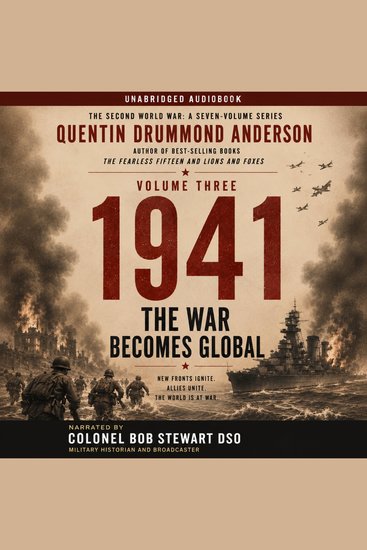
    1941: THE WAR BECOMES GLOBAL The Second World War, Volume Three 
    The world caught fire in 1939. In 1941, the fire became a furnace. 
    In twelve months, the Second World War is transformed beyond recognition. A compact German general steps off a transport in Tripoli and begins rewriting the rules of desert warfare. Three million men surge across the Soviet frontier in the largest land invasion in human history, and behind them come the killing squads. On a quiet Sunday morning in Hawaii, the last great power on earth is dragged into the flames. By December, the war has consumed Europe, North Africa, the Atlantic, the Pacific, and the vast interior of the Soviet Union. It has become, at last, a world war in every meaning of the phrase. 
    This third volume in Quentin Drummond Anderson's acclaimed seven-volume narrative history follows 1941 chapter by chapter through its cascade of defining moments. Rommel arrives in Africa with two divisions and reverses six months of British victories in three weeks. The Hood — symbol of British naval supremacy — is destroyed in eight minutes. Barbarossa sends three million men across the Soviet border into one of the most savage campaigns in military history. And at Pearl Harbor, the United States is pulled into a conflict that will reshape the world for generations. 
    But 1941: The War Becomes Global does not flinch from the darkest material. The Einsatzgruppen — the mobile killing units that followed the Wehrmacht into the Soviet Union — are not a footnote here. They are part of the story of Barbarossa, inseparable from it. The military history and the history of the Holocaust are not parallel stories in 1941. They are the same story. 
    Written with the narrative drive of the finest military fiction and the rigour of serious scholarship, this is history lived from the inside — through the soldiers in the snow outside Moscow, the sailors on the Arctic convoys, the aircrews over Pearl Harbor, and the civilians in the cellars of Leningrad.
    Show book