Join us on a literary world trip!
Add this book to bookshelf
Grey
Write a new comment Default profile 50px
Grey
Subscribe to read the full book or read the first pages for free!
All characters reduced
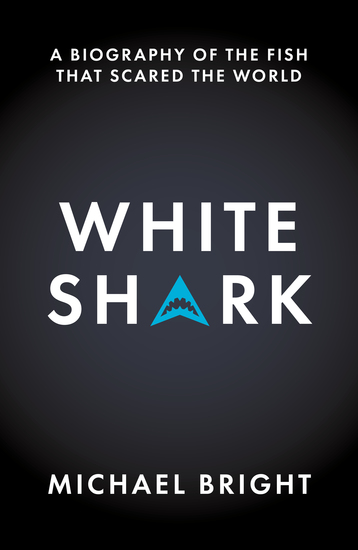
White Shark - A Biography of the Fish That Scared the World - cover

White Shark - A Biography of the Fish That Scared the World

Michael Bright

Publisher: Biteback Publishing

  • 0
  • 0
  • 0

Summary

An adult great white is a big shark – really big. It has been responsible for more shark bites and human deaths than any other species, according to the International Shark Attack File. This is probably because it sees us as aberrant marine mammals flailing about in the water and certainly worth an exploratory bite – but a gentle mouthing from a two-tonne white shark, its jaws filled with row upon row of razor-sharp teeth, could result in a severe mauling for any victim unlucky enough to have attracted its attention.
Though its danger was well known to ancient mariners, it was not until the mid-1970s that it came to occupy its current place in the popular imagination, when Jaws was unleashed on an unsuspecting public. The great white shark's reputation hit rock bottom in the wake of the Spielberg classic. But during the fifty years since the film's first release, public interest in the species has sparked a renaissance in research, producing remarkable new insights into the life of this extraordinary animal.
Telling the story of the great white shark from the perspectives of history, psychology and biology, White Shark is nothing less than the biography of the world's most fascinating fish.
Available since: 07/29/2025.
Print length: 3230 pages.

Other books that might interest you

  • Stream to Income - Turn Your Skills Content and Time Into Online Revenue - cover

    Stream to Income - Turn Your...

    Kyla Jennings

    • 0
    • 0
    • 0
    🎧 Stream to Income: Turn Your Skills, Content, and Time Into Online Revenue 
     Written and narrated for creators, freelancers, and everyday entrepreneurs ready to earn online. 
    Are you sitting on untapped skills, valuable knowledge, or just a passion to create—and wondering how to turn it all into real income? Stream to Income is your step-by-step audio guide to transforming your expertise, content, and free time into multiple streams of online revenue. 
    Whether you're a teacher, writer, gamer, artist, coach, or side hustler, this audiobook walks you through practical, actionable strategies for monetizing what you already know and love to do. No fluff, just a clear roadmap. 
    Inside, you’ll learn how to:Identify the most profitable parts of your skill setCreate digital products that sell while you sleepBuild your audience without burning outChoose the best platforms for content, coaching, courses, and moreStreamline your time and set up sustainable systems for passive income 
    From side hustle to full-time freedom, Stream to Income breaks down the myths and shows you what’s really working right now in the digital economy. 
    🎙️ Perfect for listening on the go, this audiobook includes real examples, bonus tips, and mini-audio exercises to help you build your revenue engine as you listen. 
    If you're ready to stop trading hours for dollars and start building income streams that work while you sleep, press play and let’s start streaming your income today.
    Show book
  • Liberation of Western Europe in World War II The: The History of the Western Allies’ Campaigns on the Continent - cover

    Liberation of Western Europe in...

    Editors Charles River

    • 0
    • 0
    • 0
    During World War II, the free world literally hung in the balance, with the Axis and Allies engaging in warfare on an unprecedented scale. Although Hitler’s Nazi Germany had overrun much of the European continent by 1940, the Allies began to reverse the momentum in 1942. By the end of 1943, with Allied forces firmly established in Italy and the Soviets on the verge of turning the tide in Russia, the British and Americans began to plot the invasion that would liberate Europe from the Nazis.  
    	During the first half of 1944, the Americans and British commenced a massive buildup of men and resources in the United Kingdom, while Allied Supreme Commander Dwight D. Eisenhower and military brass planned the details of an enormous and complex amphibious invasion of Europe. Though the Allies used misinformation to try deceiving the Germans, the most obvious place for an invasion was just across the narrow English Channel, and the Germans had built coastal fortifications throughout France to protect against just such an invasion. 
    The invasion across the Channel came in the early morning hours of June 6, 1944. That day, forever known as D-Day, the Allies commenced Operation Overlord by staging the largest and most complex amphibious invasion in human history. After the successful amphibious invasion on D-Day in June 1944, the Allies began racing east toward Germany and liberating France along the way. The Allies had landed along a 50 mile stretch of French coast, and despite suffering 8,000 casualties on D-Day, over 100,000 still began the march across the western portion of the continent.  
    After resisting the German attack, the Allied armies began advancing, and with that, the race to Berlin was truly on. While much has been written of the Battle of the Bulge, Okinawa, Midway, Stalingrad, and many other conflicts of the Second World War, the Battle for Berlin has remained in the shadows for many historians. 
    Show book
  • The Women Are Up to Something - How Elizabeth Anscombe Philippa Foot Mary Midgley and Iris Murdoch Revolutionized Ethics - cover

    The Women Are Up to Something -...

    Benjamin J. B. Lipscomb

    • 0
    • 0
    • 0
    On the cusp of the Second World War, four women went to Oxford to begin their studies: a fiercely brilliant Catholic convert; a daughter of privilege longing to escape her stifling upbringing; an ardent Communist and aspiring novelist with a list of would-be lovers as long as her arm; and a quiet, messy lover of newts and mice who would become a great public intellectual of our time. They became lifelong friends. At the time, only a handful of women had ever made lives in philosophy. But when Oxford's men were drafted in the war, everything changed. 


    As Elizabeth Anscombe, Philippa Foot, Mary Midgley, and Iris Murdoch labored to make a place for themselves in a male-dominated world, as they made friendships and families, and as they drifted toward and away from each other, they never stopped insisting that some lives are better than others. They argued that courage and discernment and justice—and love—are the heart of a good life. 


    This book presents the first sustained engagement with these women's contributions: with the critique and the alternative they framed. Drawing on a cluster of recently opened archives and extensive correspondence and interviews with those who knew them best, Benjamin Lipscomb traces the lives and ideas of four friends who gave us a better way to think about ethics, and ourselves.
    Show book
  • Bedtime Stories For Kids - The Great Collection of Meditation Stories for Children of All Ages Help Your Children Fall Asleep with Tales of Dragons Aliens Dinosaurs and Unicorns - cover

    Bedtime Stories For Kids - The...

    Corie Herolds

    • 0
    • 0
    • 0
    Do your kids like to hear stories before sleep? 
    Do you want your child to learn mindfulness while reading beautiful short stories? 
    Then you and your kids will love this audiobook! 
    In this book, you will find a collection of stories written to help children enter a place of dreams and eventually drift off into sleep. These stories are intended to stir their imagination in such a way that the transition from fantasy and adventure into dreamland will be a seamless one. Best of all, your children will be able to get a good night’s sleep and wake up feeling refreshed and happy. 
    The following chapters are designed to take you and your family on an exciting adventure through space and time, laden with humor and surprises, while also attempting to disseminate valuable lessons about important principles, such as family, home, wrongdoing, and numerous other themes.  
    While each story is unique, the underlying purpose of each remains the same, to confer to readers some degree of insight into moral behavior and proper conduct. Through the careful application of allegory, the stories contained herein are intended not only to engage and captivate but serve as thought-provoking tools by which your children might avail themselves of one of mankind's most powerful attributes, thoughtfulness and self-reflection.  
    Plus, the stories in this book seek to create traditions and memories which will create everlasting moments that your children will treasure for the rest of their lives.  
    These are the kinds of moments that your children will surely love to live with their children someday, too. So, let’s jump right in and take a trip into a magical world from which your children will drift off in their sleep. Don’t be surprised if they don’t want to wake up after having such beautiful dreams. 
    Download this audiobook now to start your great experience with your child!
    Show book
  • The History and Legacy of the Greatest Battles of the Napoleonic Wars - cover

    The History and Legacy of the...

    Editors Charles River

    • 0
    • 0
    • 0
    Over the course of its history, England has engaged in an uncountable number of battles, but a select few have been celebrated like the Battle of Trafalgar, one of the most important naval battles in history. Before the battle, Napoleon still harbored dreams of sailing an invasion force across the English Channel and subduing England, but that would be dashed on October 21, 1805 by a British fleet that was outnumbered and outgunned. The impact of Trafalgar cannot be overstated, as it literally set the stage for the rest of the Napoleonic Era. Unable to invade England, Napoleon was limited to conducting war on the European continent, and while he spent the better part of a decade frustrating the British and their allies, he was eventually undone at Leipzig and then Waterloo nearly a decade after Nelson’s victory at Trafalgar. 
    For those questioning why generals continued using tactics from the Napoleonic Era even as technology changed the battlefield, the Battle of Austerlitz may provide the best answer. Napoleon is regarded as one of history’s greatest generals, and Austerlitz was his greatest victory. In 1805, Britain, Austria, and Russia allied together to form the Third Coalition against the French, and the Third Coalition’s forces consisted of armies from Austria and Russia, with Britain providing naval support as well as its financial powers. The Battle of Austerlitz was a tactical masterpiece that saw Napoleon actually invite an attack on his army by the bigger Coalition army, and over the course of about 9 hours, the French successfully defended their right flank while counterattacking in the center and splitting the Russo-Austrian army in two, allowing the French to hit the flank of the advancing left wing of the enemy. The result was a decisive victory that virtually annihilated the Third Coalition’s army and made Napoleon the master of the European continent.
    Show book
  • Maroons The: The History and Legacy of African Descendants Who Formed Free Settlements across the Americas - cover

    Maroons The: The History and...

    Editors Charles River

    • 0
    • 0
    • 0
    The Underground Railroad is one of the most taught topics to young schoolchildren, and every American is familiar with the idea of fugitive slaves escaping to Canada and the North with the help of determined abolitionists and even former escaped slaves like Harriet Tubman. The secrecy involved in the Underground Railroad made it one of the most mysterious aspects of the mid-19th century in America, to the extent that claims spread that 100,000 slaves had escaped via the Underground Railroad. Of course, from a practical standpoint, the Underground Railroad had to remain covert not only for the sake of thousands of slaves, but for a small army of men and women of every race, religion and economic class who put themselves in peril on an ongoing basis throughout the first half of the 19th century, and in the years leading up to the war.  
    Of course, a fairly common form of resistance was running away and seeking hiding places in environments where slave catchers experienced difficulty. Slaves who ran and hid out, or who made their own settlements, were called maroons, from the Spanish word cimarron, which means “wild” or “untamed.” The term that historians commonly use to describe this is marronage, adapted from the French word maron, meaning the same as maroon. Marronage took two forms, grand and petty. Grand marronage was permanent, with escapees joining together to establish lasting settlements in inaccessible areas in mountains and swamps, sometimes preferring death rather than being caught and enslaved again.
    Show book