¡Acompáñanos a viajar por el mundo de los libros!
Añadir este libro a la estantería
Grey
Escribe un nuevo comentario Default profile 50px
Grey
Suscríbete para leer el libro completo o lee las primeras páginas gratis.
All characters reduced
Public Trust Decline - cover

Public Trust Decline

Michael A. Johnson

Traductor A AI

Editorial: Publifye

  • 0
  • 0
  • 0

Sinopsis

Public Trust Decline examines the widespread erosion of confidence in institutions like government and media, a crucial issue as societal health depends on trust. The book uniquely offers a comparative analysis across different countries, revealing that declining public trust isn't a singular issue but a complex mix of perceived corruption, lack of transparency, and a disconnect between citizens and those in power. Intriguingly, the rise of social media and economic inequality significantly contribute to this decline, fueling political polarization and hindering effective governance. 

 
The book adopts an analytical and objective approach, drawing from diverse sources like public opinion surveys and case studies. Initially, it establishes a historical context, then analyzes survey data to compare trends across various institutions. Subsequent chapters explore specific factors like the role of media, political polarization, and economic inequality. 

 
The final chapters propose actionable solutions, emphasizing transparency, accountability, and ethical leadership to restore faith in institutions, aiming to inform policymakers, journalists, and engaged citizens.
Disponible desde: 21/02/2025.
Longitud de impresión: 85 páginas.

Otros libros que te pueden interesar

  • The Power of Our Supreme Court - How Supreme Court Cases Shape Democracy - cover

    The Power of Our Supreme Court -...

    Matt Beat

    • 0
    • 0
    • 0
    Mr. Beat Connects the Supreme Court History Right to You!Mr. Beat’s The Power of Our Supreme Court is the Supreme Court book of decisions that affect the everyday lives of Americans everywhere.The real democracy of America unveiled. What does the supreme court do? Sure, people care when the court makes a big ruling, but most don’t pay attention to the court’s day-to-day decisions. In this law book, Mr. Beat takes you on a journey through our Supreme Court system, what it is, who is in it and how they got to be there while foreshadowing how it shapes our very future.
     
    A tour of the most influential cases in history. Inspired by Mr. Beat’s court series, The Power of Our Supreme Court walks through many Supreme Court history cases from landmark cases to the more obscure. Matt Beat explains how each case affects us to this day in a way that is engaging, applicable, and easy to understand, even for beginners.
     
    Inside, you’ll find:
     
    Detailed explanations of the Supreme Court, how it works, and how it affects youA Supreme Court cases book perfect for anyone interested in social science, political science, activism, or lawInteresting visuals, charts, and graphs to help contextualize and breakdown the historical significance of big and small casesIf you like courtroom books, legal books for lawyers, or books on politics for beginners like How Civil Wars Start, The Color of Law, or The Flip Side of History, you’ll love Mr. Beat’s The Power of Our Supreme Court.
    Ver libro
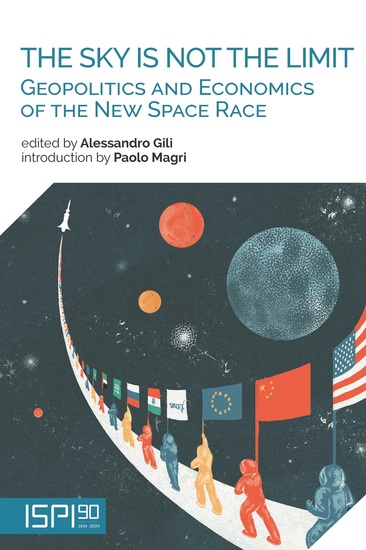
  • The Sky Is Not the Limit - Geopolitics and Economics of the New Space Race - cover

    The Sky Is Not the Limit -...

    Alessandro Gili

    • 0
    • 0
    • 0
    Space is a contested domain for its very nature and today it is evidently becoming an increasingly important enabler of economic and military power. An increasing number of actors, infrastructures and technologies deployed in space also raises concerns for safety and security, especially in cyberspace. Many countries are striving to achieve space capabilities and autonomous access to space, and this is
    having a tremendous geopolitical impact, especially since space is emerging as an increasingly critical military and strategic domain. The development of the new space economy, which is increasingly involving the private sector and many industrial actors and services, will also be a game changer for the international economy. The space race likewise implies disruptive technologies that could contribute massively to the energy and digital transitions, accelerating solutions that could benefit humanity. A new international governance system for space is therefore needed urgently, considering that the current rules are no longer able to respond to a sector evolving at such a rapid pace. Which actors are leading the race? Which economic sectors could benefit the most and what could the new space economy mean for the world? How is space emerging as a military domain against a backdrop of increasing international tensions? What would a new system of global governance for space look like?
    Ver libro
  • The Presidential Fringe - Questing and Jesting for the Oval Office - cover

    The Presidential Fringe -...

    Mark Stein

    • 0
    • 0
    • 0
    This offbeat slice of American history places the story of our great republic beneath an unexpected lens: that of fringe candidates for president of the United States. Mark Stein explores how their quest for our nation’s highest office helped to amplify voices otherwise quashed during their day. His careening tour through elections past includes the efforts of true pioneers in the quest for social equality in our country: the first woman to run for president, Victoria Woodhull in 1872; the first African American to run for president, George E. Taylor, in 1904; and the first openly gay cross-dressing candidate for president, Joan Jett Blakk in 1992. 
    But The Presidential Fringe also takes a look at those who would jest their way into the Oval Office, from comedians such as Will Rogers and Gracie Allen to Pat Paulsen and Stephen Colbert. Along the way, Stein shows how even seemingly zany candidates, such as “Live Forever” Jones, Vegetarian Party candidate John Maxwell, Flying Saucer Party candidate Gabriel Green, or most recently, Vermin Supreme, provide extraordinary insights of clarity into who we were when they ran for president and how we became who we are today. Ultimately, Stein’s examination reveals that it was often precisely these fringe candidates who planted the seeds from which mainstream candidates later harvested genuine, positive change. 
    Written in Stein’s direct and witty style, The Presidential Fringe surveys and portrays an American landscape rife with the unlikely, unassuming, unexpected, and (in a few cases) unbalanced presidential hopefuls who, in their own way, have contributed to this nation’s founding quest to form a more perfect Union.
    Ver libro
  • How I Changed The World: In My Own Unique Ways - cover

    How I Changed The World: In My...

    Galeeb Kachra

    • 0
    • 0
    • 0
    "Galeeb Kachra truly is one of a kind. A unique combination of optimism, can-do determination and relentless energy, he has the wiliness and moral integrity required to shake up sclerotic systems and sweep away logjams. His detailed account of five projects that mattered intensely to him, which did their little bit to make the world a better place, is sprinkled with humour and charmingly idiosyncratic, while packed with serious intent."  
    -- Michela Wrong, March 2021, author of "It's Our Turn to Eat: the Story of a Kenyan Whistleblower." 
    From the author: 
    Do you want to help achieve change, but don't know how? Other books don't give you practical examples that are within your own reach. This book showcases real cases, based on Galeeb's international experience. It covers disaster preparedness, anticorruption, youth empowerment, judicial reform, book bans, and procurement reform. Be motivated to find a way of helping others whatever your specific interests and technical skills. 
    Ver libro
  • The Wannabe Fascists - A Guide to Understanding the Greatest Threat to Democracy - cover

    The Wannabe Fascists - A Guide...

    Federico Finchelstein

    • 0
    • 0
    • 0
    Meet today's almost fascists and learn the warning signs to intercept them on the road from populism to dictatorship. 


    With The Wannabe Fascists, historian Federico Finchelstein offers a precise explanation of why Trumpism and similar movements across the world belong to a new political breed, the last outcome of the combined histories of fascism and populism: the wannabe fascists. This new type of populist politician is typically a legally elected leader who, unlike previous populists who were eager to distance themselves from fascism, turns to totalitarian lies, racism, and illegal means to destroy democracy from within. 


    Drawing on almost three decades of research on the histories of fascism and populism around the world, this book lays out in clear language what the author calls the "four pillars of fascism"—xenophobia, propaganda, political violence, and ultimately dictatorship. Finchelstein carefully explains how and why wannabe fascists like Trump, Bolsonaro, and Modi embrace the first three pillars but don't quite succeed in dictatorship and total suppression of the popular vote. The Wannabe Fascists stresses the importance of preventing despots from reaching this tipping point and offers a clear warning for what's at stake.
    Ver libro
  • The Scheme - How the Right Wing Used Dark Money to Capture the Supreme Court - cover

    The Scheme - How the Right Wing...

    Jennifer Mueller, Senator...

    • 0
    • 0
    • 0
    Following his book Captured on corporate capture of regulatory and government agencies, and his years of experience as a prosecutor, Senator Sheldon Whitehouse here turns his attention to the right-wing scheme to capture the courts, and how it influenced the Trump administration's appointment of over 230 "business-friendly" judges, including the last three justices of the United States Supreme Court. 


    Whitehouse traces the motive to control the court system back to Lewis Powell's notorious memo, which gave a road map for corporate influence to target the judiciary, and chronicles a hidden-money campaign using an armada of front groups and helped by the infamous Citizens United Supreme Court decision. The scheme utilized the Federalist Society as an appointments turnstile, spent secret millions to support the nominees, orchestrated an "amicus brief" signaling apparatus, and propped up front-group litigants to "fast-lane" strategic test cases to the friendly justices. 


    Whitehouse finds the same small handful of right-wing billionaires and corporations running operations that he likens to "covert ops," ultimately enticing the Senate to break rules, norms, and precedents to confirm wildly inappropriate nominees who would advance the anti-government agenda of a small number of corporate oligarchs.
    Ver libro